
The Karnataka State Road Transport Corporation has taken a significant step towards improving passenger convenience by introducing advance ticket booking facilities at Bengaluru-One and Karnataka-One service centres across the State. The initiative aims to make bus ticket booking more accessible, especially for passengers who may not be comfortable using digital platforms or lack access to smartphones and the internet. By integrating KSRTC services into these citizen service centres, the transport utility hopes to bridge the gap between technology-driven services and ground-level accessibility.
KSRTC officials said the move is part of a broader effort to decentralise public services and bring them closer to citizens. Bengaluru-One and Karnataka-One centres already serve as single-window facilities for a wide range of government services, including utility payments, certificates, and transport-related applications. Adding advance bus ticket booking to this list is expected to significantly benefit daily commuters, senior citizens, and passengers from rural and semi-urban areas who depend heavily on KSRTC buses for inter-district and inter-State travel.
Passengers can now walk into designated centres, provide their travel details such as destination, date, and preferred service, and book tickets well in advance. The service covers major KSRTC operations, including express, Rajahamsa, Airavat, and other long-distance services, subject to seat availability. Officials clarified that standard booking rules, reservation windows, and cancellation policies applicable on KSRTC’s online and counter bookings will also apply at these centres.
Expanding Access Beyond Digital Platforms
The decision to enable advance booking at Bengaluru-One and Karnataka-One centres comes against the backdrop of increasing digitisation of public services. While KSRTC has successfully promoted online booking through its website and mobile applications, a section of passengers continues to rely on physical counters due to digital literacy barriers. Transport experts have long pointed out that exclusive reliance on online platforms can inadvertently exclude vulnerable groups, including elderly passengers and migrant workers.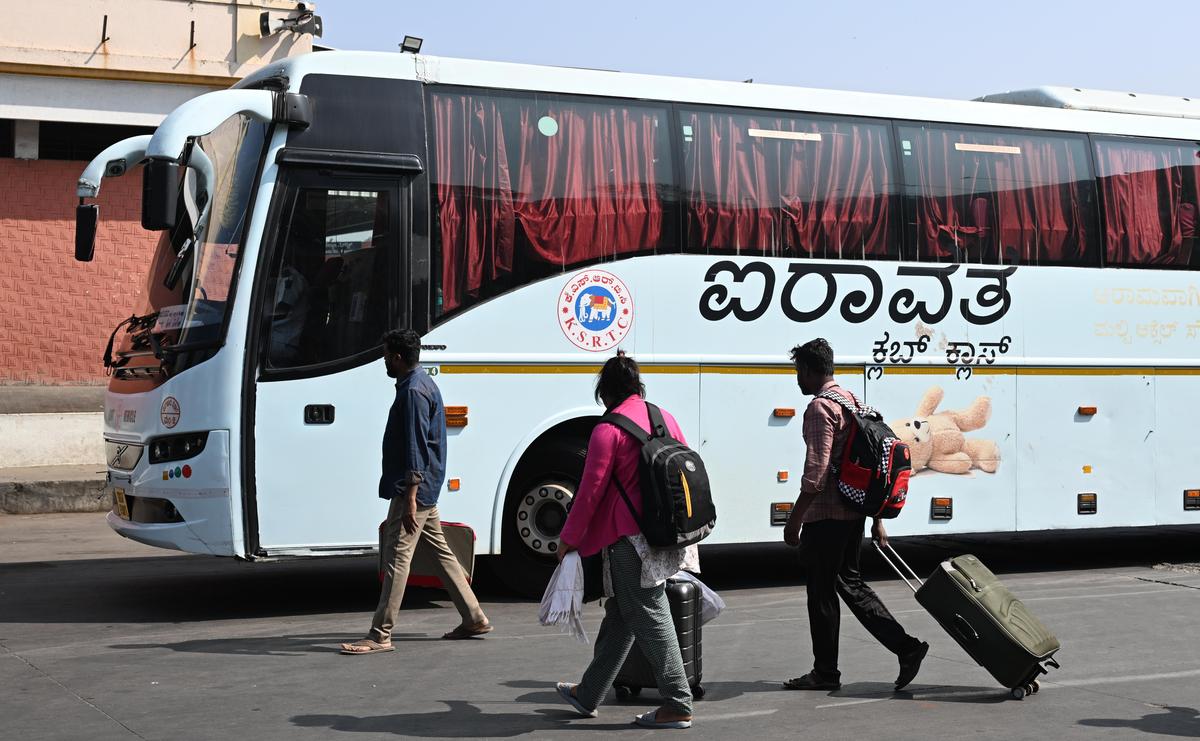
By leveraging the widespread network of citizen service centres, KSRTC is effectively expanding its reach without setting up new infrastructure. These centres are present in urban hubs as well as taluk and district headquarters, making them easily accessible. Officials noted that trained staff at the centres have been oriented to handle ticket booking requests efficiently, ensuring accuracy and minimising errors in passenger details.
The initiative is also expected to reduce crowding at bus terminals, especially during peak travel seasons such as festivals, school holidays, and long weekends. Advance booking at neighbourhood service centres could help distribute passenger footfall more evenly, easing pressure on central booking counters at major bus stations. For passengers, this means shorter queues, reduced waiting times, and a more predictable travel planning experience.
KSRTC has emphasised that the service is not meant to replace existing booking channels but to complement them. Online platforms, mobile apps, and traditional bus stand counters will continue to operate as usual. The addition of Bengaluru-One and Karnataka-One centres provides an extra option, allowing passengers to choose the mode of booking that best suits their comfort and convenience.
Passenger Response and Future Plans
Early feedback from passengers has been largely positive, particularly from those who prefer face-to-face transactions. Senior citizens have welcomed the move, saying it offers reassurance and clarity that online systems sometimes lack. Many passengers also appreciate the ability to seek assistance from centre staff while making bookings, especially when selecting routes, timings, or bus categories.
KSRTC officials said that the transport corporation will closely monitor the response during the initial phase. Data on booking volumes, peak usage times, and common passenger queries will be analysed to fine-tune the service. If demand is strong, the corporation may explore extending similar booking facilities to other government service points and possibly integrating additional transport-related services./newsfirstprime/media/media_files/2026/01/13/ksrtc-booking-available-at-bengaluru-one-and-karnataka-one-2026-01-13-10-24-02.jpg)
There is also scope for expanding the range of transactions available at these centres. Officials hinted that services such as ticket cancellations, refunds, and travel-related enquiries could be considered in the future, subject to technical feasibility. Such integration would further strengthen the role of Bengaluru-One and Karnataka-One centres as comprehensive public service hubs.
In the long term, transport planners believe the initiative reflects a shift in how public transport systems engage with users. Rather than expecting passengers to adapt to systems, institutions are beginning to adapt systems to passenger realities. If implemented effectively and scaled thoughtfully, advance ticket booking at citizen service centres could become a permanent feature of Karnataka’s public transport ecosystem, reinforcing KSRTC’s role as a reliable and accessible service provider.
From a governance perspective, the move reflects an emphasis on service delivery rather than mere technological adoption. By recognising that digital inclusion remains uneven, KSRTC’s initiative aligns with the broader goal of inclusive public transport. Policy analysts note that such hybrid models, combining digital systems with physical access points, are crucial in ensuring that reforms benefit all sections of society.
As Karnataka continues to modernise its transport infrastructure, initiatives like this signal a shift towards passenger-centric planning. While large-scale projects such as fleet upgrades and route expansions often dominate headlines, smaller interventions that improve everyday accessibility can have an equally meaningful impact. For thousands of KSRTC passengers across the State, advance ticket booking at familiar citizen service centres may translate into less stress, better planning, and a smoother journey.
Transport economists note that the initiative could also have indirect economic benefits for KSRTC. Easier access to advance booking is expected to improve seat occupancy, particularly on long-distance routes where last-minute cancellations and no-shows often affect revenue. When passengers plan travel earlier, fleet utilisation becomes more predictable, allowing better scheduling and resource allocation. Over time, this could help the corporation reduce operational inefficiencies and improve financial sustainability without raising fares.
Officials from the e-governance department highlighted that integrating KSRTC booking services required backend coordination between transport and IT systems. Ensuring real-time seat availability and synchronisation with existing booking platforms was a key challenge. They said the successful rollout demonstrates that government departments can collaborate effectively when service delivery is prioritised. The experience gained here could serve as a template for integrating other transport and mobility services at citizen service centres.
Rural commuters are expected to be among the biggest beneficiaries of the new facility. In many villages and small towns, Karnataka-One centres function as the primary interface between citizens and government services. For residents who earlier had to travel long distances to major bus stations just to book tickets, the new arrangement saves both time and money. Community leaders believe this could improve mobility for education, healthcare, and employment-related travel.
Women passengers, especially those travelling alone, have also welcomed the initiative. Many have pointed out that booking tickets in advance at familiar local centres feels safer and more comfortable than navigating crowded bus terminals. Women’s groups say that such measures, though seemingly small, contribute to making public transport more inclusive. They have urged KSRTC to also focus on awareness campaigns so that more women know about and use the facility.
Employee unions within KSRTC have expressed cautious optimism. While welcoming improved passenger services, they have stressed the need to ensure that existing booking counter staff are not adversely affected. Union representatives said that decentralising bookings should be accompanied by redeployment and skill upgradation rather than workforce reduction. KSRTC management has assured unions that the initiative is aimed at improving reach, not cutting jobs.
Travel agents operating near major bus stations have offered mixed reactions. Some fear a reduction in walk-in customers, while others believe demand will grow overall, benefiting all stakeholders. Industry observers suggest that as travel demand increases, multiple booking channels can coexist. In fact, advance planning facilitated by easier booking could lead to more frequent travel, especially among families and groups.
From a policy standpoint, the move aligns with the State’s broader emphasis on citizen-centric governance. Bengaluru-One and Karnataka-One centres were conceived as platforms to reduce bureaucratic hurdles and travel for citizens. Adding transport services reinforces their relevance in daily life. Governance experts argue that such integration enhances public trust, as citizens experience tangible improvements rather than abstract reforms.
KSRTC has also indicated that information about the new booking facility will be disseminated through posters at bus stands and service centres. Awareness remains a critical factor, as many eligible users may initially be unaware of the option. Officials said local outreach, especially in rural areas, will determine the success of the initiative more than the technology itself.
There are suggestions that the service could be particularly useful during festival seasons like Sankranti, Ugadi, and Deepavali, when travel demand surges sharply. Advance booking at neighbourhood centres could help passengers secure seats early and avoid last-minute rush. For KSRTC, this could mean smoother handling of seasonal peaks and reduced operational stress on staff.
In the long term, transport planners believe the initiative reflects a shift in how public transport systems engage with users. Rather than expecting passengers to adapt to systems, institutions are beginning to adapt systems to passenger realities. If implemented effectively and scaled thoughtfully, advance ticket booking at citizen service centres could become a permanent feature of Karnataka’s public transport ecosystem, reinforcing KSRTC’s role as a reliable and accessible service provider.
Follow: Karnataka Government
Also read: Home | Channel 6 Network – Latest News, Breaking Updates: Politics, Business, Tech & More
