
The inauguration of the Akka Café in Bidar has emerged as a significant moment for women’s empowerment in Karnataka, marking a collaborative shift towards economic inclusion, livelihood development and grassroots entrepreneurship. Opened on December 1 by Forest, Ecology and Environment Minister and Bidar district in-charge Eshwar B. Khandre, the café has already begun drawing attention for its community-driven model and its deeper socio-economic purpose. Operated completely by women and supported by multiple government and rural-development agencies, the café is positioned as a local initiative with the potential to inspire larger change across the State.
The café has been established on the premises of the Zilla Panchayat office in Bidar, symbolically placing women-led enterprise at the heart of district-level governance. The opening ceremony drew officials, members of women’s self-help groups, local leaders and representatives of institutions that supported the venture. The collaboration between Sanjeevini, the Department of Skill Development, Entrepreneurship and Livelihood, the Zilla Panchayat and the Taluk Panchayat reflects a deliberate effort to provide structured backing to women seeking financial independence.
The Minister, during his address, emphasised that the café is not merely a food outlet but an initiative intended to provide sustainable livelihoods for women. At a time when rural and semi-urban women often struggle to gain access to entrepreneurship, this café model aims to offer an accessible and supportive environment for skill-building, income generation and leadership opportunities.
The launch of Akka Café in Bidar is also being interpreted as a symbolic moment for the district, which has historically struggled with inadequate employment opportunities for women. Many self-help groups formed under various livelihood schemes have prospered in rural pockets, yet women often lacked a direct platform to showcase their skills in mainstream public spaces. By situating the café within the Zilla Panchayat premises, the initiative sends a strong message about placing women at the centre of local governance and public engagement. Officials believe that women-led food enterprises can redefine the identity of rural entrepreneurship in Bidar.
Local administrators have shared that the café is expected to operate on a model emphasising transparency, community support, and shared decision-making. The women involved will participate in weekly assessment meetings to discuss finances, menu improvements, customer demands, and operational challenges. This participatory model, they said, will impart valuable management skills, enabling members to confidently handle larger business ventures in the future. Such structures help dismantle long-standing stereotypes about women’s capacities in leadership and financial matters. The goal is not merely to run a café but to nurture confident rural entrepreneurs capable of replicating the model across multiple regions.
Residents who visited the café during its initial days reported an encouraging response. Customers appreciated that the food options reflected the authentic flavours of Bidar’s culinary traditions while maintaining affordability, making it accessible to government staff, students, and daily wage workers. The café also created a warm environment where women from different taluks could interact with the public, build networks, and understand customer expectations. Several visitors remarked that the initiative adds vibrancy to the Zilla Panchayat campus, transforming it into a lively social space rather than a purely administrative environment. This human-centric element, authorities believe, will further strengthen public interaction with local institutions.
The officials involved in monitoring the initiative added that Akka Café may eventually integrate digital tools for accounting, inventory management, and customer engagement. Training sessions for digital literacy are already being planned through the Karnataka State Rural Livelihood Promotion Society. These efforts are intended to ensure that the women managing the café are not left behind as the state increasingly adopts digitised public service models. Through such skill development, the café becomes more than a livelihood source; it becomes a gateway to bridging the digital divide. This reinforces the broader goals of education, adaptability, and modernisation embedded within rural development programmes.
As discussions grow about replicating the Akka Café model in other parts of Karnataka, experts emphasise the need to preserve the cultural and community-specific elements that make the Bidar version unique. They argue that women-led businesses thrive when rooted in local identity rather than centrally imposed templates. For this reason, any future cafés must consider the distinct food habits, ingredients, and customer dynamics of their respective regions. Authorities believe that this decentralised approach will allow the model to scale sustainably across districts. The Bidar inauguration, therefore, is not just an isolated event but a step toward a broader transformation in women’s economic empowerment.
The launch comes amid a broader push by the Karnataka government to strengthen women’s participation in micro-enterprise, skill training and community-driven economic ecosystems. For many women in Bidar, this café symbolises a gateway towards consistent income and participation in local development.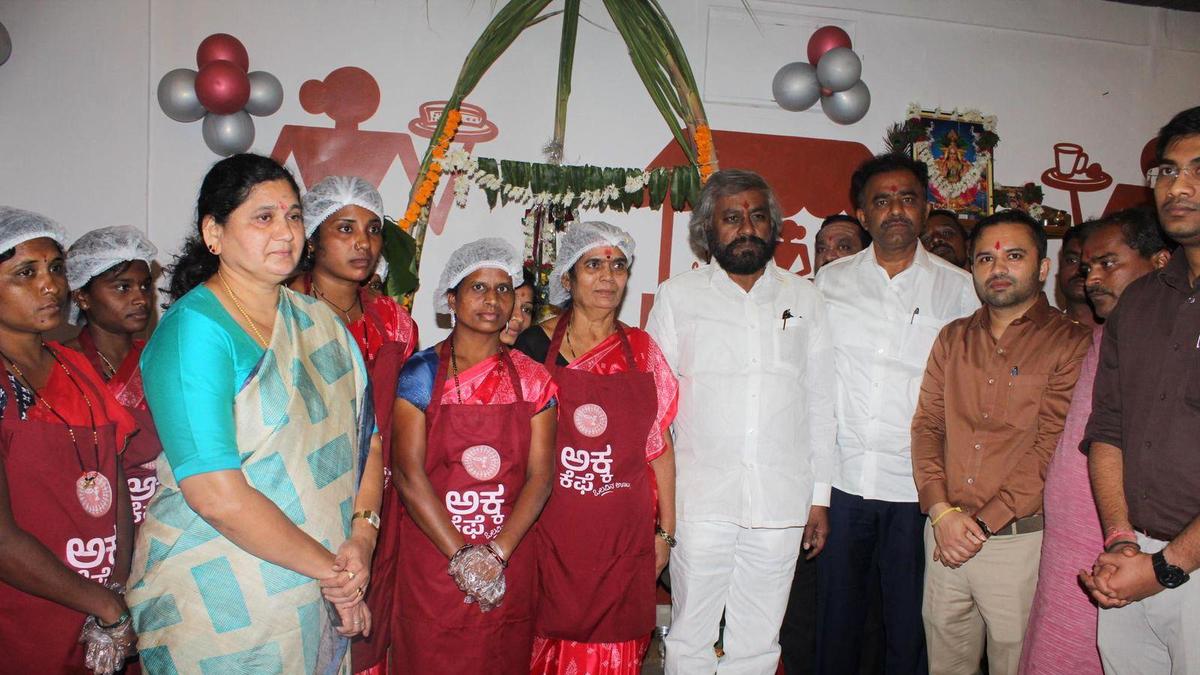
A Community-Driven Café with a Mission
The Akka Café stands out not just because it is operated entirely by women but because it has been designed specifically to uplift local women’s groups and give them a sustainable business model. The initiative aligns closely with the goals of Sanjeevini, the State Rural Livelihood Promotion Society, which works extensively with women-led self-help groups across Karnataka. These groups, often known as “Stree Shakti groups,” form the backbone of community entrepreneurship in the State, yet many struggle to transition from training to actual income-earning ventures.
The café seeks to bridge that gap. Women who are part of these groups undergo hospitality training, food handling practice, and basic business management support before formally joining the café operations. This ensures that the café serves high-quality, hygienic and affordable food while also functioning as a practical platform for skill development.
According to officials familiar with the planning process, the idea is to replicate successful women-run cafés established under similar initiatives in other districts. These outlets have often evolved into self-sustaining units, with women gaining the confidence to expand into catering, tiffin services, and local food stalls. Bidar’s Akka Café is expected to follow a similar trajectory over the coming months.
At the inauguration, Minister Eshwar Khandre highlighted how initiatives like this help dismantle socio-economic barriers. By placing women in positions of responsibility and visibility, such projects help challenge stereotypes that often restrict women to unpaid or informal work. The minister also noted that the café can become a model for future livelihoods in public spaces, especially at government offices where employees and visitors rely on easily accessible food services.
The café’s location within the Zilla Panchayat complex ensures steady footfall from officials, students, local residents and individuals visiting the office for administrative work. This offers the women an immediate consumer base, reducing the risks faced by new entrepreneurs.
Members of self-help groups who have joined the initiative expressed enthusiasm during the launch event. For many of them, the establishment of the café represents financial security and the possibility of savings, education for their children and aspirations for larger ventures. Some women shared that this was the first time they were stepping into a formal work environment, highlighting the transformative potential of the project.
A Model of Empowerment with Long-Term Impact
The Akka Café is being positioned as more than a short-term livelihood scheme. Officials from the Department of Skill Development and Livelihood emphasised that the café is expected to operate as a long-term establishment, with continuous support from government agencies until it becomes fully self-sustaining. This includes periodic upskilling workshops, digital-payment training and capacity-building programmes that help women adapt to changing business needs.
The café’s business model includes structured rotation of responsibilities among the women, ensuring that everyone gains experience in kitchen management, handling customers, maintaining accounts and purchasing supplies. This rotational management system helps build leadership skills and ensures that no single member is overburdened.
One of the key objectives is to ensure that the income generated is distributed fairly among the members, thereby encouraging consistent participation and a sense of ownership. The women involved will also have the opportunity to reinvest part of their earnings into expanding the café’s services, such as offering lunch boxes, snacks for meetings and catering for small events.
The café’s menu largely features affordable, homemade-style food items prepared using local ingredients sourced from rural communities. This not only keeps the café’s operations cost-effective but also strengthens local agricultural and small-business ecosystems. The focus on local procurement ensures that more women and small farmers indirectly benefit from the café’s success.
The involvement of multiple government bodies ensures that the café receives the institutional support needed during its initial months. The Zilla Panchayat’s role includes providing space, utilities and administrative support, while Sanjeevini and the Livelihood Department handle training and monitoring. Such inter-departmental coordination has been increasing in recent years as Karnataka pushes for comprehensive rural development initiatives.
Community members who attended the inauguration welcomed the initiative, noting that such cafés help create safe, respectful and inclusive workspaces for women. Many local leaders expressed hope that the success of Akka Café would motivate similar women-led ventures in other public institutions, including hospitals, educational institutions and government offices.
The project also has the potential to encourage young women who are completing school or college to consider entrepreneurship as a career path. Seeing women run a public café can significantly influence younger generations and break long-held social expectations about women’s roles.
Local officials also indicated that if the café becomes successful, more such units may be launched in other parts of Bidar, particularly in busy public spaces. Discussions are already underway about creating additional training modules that can help the café’s women explore digital marketing, online delivery partnerships and promotional strategies.
Conclusion: A Small Café Creating a Large Ripple of Change
The inauguration of Akka Café in Bidar is a significant step toward strengthening women’s empowerment and rural livelihoods in Karnataka. While it may appear to be a small café in a district office complex, its importance extends far beyond its physical space. It represents a commitment to giving women agency, income and dignity through structured support, skill development and community collaboration.
For many of the women operating the café, this opportunity marks the beginning of financial independence and a recognition of their potential as entrepreneurs. The café also sets a positive example of what can be achieved when government departments coordinate effectively to support ground-level initiatives.
In the coming months, the café’s success will depend on continued public support, consistent footfall and the ability of the women involved to manage operations smoothly. If it thrives, it can become a model replicated across Karnataka, promoting sustainable livelihood opportunities for women, especially in rural and semi-urban districts.
With its focus on empowerment, enterprise and community strength, the Akka Café stands as a powerful reminder that meaningful progress often begins with small but well-supported steps. The women leading this café are not just serving meals—they are shaping a future where local economies grow through inclusivity, collaboration and resilience.
Follow: Karnataka Government
Also read: Home | Channel 6 Network – Latest News, Breaking Updates: Politics, Business, Tech & More
