
The Mangaluru city police have arrested three persons in connection with the brutal assault of a migrant labourer, an incident that triggered widespread outrage and raised serious questions about prejudice, vigilantism, and public safety. The arrests come days after a migrant worker from Jharkhand was allegedly mistaken for a Bangladeshi national and attacked in a public place. Police officials said swift action was taken following preliminary investigations, video evidence, and eyewitness accounts, signalling a firm response against mob violence and identity-based attacks.
The arrests have also prompted senior police officials to review existing standard operating procedures for handling incidents involving migrant workers. Officers have been instructed to respond swiftly to complaints of harassment or intimidation and to treat such cases with sensitivity. Sources within the department said internal advisories have been circulated, reiterating that any form of mob questioning or public “verification” of identity is illegal and must be stopped at the earliest stage to prevent escalation.
District authorities have begun engaging with labour contractors and employers following the incident. Many migrant workers in Mangaluru are employed through informal networks, making them particularly vulnerable during crises. Officials have stressed the need for contractors to maintain updated records of workers, including identity documents and contact details, and to act as a bridge between workers and local administration in case of emergencies. This, they believe, will improve both security and communication.
The case has also drawn attention to gaps in awareness among local communities about internal migration within India. Social researchers point out that workers from eastern and northeastern States are often wrongly perceived as foreigners due to language, physical appearance, or cultural differences. Such misconceptions, they warn, create fertile ground for suspicion and violence. The Mangaluru assault has therefore renewed calls for public education initiatives that promote understanding of India’s internal diversity.
Religious and community leaders in the city have issued appeals for calm, urging residents not to fall prey to rumours or stereotypes. Several organisations have organised meetings to reassure migrant communities and emphasise that acts of violence do not reflect the values of the broader society. These leaders have stressed that maintaining communal harmony is a shared responsibility and that silence in the face of injustice only emboldens perpetrators.
Legal observers have highlighted that cases like this often hinge on the quality of evidence and witness protection. While video footage played a crucial role in identifying the accused, experts caution that sustained follow-up is necessary to ensure the case does not weaken over time. They stress the importance of protecting witnesses from intimidation and ensuring that the victim is able to testify without fear or pressure.
The State Human Rights Commission is also expected to take note of the incident, given its implications for dignity, equality, and freedom of movement. Rights groups argue that such assaults violate fundamental constitutional guarantees and must be treated not merely as isolated crimes but as serious human rights concerns. They have called for periodic reviews of cases involving violence against migrant workers to identify systemic patterns.
For migrant labourers, the arrests offer a measure of reassurance but not complete relief. Many workers continue to express anxiety about their safety, especially in unfamiliar neighbourhoods. Some have reportedly reduced movement after dark or avoided public spaces. Labour activists argue that confidence can be restored only through visible enforcement, community outreach, and consistent messaging that migrant workers are protected by law.
As Mangaluru reflects on the incident, the case stands as a test of institutional resolve. The police action has sent a clear signal that mob violence will not be tolerated, but preventing recurrence will require sustained vigilance. Beyond arrests and prosecutions, building an environment of trust, awareness, and inclusion remains the larger challenge. How effectively the city addresses this will determine whether the incident becomes a turning point or just another troubling episode in the lives of migrant workers.
According to the police, the victim, who had been working as a daily wage labourer in and around Mangaluru, was stopped by a group of local residents who allegedly questioned his identity and origin. What began as verbal harassment soon escalated into physical violence, with the accused reportedly assaulting him on suspicion that he was an undocumented migrant. The incident, captured partially on mobile phones and circulated on social media, drew sharp criticism from civil rights groups and political leaders alike.
Senior police officials confirmed that three men were taken into custody after identifying them through video footage and local intelligence. The accused were produced before a magistrate and remanded to judicial custody. The police stated that further investigation is ongoing to determine whether more individuals were involved and whether the assault was premeditated or spontaneous. Officials also clarified that the victim was a legitimate Indian citizen with valid identification documents, dismissing the basis of the attackers’ claims as entirely false.
The victim, who sustained multiple injuries, was admitted to a government hospital and later discharged after treatment. Police sources said he is currently under protection and counselling, as the incident has left him traumatised. Authorities have assured him of legal support and safety, stating that his cooperation will be crucial in strengthening the case against the accused. The incident has underscored the vulnerability of migrant workers, especially those working in informal sectors without strong social support networks.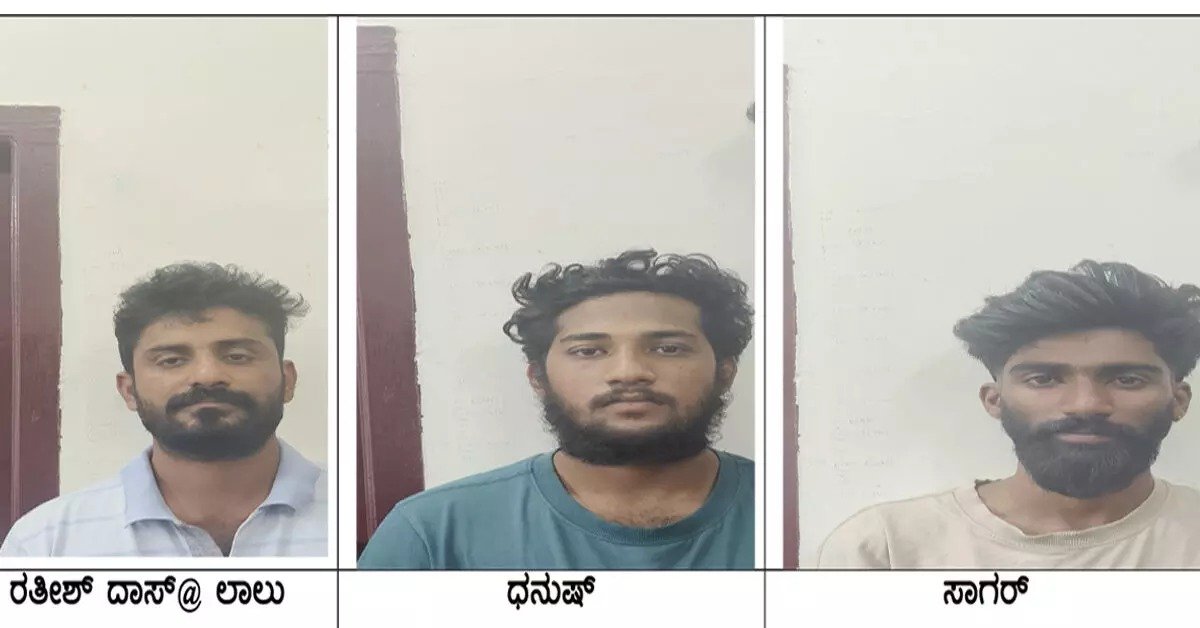
PREJUDICE, VIGILANTISM, AND POLICING CHALLENGES
The assault has brought renewed attention to the growing problem of identity-based vigilantism in urban and semi-urban spaces. Law enforcement officials have warned that no individual or group has the authority to question another person’s citizenship or legal status. Such actions, they stressed, amount to criminal offences and will be dealt with strictly. The Mangaluru police have reiterated that verification of identity is solely the responsibility of authorised agencies and not private citizens.
Civil society organisations have condemned the incident, calling it a dangerous manifestation of misinformation and xenophobia. Activists argue that migrant labourers, who form the backbone of construction, sanitation, and service sectors, are increasingly being targeted based on appearance, language, or region of origin. They warn that unchecked suspicion can quickly turn into violence, eroding social harmony and the rule of law. The Mangaluru incident, they say, is not an isolated case but part of a worrying national pattern.
Political reactions have also poured in, with leaders across party lines condemning the assault and welcoming the arrests. Several leaders urged the police to ensure a fast and transparent investigation to send a strong message against mob justice. They emphasised that Karnataka has a long tradition of coexistence and must not allow fear or misinformation to divide communities. Some leaders also called for awareness campaigns to educate the public about the legal consequences of taking the law into one’s own hands.
Police officials have acknowledged that social media plays a significant role in amplifying rumours and stereotypes. In this case, investigators are examining whether online misinformation contributed to the attackers’ suspicions. Authorities have cautioned citizens against sharing unverified content and warned that those spreading hate or inciting violence online could also face legal action. Cybercrime units have been instructed to monitor platforms more closely following the incident.
MIGRANT SAFETY AND THE ROAD AHEAD
The incident has reignited debate on the safety and dignity of migrant workers in Karnataka’s coastal regions. Mangaluru, a major commercial and educational hub, attracts labourers from several States, including Jharkhand, Odisha, Bihar, and West Bengal. While migrants contribute significantly to the local economy, they often remain socially invisible and vulnerable to exploitation or discrimination. Experts argue that stronger community integration and awareness are essential to prevent such incidents.
Labour rights advocates have urged the State government to strengthen mechanisms that protect migrant workers, including helplines, legal aid cells, and outreach programmes in multiple languages. They point out that many workers are unaware of their rights or fear approaching authorities due to job insecurity. Ensuring accessible support systems, they argue, would not only protect workers but also help law enforcement respond more effectively to abuse.
The police have stated that they plan to increase patrolling and community engagement in areas with a high concentration of migrant workers. Sensitisation programmes involving local residents, employers, and worker groups are also being considered. Officials believe that building trust between communities and the police is critical to preventing suspicion-driven violence. They have urged employers to maintain proper records and assist workers in accessing identification and welfare schemes.
Legal experts note that the arrests in this case are significant because they reinforce the principle that citizenship and identity cannot be policed by mobs. They stress that strong prosecution and timely convictions are essential to deter future incidents. If handled decisively, the case could serve as a precedent, reaffirming constitutional values of equality and dignity.
As the investigation continues, the Mangaluru assault stands as a sobering reminder of how quickly fear and prejudice can erupt into violence. The arrests may provide a measure of accountability, but restoring confidence among migrant communities will require sustained effort. For the city and the State, the challenge lies not only in punishing the guilty but in ensuring that no individual is ever again subjected to violence simply for being perceived as an outsider.
Follow: Karnataka Government
Also read: Home | Channel 6 Network – Latest News, Breaking Updates: Politics, Business, Tech & More
