
Siddaramaiah — the Chief Minister of Karnataka — sparked a swirl of political debate on December 2, 2025, after a video clip of him saying “politics is not permanent” went viral. The off-the-cuff remark — captured during a seemingly informal conversation as he left the state legislature — came amidst intense speculation about possible leadership changes within the ruling party. The statement instantly ignited speculation about his own political future and sent ripples through both public discourse and party corridors. What followed was a mixed response: affirmations of hard-earned humility from some quarters, and fresh waves of speculation about impending power shifts from others.
Over the next several hours and days, the comment dominated headlines, social media, and political speeches. For many, the words carried a sense of philosophical weight — a leader acknowledging the transient nature of power. For others, it signaled a possible acceptance of change or a subtle notification to colleagues and rivals: that no position was guaranteed. Given the timing of the remark — just days after the government completed half of its five-year term, and as factional tensions simmer within the party — the viral video took on many interpretations.
The Moment That Triggered a Storm
The controversy traces back to an informal exchange soon after a routine visit by Siddaramaiah and his deputy, DK Shivakumar, to each other’s homes — described as a breakfast meeting aimed at projecting unity amid swirling internal rumours. As Siddaramaiah emerged from the state assembly building, he was captured on camera speaking to a party colleague and reportedly said: “Whatever has to happen, let it happen. Is politics my father’s property? Politics is not permanent.”
Though the comment came in a casual tone, its timing and context added gravity. The ruling party has been under pressure after crossing the halfway mark of its five-year term, triggering speculation about a possible leadership reshuffle. Senior party members and analysts have long been watching for signs of whether the current CM will complete the full term or whether a transition to the deputy CM might be negotiated.
When the video went viral, it revived all those speculations. Some saw it as a candid expression of political realism — a reminder that power is temporary. Others read it as a heads-up about readiness to step aside, or as subtle pressure on the party high command to formalize a leadership change. The ambiguity of the situation amplified both curiosity and anxiety among observers, party cadres and voters alike.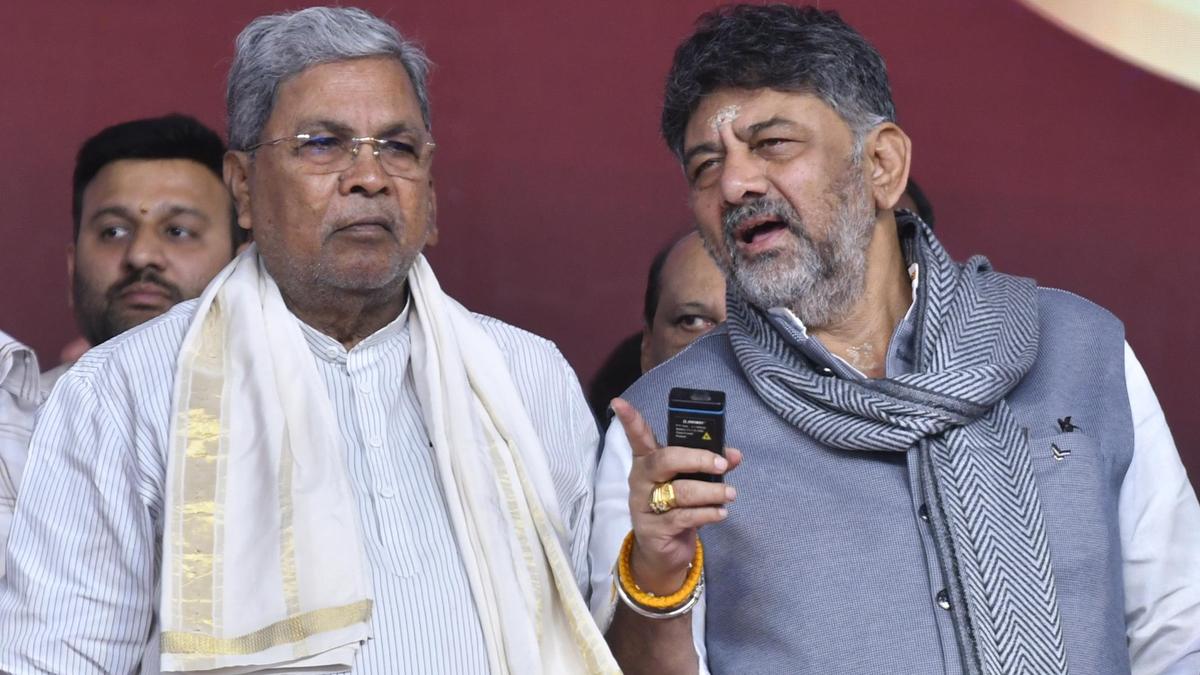
Meanwhile, the simultaneous show of camaraderie — the breakfast meet between Siddaramaiah and Shivakumar — added to the sense of orchestrated political communication: unity in appearance, while undercurrents of internal tension remained alive.
What It Means: Interpretations and Implications
Siddaramaiah’s words are being dissected on multiple levels: philosophical, political and personal.
A Humble Reminder about Power’s Impermanence
For many in public discourse, the remark reads like an honest admission of a basic truth: political power is fleeting. In a democracy, leadership shifts — election cycles, internal party decisions, public mandate — all contribute to constant flux. For a senior politician with decades in public life, acknowledging that “politics is not permanent” might reflect a sense of realism and readiness to accept change. It could also be offered as a message to younger politicians: that legacy and tenure aren’t guaranteed by lineage or loyalty.
Sign of Forthcoming Leadership Dynamics in Karnataka
Given the current context — internal discussions, past rumours of power sharing, and expectations within the party — the comment could mark the beginning of a formal leadership recalibration. Some perceive it as Siddaramaiah preparing the ground for a smooth transition, possibly to Shivakumar or another leader. The fact that the video emerged right after a friendly public display with the deputy CM gives credence to theories that this could be part of a broader strategy to manage internal dynamics while presenting unity externally.
A Signal to Congress High Command and Party Cadre
Within the party, such a statement can be seen as a nudge to higher leadership: either to acknowledge that generational change is due, or to pre-empt any dissent. It might also be aimed at calming internal tensions by showing that the CM himself is not clinging to power — potentially diffusing pressure from aspirants pushing for a change. The ambiguity leaves room for interpretation, making it a strategic statement rather than a definitive one.
Public Perception and Voter Expectations
For voters and the public, the remark can inspire both hope and uncertainty. On one hand, acknowledging impermanence may enhance trust in leaders who appear self-aware and realistic. On the other, speculation over instability or upcoming changes may create unease about governance continuity. In a state like Karnataka, with visible developmental and policy projects underway, political uncertainty might raise concerns.
Historical Context and Legacy of Siddaramaiah
Siddaramaiah is not new to leadership transitions or political turbulence. Over decades, he has served in multiple legislative and ministerial roles, weathering shifts in political fortunes and power alignments. His long innings in Karnataka politics — through alliances, elections, internal party power plays — have shaped his reputation as a seasoned, adaptive leader.
In the past too, Siddaramaiah has emphasized institutional processes over personal ambition. After the 2023 state assembly elections, when there was a tussle for the chief minister’s post between him and Shivakumar, the party high command intervened. Ultimately, Siddaramaiah assumed office while Shivakumar was made deputy CM in what many considered a compromise. Later, there was speculation about a planned rotation midterm, but the arrangement was never officially confirmed. Siddaramaiah had then repeatedly asserted his intent to complete a full five-year term.
His latest “politics is not permanent” comment thus comes not from a political novice, but from a seasoned veteran who knows the ebb and flow of power better than most. Whether it reflects fatigue, wisdom, strategy or emotional release remains unclear — but its resonance is unmistakable.
Reactions, Speculations, and Possible Outcomes
The viral comment has triggered a range of reactions — from within the party, from political analysts, and from public interest.
From Within the Party
Some senior leaders view the remark as harmless — a philosophical truth spoken in private — not necessarily indicative of a planned exit. Others see it as a subtle nudge to the central leadership, suggesting openness to change, and perhaps a way to manage pressure from aspirants. Party workers have reportedly expressed both relief (that the CM acknowledges the larger democratic cycle) and apprehension (uncertainty about stability and future leadership).
From Political Observers and Analysts
Analysts weigh this moment as significant. On one hand, it may usher in a negotiated transition, giving sufficient time for grooming successors and ensuring stability. On the other hand, the ambiguity may lead to internal jockeying if multiple aspirants begin to actively position themselves. The timing — midterm — could either be strategic calculus or a reflection of deeper fissures. Analysts also warn that premature speculation could destabilize governance or distract focus from administrative priorities.
Public and Voter Sentiment
For ordinary citizens, reactions have been mixed. Among some, the humility in the statement is appreciated — a rare moment of realism from a senior leader. For others, especially those invested in long-term policy continuity, the thought of political transition midterm is unsettling. There are concerns about possible disruptions in welfare schemes, governance, and administrative focus — especially given that the government’s second half still holds many developmental promises.
Possible Scenarios Ahead
-
No Change — Full Term Continuation
The comment may end up being dismissive rhetoric, and the CM might continue till the end of his five-year term, as previously asserted. This is plausible if the party high command reaffirms his leadership and seeks stability. -
Planned Transition — Deputy CM or Fresh Leadership
The remark could be setting the tone for a smooth transition midterm — possibly to the deputy CM or another senior leader — to balance party dynamics while retaining public confidence. -
Fresh Turbulence — Jockeying for Power
The ambiguity could embolden multiple aspirants, leading to internal contestation, instability, and short-term disruption in governance. -
Managed Reassignment or Role Change
Instead of a full CM change, there might be a reshuffle — new cabinet assignments, redistributed responsibilities — as a compromise to satisfy demands without replacing the top post.
Broader Implications for Politics in Karnataka and Beyond
The viral moment is more than just a remark; it reflects a larger reality of democratic politics — that leadership, power, and authority are transient.
In a system where power often extends through personal networks, family ties, and long-standing influence — such admissions of impermanence serve as a reminder of democratic accountability. If navigated well, this could encourage healthier internal party democracy and acceptance of leadership churn without bitterness.
It also brings to fore an important conversation: the balance between stability required for governance and dynamism necessary for political renewal. Frequent leadership changes can disrupt policy and administration. But on the flip side, long tenures can stagnate fresh ideas and reduce opportunities for emerging leaders. Statements like “politics is not permanent” might help build a culture where leadership is viewed as service rather than entitlement.
For a large state like Karnataka — with its social, economic, and cultural diversity — transitions in leadership matter immensely. They influence not just political equations but also governance priorities, welfare policies, administrative focus, and public confidence.
Conclusion: A Statement, A Stir, A Turning Point
Siddaramaiah’s simple yet powerful remark — “politics is not permanent” — has done more than stir debate; it has opened up a window into the fragility and fluidity of political power. Whether the comment will lead to change, or fade away as a moment of reflection, is uncertain. But its impact is already visible: renewed speculation, cautious optimism among some, and concern among others.
For now, the people of Karnataka watch and wait. The coming days — alliances, internal meetings, public statements — will determine whether this was a philosophical reflection or the first step in a transition of power. Either way, the moment underlines a truth inherent in democracy: nothing lasts forever, and change — whether quiet or dramatic — is always possible.
Follow: Karnataka Government
Also read: Home | Channel 6 Network – Latest News, Breaking Updates: Politics, Business, Tech & More
