
SIR Bengal Excess Voters 2025: West Bengal is once again at the centre of a massive electoral debate — this time not about campaign slogans or party symbols, but about the very authenticity of its voter list. A new demographic study has estimated that Bengal’s electoral roll contains over one crore excess voters, sparking a historic initiative by the Election Commission of India (ECI) known as the Special Intensive Revision (SIR).
The revelation has shaken political and administrative circles alike. While the ECI insists the process is a routine democratic correction, political analysts say the numbers hint at a far deeper issue — that of electoral integrity, inclusion, and public trust.
This article explores in depth what the SIR Bengal Excess Voters 2025 issue means — from the findings of the study to the human stories unfolding across the state’s villages, towns, and cities.
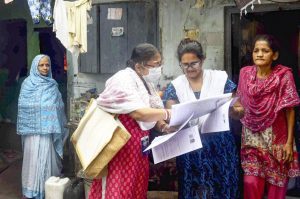
The Study That Sparked a Storm: Over One Crore Surplus Names in Bengal’s Voter List
The research that set off the discussion is titled “Demographic Reconstruction of Legitimate Voter Counts: An Estimate of Electoral Roll Inflation in West Bengal.” Conducted by data researchers and demographers using official Census datasets, the study examined how West Bengal’s registered electorate grew compared to its actual population dynamics over the last two decades.
Their conclusion was startling: West Bengal’s official voter count is about 13.7 percent higher than what demographic trends suggest should exist. Translating that figure into absolute numbers, the report claims at least 1.04 crore excess voters may currently be listed on the rolls.
Researchers used Census 2001 and 2011 data, survival rates from national health statistics, birth-rate adjustments, and migration estimates to reconstruct how many individuals should be alive and eligible to vote in 2025. The outcome, they said, shows “an urgent need for large-scale roll correction and validation.”
The study cautions that these excess entries could include deceased individuals still listed, duplicate names, migrants who moved out of the state, or records not properly updated for years.
Such anomalies are not entirely new — in previous national audits, states like Bihar and Madhya Pradesh also found inflated rolls — but Bengal’s numbers are exceptionally high.
“If one crore names on a voter roll of about 7.6 crore are inaccurate, that’s not a statistical error — that’s a structural crisis,” one of the researchers explained.
Why the Election Commission Launched the SIR in West Bengal
To address the issue, the Election Commission of India approved a Special Intensive Revision (SIR) — a rigorous door-to-door enumeration and verification exercise last carried out in Bengal in 2002.
The SIR is not just another routine update. It involves:
- Physical verification of every voter through Booth Level Officers (BLOs).
- Cross-checking names with the 2002 electoral roll baseline.
- Identification of duplicates, deceased, or migrated individuals.
- Fresh inclusion of legitimate voters who were previously unregistered.
Officials say the goal is to produce a “transparent and error-free roll” before the 2026 Assembly elections.
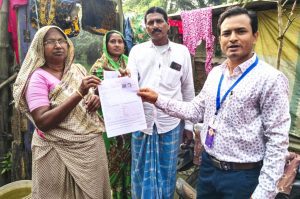
The Chief Electoral Officer (CEO) of West Bengal has clarified that the SIR’s aim is “correction, not exclusion.” The office has set up grievance counters, online verification portals, and district-level monitoring teams to ensure transparency.
For more on SIR procedure, refer to the Election Commission of India and Wikipedia – Electoral Roll Revision in India.
Inclusion vs. Exclusion: The Human Impact of the Revision
The SIR Bengal 2025 process has become not only a data exercise but a deeply human story.
For many residents, especially in rural and semi-urban areas, the process has triggered both confusion and concern.
- Elderly citizens fear being removed if they cannot provide proof of being on the 2002 voter roll.
- Migrant workers worry that their temporary absence or change of residence may lead to deletion.
- Daily-wage labourers, domestic workers, and homeless citizens often struggle with documentation, raising risks of wrongful exclusion.

A retired teacher from Birbhum explained:
“We want clean rolls. But the process must be humane. People without papers should not lose their right to vote.”
The ECI has assured that no legitimate voter will be excluded. Voters who cannot locate their names in the older lists are being allowed to submit self-declarations and alternative IDs. However, civil society groups stress that adequate public awareness campaigns are crucial to prevent fear and misinformation.
The Political Dimension: Competing Narratives Over the Numbers
In Bengal, where politics runs through every street and adda, even a technical administrative step can ignite debate.
The state’s ruling and opposition parties have sharply divergent interpretations of the SIR Bengal Excess Voters 2025 exercise.
- The ruling party claims that the ECI’s move may be politically motivated, possibly used to “target” certain demographic pockets.
- The opposition, on the other hand, argues that “fake voters” and “bogus entries” have distorted Bengal’s electoral balance for years.
Both sides have mobilized volunteers to help voters verify their inclusion in the ongoing revision. Political analysts observe that the discourse has shifted from governance to legitimacy — a rare situation where voter lists themselves dominate headlines.
SIR Bengal Excess Voters 2025: Statistical Gaps and Demographic Anomalies
Demographers point out that voter inflation can happen for multiple reasons:
- Out-migration — Bengal has seen lakhs of people move to other states or countries for work, but their voter registrations often remain active.
- Low death registration rates — If deceased citizens’ names are not updated in civil databases, their voter entries persist.
- Duplicate entries — Sometimes voters register from both ancestral and current addresses.
- Administrative delay — Lack of synchronization between district records and ECI’s master database.
According to the Census of India, Bengal’s population growth rate between 2011 and 2021 was about 10.3 percent, but the voter roll grew at nearly 19 percent, suggesting a statistical mismatch. (Census of India)
Experts say cleaning up this mismatch is essential for democratic credibility. As one election scholar put it,
“Democracy depends on trust. When the basic roll itself is questioned, everything else — from campaigns to results — becomes suspect.”
Ground-Level Challenges: BLOs, Forms, and Public Confusion
The logistical scale of the SIR drive is immense. Over 80,000 Booth Level Officers (BLOs) are conducting verification across 42,000 polling stations. Each officer carries enumeration forms requiring voters to list previous family details, old addresses, and proof of residence.
While technology — such as QR-coded forms and online verification portals — is helping, the ground reality remains complex.
Reports from several districts indicate:
- Shortage of printed forms in some areas.
- Misinformation among elderly voters about the purpose of verification.
- Long queues at local offices for corrections or document submissions.
Still, many voters express optimism that the process, if done transparently, can finally fix long-standing roll issues.
Balancing Accuracy with Accessibility
The Election Commission faces a delicate balance. On one hand, it must remove non-existent or duplicate entries; on the other, it must protect every legitimate citizen’s right to vote.
Civil society organizations like voter rights forums and educational NGOs have urged the ECI to adopt a “human-centred approach.”
Key recommendations include:
- Simplifying form instructions in Bengali, Hindi, and Nepali languages.
- Increasing public announcements via community radio and local panchayats.
- Allowing more flexible document options for the elderly and low-income citizens.
- Regular publishing of revision data for transparency.
If executed well, the SIR Bengal Excess Voters 2025 could become a national benchmark for electoral reform.
Expert Voices: Why Accurate Voter Lists Matter
Electoral experts underline three key reasons why voter-list accuracy is critical:
- Prevents Fraud and Misuse: Inflated rolls create opportunities for impersonation or misuse of unused ballots.
- Ensures Fair Representation: Constituency populations are defined by voter numbers; inflated data can distort seat allocation.
- Builds Public Trust: Transparent processes restore faith in democratic institutions and reduce post-election disputes.
India’s Election Commission, often praised for its institutional integrity, has been working toward digitizing electoral databases and linking voter IDs with demographic information — a reform also recommended in the Law Commission of India’s 255th Report on electoral integrity. (Law Commission of India)
Historical Context: Bengal’s Legacy of Electoral Reform
West Bengal has a long and intense electoral history. From the early years of communist governance to the post-2011 shifts, voter registration has always been both a bureaucratic and political exercise.
The last Special Intensive Revision in 2002 was itself controversial, with similar concerns about missing voters. Over two decades later, technology, population change, and political competition have magnified the scale of the challenge.
Political historians note that Bengal’s dense population, migration patterns, and urban expansion make roll accuracy more complex than in many other Indian states.
Technology and the Future of Electoral Data in India
The current SIR exercise is also serving as a test case for future digital integration. The Election Commission plans to use:
- Geotagging of polling booths
- AI-assisted duplicate detection algorithms
- Blockchain-based voter verification prototypes (in pilot stage)
If successful, Bengal’s SIR could set a precedent for data-driven roll verification across India, aligning with the country’s broader Digital India initiative. (Digital India Portal)
What Citizens Can Do: A Voter’s Checklist
Every voter can take part in ensuring the accuracy of the list. Here’s how:
- Visit the National Voters’ Service Portal (NVSP).
- Verify if your name appears correctly in the roll.
- Contact your Booth Level Officer for corrections if discrepancies are found.
- Submit a Form-6 for new registration or Form-8 for correction.
- Keep identity proofs ready — EPIC, Aadhaar, or any government-issued ID.
The ECI’s official voter helpline app also allows you to track your status digitally.
The Broader Democratic Implication
The debate around the SIR Bengal Excess Voters 2025 goes far beyond West Bengal. It touches on the foundational question of how democracies maintain legitimacy.
Every vote counts, but only if every name on the list represents a real, living citizen. When lists become bloated or inaccurate, faith in the process suffers.
A transparent, citizen-friendly revision can therefore strengthen not just Bengal’s democracy but India’s entire electoral ethos.
“Cleaning the rolls is not about deleting names — it’s about defending the principle that every legitimate voter matters equally,” said a retired election commissioner.
Conclusion: A Chance to Rebuild Trust
The SIR Bengal Excess Voters 2025 initiative represents both a challenge and an opportunity. A challenge because it risks confusion and politicization; an opportunity because it can reestablish confidence in one of the world’s largest democratic exercises.
If executed transparently, the revision can become a landmark in electoral reform, aligning Bengal’s voter roll with its true demographic reality. But if it falters, it could deepen divisions and distrust.
In the end, the success of the SIR will not be measured merely by the number of names deleted or added — but by whether Bengal’s citizens believe, once again, that their democracy is fair, inclusive, and credible.
🔗 External Reference Links (Informational & Verified Sources Only)
- Election Commission of India – Official Portal
- National Voters’ Service Portal
- Census of India – Official Data
- Law Commission of India – Electoral Reforms Reports
- Digital India Initiative
- Wikipedia – Electoral Roll (India)
Also read: Home | Channel 6 Network – Latest News, Breaking Updates: Politics, Business, Tech & More
