
The sudden cancellation of an IndiGo flight left newlyweds Arjun and Meera devastated on what was meant to be one of the most memorable days of their lives. Scheduled to fly from Bengaluru to Hubballi to attend their wedding reception, the couple arrived at the airport full of excitement and expectation. However, the abrupt announcement that their flight had been cancelled due to operational issues forced them into an unexpected crisis. As the minutes passed and alternative arrangements fell apart, the reality of missing their own reception began to sink in, turning joy into helpless disappointment.
Family members in Hubballi had already begun preparations for the reception, unaware of the trouble unfolding hundreds of kilometres away. Decorations were being arranged, guests had started gathering, and the atmosphere was buzzing with anticipation. Meanwhile, Arjun and Meera scrambled from counter to counter at the Bengaluru airport, pleading for answers and searching for any available alternative flight. Their efforts led nowhere, as they were informed that no seats were available for the rest of the day. The helplessness of the situation made each passing moment more painful for the couple.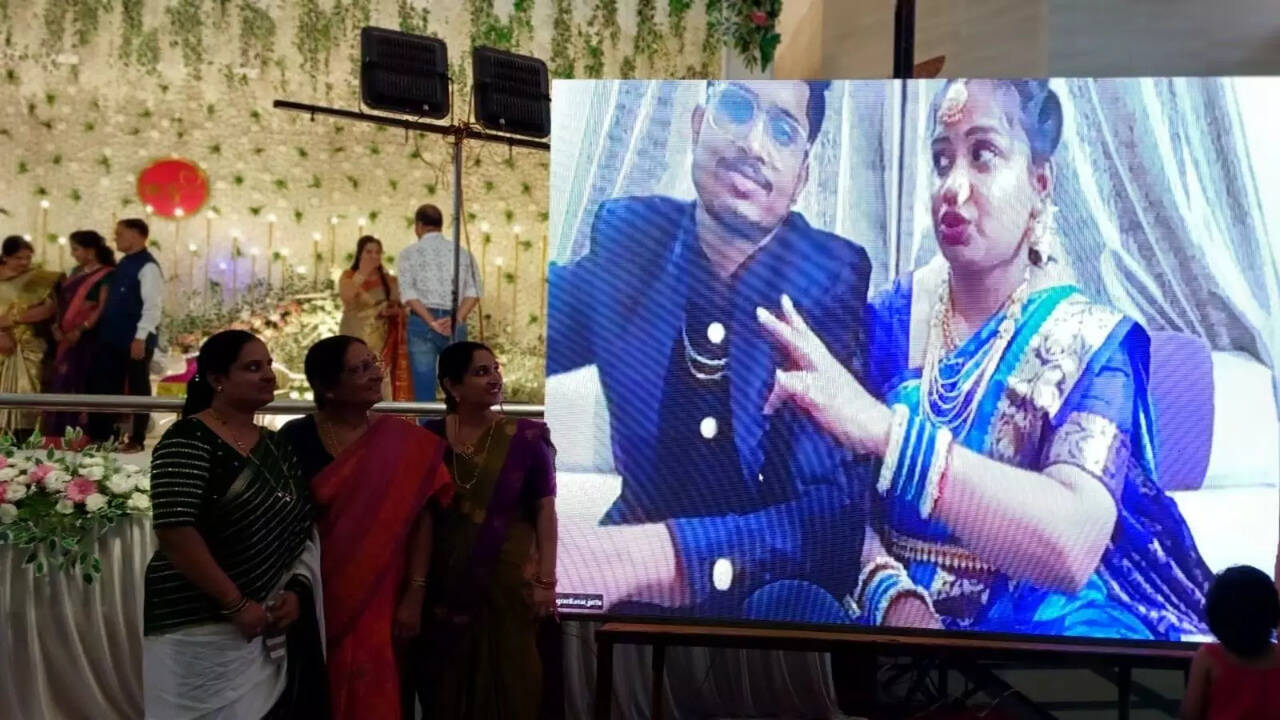
Their families anxiously called for updates, hoping for some miracle that would allow the couple to reach Hubballi on time. But as the airline staff repeated the same lines about operational disruptions and unavailable seats, it became clear that the reception would continue without them. What should have been an evening to remember became a moment of overwhelming frustration, emotional distress, and unavoidable distance. Their relatives tried to stall proceedings, but with guests already arriving in large numbers, delaying the event further became nearly impossible.
Arjun and Meera eventually returned to a nearby accommodation, exhausted and heartbroken. Knowing they could not physically attend the reception, they hurriedly set up a laptop to join the event virtually. The sight of guests milling around the decorated hall, captured through a shaky mobile camera, made the moment even more surreal. The couple sat in their wedding attire, looking into a screen instead of stepping onto the stage they had imagined for months. Emotional greetings poured in from relatives, but the absence of physical presence weighed heavily on them.
Their appearance on the projector screen drew applause from the crowd back in Hubballi, yet the celebration felt hollow for the newlyweds. The sound lag, the blurred visuals, and the inability to interact freely made the moment painfully detached. They watched as loved ones gathered for group photos, lined up to greet them, and took part in rituals that the two could only participate in through fragmented video calls. What should have been an evening of handshakes, hugs, and blessings became a distant, pixelated version of happiness.
The disappointment grew stronger as relatives attempted to comfort the couple through the screen, urging them to smile and make the best of the situation. But Meera’s expression revealed how difficult it was to cope with the emotional loss. Photographers shifted their cameras toward the stage, capturing pictures that would forever be incomplete without the bride and groom. The couple could only look on helplessly, silently grieving the moment they had dreamed of, planned for, and waited to experience. No virtual connection could replicate the significance of appearing before their loved ones in person.
A Day Unravelled by Operational Failure
Even after the virtual reception ended, the couple struggled to accept what had happened. They contacted IndiGo’s customer service in hopes of receiving some explanation or form of compensation. However, they were merely directed to apply for refunds online, with no gesture of accountability or empathy from the airline. Other passengers facing similar cancellations voiced their frustration as well, describing a lack of clear communication and minimal support from airport staff. The cancellation had sparked widespread irritation, but for Arjun and Meera, it had damaged an irreplaceable moment.
In Hubballi, relatives attempted to salvage the evening by taking extra photos, recording video messages, and sending voice notes to the couple. But nothing could hide the emptiness created by their absence. Guests exchanged conversations tinged with shock and sympathy, expressing disbelief that an airline cancellation could disrupt such a significant event. The incident also sparked discussions about the increasing frequency of last-minute flight cancellations across domestic routes. Many questioned whether stricter regulations and accountability measures were needed to protect passengers from such distress.
Arjun and Meera flew to Hubballi the next day, but the moment had already passed. When they visited the reception hall, the decorations were gone, chairs were stacked, and the atmosphere was cold and silent. Relatives who had stayed back tried to console them, offering reassurances and apologies that could not fill the emotional void they carried. The couple walked around the empty space imagining how the reception might have looked, but all they had were mental pictures and fragments of a celebration experienced only through a screen.
The emotional impact followed them long after the lights dimmed in the reception hall. For days, the couple revisited what happened, replaying the virtual recording and messages from their loved ones. Each time they watched the footage, the sense of loss deepened. What hurt most was not the money spent, the decorations dismantled, or the food wasted, but the unforgettable moment lost forever. Wedding receptions are meant to be lived, felt, and cherished in person. The stolen experience left behind only a void—heavy, painful, and deeply personal.
Family members back in Bengaluru and Hubballi expressed anger over the airline’s handling of the situation. They pointed out that last-minute cancellations without proper alternative arrangements are not just logistical inconveniences but emotional upheavals that disrupt milestones in people’s lives. The couple’s parents attempted to reason with airline officials, but every interaction ended with routine statements about operational disruptions. The lack of clarity on the specific reason behind the cancellation only added to the frustration.
Many guests felt that airlines should be more transparent about disruptions that affect special events. Some suggested that passengers facing critical occasions should be prioritized for rebooking. Others argued the need for compensation that reflects not just monetary loss but emotional damage. These discussions continued for days, spreading among family circles, community groups, and social conversations. For Arjun and Meera, however, nothing could change the fact that their wedding reception had unfolded without them—the ultimate heartbreak.
A Larger Question About Passenger Rights
As the incident gained attention among those who witnessed the aftermath, questions arose about the broader issue of passenger rights in India. With flight cancellations becoming increasingly frequent, travellers often find themselves left alone to deal with the consequences. Emotional distress, financial loss, and disruptions of important milestones are rarely addressed by airlines. Arjun and Meera’s story became a striking example of how an operational failure can create a ripple effect that touches lives far beyond the airport terminal.
Experts have pointed out that while operational disruptions are sometimes unavoidable, airlines must adopt better communication practices. Timely alerts, clearer explanations, and immediate rebooking support could significantly reduce the stress experienced by passengers. In situations involving major life events, airlines could explore offering priority options or flexible alternatives. These improvements, though seemingly minor, could prevent emotional tragedies like the one faced by the newlyweds. Public sentiment has increasingly leaned toward demanding higher accountability.
Arjun and Meera have chosen to remain composed despite their heartbreak, but they acknowledge that the memory of what happened will linger for years. Their wedding album will always feel incomplete without photographs from the reception. The emotional toll has left them cautious about future travel, especially with the same airline. They hope that their experience will prompt airlines to treat passengers not as ticket numbers, but as people whose lives can be deeply affected by operational decisions.
In the days that followed, the couple’s families arranged a small private gathering to recreate some of the rituals. Although heartfelt, the experience lacked the magic and scale they had originally planned. Arjun and Meera participated with sincere smiles, but beneath their expressions lay the weight of what had been lost. The recreated celebration was meaningful, but it could never replicate the grandeur and emotional energy of the original event. The family accepted this with quiet sadness, cherishing what little they could salvage.
The couple has since returned to Bengaluru, resuming their daily routines with the emotional heaviness of the incident still present. Their story has become a reminder of how fragile important moments can be and how deeply they depend on systems functioning as they should. While the world moves on, the memory of their disrupted reception remains etched in their hearts. For them, the incident is not just about a cancelled flight, but about a milestone stolen by circumstances beyond their control.
Arjun and Meera believe that sharing their experience may help others understand the impact of sudden cancellations. They hope their story encourages airlines to reconsider their approach to handling major disruptions. Whether through better planning, improved customer support, or more empathetic responses, changes are needed. They also remind other couples to plan additional buffer time whenever flights are involved in wedding logistics. Their message, though painful, is rooted in the desire to prevent others from facing similar heartbreak.
Even now, when they talk about their wedding day, their voices soften when the topic of the reception comes up. They acknowledge the love and support they received but cannot deny the sense of emptiness that overshadows the memory. They look forward to building new moments together, hoping future experiences will help heal the emotional void left behind. Yet the wound remains tender, a stark reminder of how one airline disruption can alter the emotional landscape of one of life’s most significant celebrations.
As the incident continues to spark conversation about accountability, the couple remains hopeful that future passengers will not face similar distress. The situation serves as a call for systemic improvements, greater sensitivity, and the recognition that behind every flight booking lies a human story. Arjun and Meera’s experience stands as a powerful example of how deeply travel disruptions can affect people’s lives, and why better safeguards are essential. For now, they carry forward with resilience, holding on to the hope that time will soften the memory of their unexpected heartbreak.
Follow: Karnataka Government
Also read: Home | Channel 6 Network – Latest News, Breaking Updates: Politics, Business, Tech & More
