
Mandya has emerged as a pivotal district in India’s national strategy to achieve 20% ethanol blending with petrol, a target the Centre views as essential for reducing crude oil imports, cutting carbon emissions, and strengthening the agricultural economy. According to S.E. Sudheendra, Executive Director of the National Sugar Institute and one of the country’s leading voices in ethanol research, Mandya’s unique agricultural ecosystem positions it as a potential game changer. The district’s rich sugarcane belt, expanding distillery capacity, and increasing interest from cooperative mills form the backbone of this strategic energy transition.
The ethanol-blending target, officially termed “E20,” is not just an energy policy but a multi-layered economic intervention aimed at empowering farmers while decentralising India’s fuel supply chain. By eliminating significant volumes of imported fossil fuels, the government plans to rechannel revenue into domestic industries. Sudheendra noted that Mandya’s historical association with sugarcane cultivation gives it a natural advantage, particularly at a time when both private and cooperative mills in Karnataka are enhancing their production lines to shift toward dual-output models, producing both sugar and ethanol simultaneously.
Mandya’s Agricultural Strength
Mandya’s fertile plains have long been recognised for their high-yield sugarcane fields, supported by the extensive KRS dam irrigation network. This solid agricultural foundation is now fueling a new economic narrative. Ethanol production is heavily dependent on feedstock availability, and the uninterrupted supply from Mandya’s fields gives the region an inherent stability unmatched by many other districts. Sudheendra highlighted that consistent cane output, combined with farmers’ readiness to adopt modern cultivation practices, gives Mandya the capacity to support large-scale ethanol production sustainably without jeopardising food security or water resources.
Another significant advantage lies in the district’s milling patterns. Several sugar factories, particularly cooperative institutions, have been quick to embrace the ethanol-centric model encouraged by national policies. This involves flexible production systems that shift between sugar, jaggery, and ethanol depending on market demand and government incentives. Mandya’s factories were among the first to pilot this integrated model successfully. This transition not only strengthens the ethanol supply chain but also protects farmers from volatile sugar prices, ensuring they receive steadier incomes throughout the year.
The National Context
India’s 20% blending target is ambitious, requiring coordinated efforts from states, industries, and agricultural bodies. Sudheendra explained that Karnataka is already one of the top ethanol-producing states in the country, thanks to progressive policies, cooperative structures, and strong governmental support. Despite this, bridging the gap between current levels and the E20 target will require additional investments in distillery capacity, technological upgrades, and logistical networks. Mandya’s encouraging trends make it an ideal blueprint for scaling up the model to other regions, such as Belagavi, Bagalkot, and Vijayapura, where sugarcane production is equally extensive.
The Union government has emphasised that ethanol blending is not merely a fuel adjustment but an important environmental intervention. Ethanol burns cleaner, reduces vehicular emissions, and plays a vital role in meeting India’s carbon reduction commitments. With increasing urban pollution challenges, states like Karnataka have an opportunity to lead in both agricultural reform and environmental responsibility. Sudheendra believes that Mandya’s progress strengthens Karnataka’s claim as a national ethanol hub, aligning with the state’s broader energy-investment strategies and green transition goals.
Economic Advantages for Farmers
Ethanol production offers farmers a reliable alternative revenue stream. Traditional sugar mills often delay payments due to fluctuating sugar prices, leaving farmers financially vulnerable. However, ethanol procurement is governed by centrally fixed rates, ensuring timely payments and reducing dependence on international sugar markets. Sudheendra pointed out that Mandya farmers have begun to see the benefits of this model, particularly in seasons when sugar production exceeds market demand. The steady ethanol market helps stabilise agricultural incomes, creating a more predictable economic environment for farmers.
Mandya’s deeper integration into the ethanol ecosystem has also encouraged farmers to modernise their cultivation practices. High-yielding cane varieties, water-efficient drip irrigation techniques, and mechanised harvesters have become increasingly common. These improvements boost production while reducing labour costs and water consumption. Sudheendra emphasised that such practices are essential not only for meeting national blending targets but also for ensuring long-term sustainability. Farmers’ active participation in technological advancements reinforces Mandya’s role as a critical agricultural innovation hub.
Expanding Industrial Infrastructure
While Mandya is already home to several operational sugar factories, recent policy changes have encouraged mills to establish stand-alone or annexed distilleries to boost ethanol production. These expansions require significant capital investment, but government incentives, including interest subvention schemes and soft loans, have accelerated the process. Sudheendra noted that Mandya’s cooperative institutions, known for their strong leadership and community participation, are well-positioned to adopt new processing lines. Their success has also attracted private sector interest, setting the stage for future industrial diversification.
In addition to production, logistics will play a major role in meeting the E20 mandate. Karnataka requires expanded storage systems, improved transportation pipelines, and enhanced fuel-mixing facilities. Mandya’s central location within the state gives it a logistical advantage, enabling easy distribution to larger markets like Bengaluru, Mysuru, and Mangaluru. Sudheendra stressed the importance of developing regional ethanol distribution hubs that reduce transport costs and streamline blending operations. With Mandya emerging as a key hub, the district may soon become a cornerstone of South India’s ethanol corridor.
Environmental Sustainability
Ethanol production has sometimes faced criticism over water consumption and monocropping concerns. However, Sudheendra argued that Mandya’s large-scale irrigation infrastructure mitigates these risks. He emphasised ongoing research into alternative feedstocks such as maize, sweet sorghum, and agricultural residues. Once these secondary feedstock chains mature, ethanol production will no longer depend exclusively on sugarcane. This diversification will further strengthen India’s ability to maintain high blending percentages throughout the year, even during periods of low cane availability.
Mandya’s participation in environmental innovation extends beyond feedstocks. Several mills have adopted zero-liquid-discharge systems, recycling wastewater for industrial use. Bagasse, the fibrous by-product of crushed cane, is increasingly being used for green energy, supplying power to factories and nearby villages. Sudheendra explained that such initiatives reinforce the government’s circular economy goals. Mandya, with its combination of agricultural consistency and industrial accountability, offers a sustainable model that other districts can emulate as India expands its biofuel infrastructure.
Role of State and Central Policies
Government policies have played a decisive role in shaping the ethanol economy. The Centre’s Ethanol Blended Petrol Programme, coupled with Karnataka’s supportive industrial policies, has created a conducive environment for investment. Mandya, being a politically significant district and a historical sugar hub, has benefited from these developments. Sudheendra noted that coordinated policymaking between the Union and State governments is essential for scaling production and achieving the 20% target on schedule.
One key policy advantage is the guaranteed purchase price for ethanol, which ensures predictable mill revenues. Equally important are subsidies for establishing distilleries, tax concessions, and reduced interest rates. Karnataka has also encouraged technological modernisation and research partnerships with institutions such as the National Sugar Institute and agricultural universities. Mandya’s factories frequently participate in these programmes, adopting energy-efficient equipment and exploring new processing techniques. Such initiatives create a competitive ecosystem that supports long-term industry growth.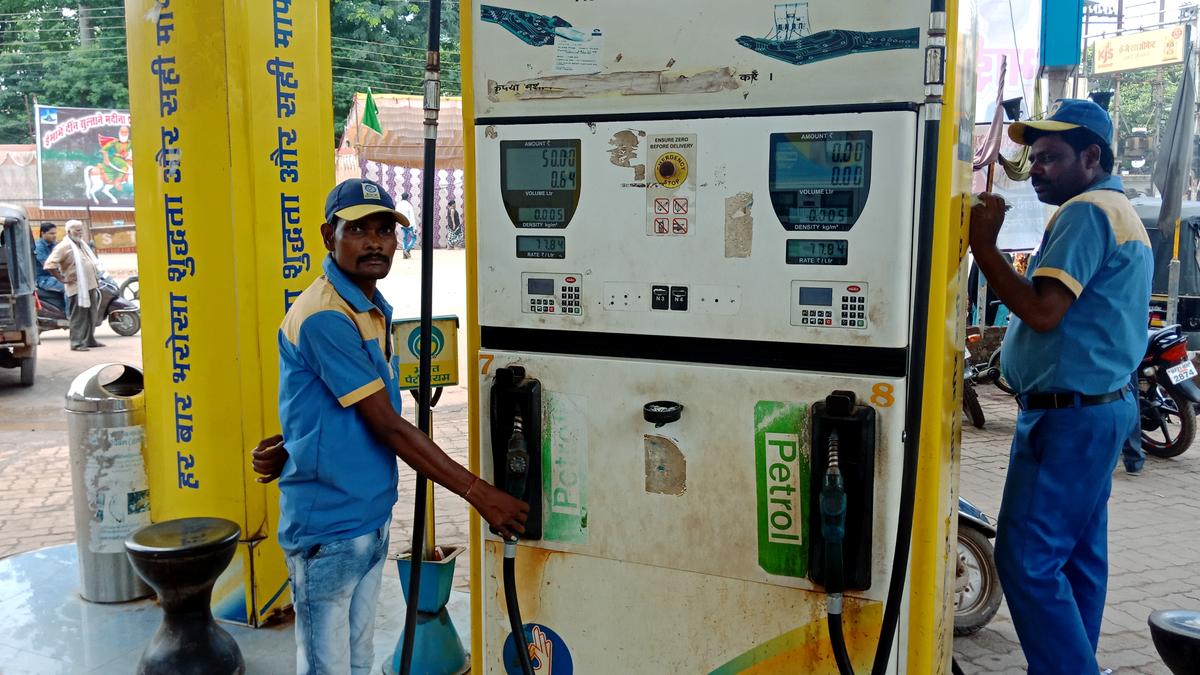
Challenges Ahead
Despite the optimism, Mandya faces several operational and structural challenges. Sudheendra acknowledged that not all mills possess the necessary capital to upgrade facilities, and smaller factories may struggle to remain competitive in the evolving ethanol landscape. There are also supply chain challenges, including the need for more tanker fleets, safety systems, and skilled workers to manage increased blending operations. Addressing these gaps will require continued government support and private sector collaboration, particularly in training and infrastructure.
Another concern is maintaining farmer enthusiasm. While ethanol offers stable returns, farmers must consistently meet supply and quality benchmarks. Extreme weather events, water shortages, and rising input costs could impact cane output, affecting the ethanol pipeline. Sudheendra emphasised the importance of long-term resilience strategies, including drought-resistant cane varieties, multi-crop systems, and precision farming tools. Mandya’s future success will depend on its ability to balance opportunity with preparedness, ensuring that both farmers and industries remain aligned with national goals.
Conclusion
Mandya’s role in India’s quest for 20% ethanol blending is both symbolic and strategic. It represents the intersection of agricultural heritage, industrial innovation, and national energy security. With farmers adapting to new economic possibilities, mills investing in modern distilleries, and researchers guiding sustainable transitions, Mandya stands at the heart of India’s biofuel revolution. Sudheendra’s assertion that Mandya is “key” to achieving the E20 target is not just an observation but a recognition of the district’s unique strengths. As India accelerates its shift toward cleaner, domestically produced fuels, Mandya is poised to lead the transformation with confidence and resilience.
Mandya’s role in India’s quest for 20% ethanol blending is both symbolic and strategic. It represents the intersection of agricultural heritage, industrial innovation, and national energy security. With farmers adapting to new economic possibilities, mills investing in modern distilleries, and researchers guiding sustainable transitions, Mandya stands at the heart of India’s biofuel revolution. Sudheendra’s assertion that Mandya is “key” to achieving the E20 target is not just an observation but a recognition of the district’s unique strengths. As India accelerates its shift toward cleaner, domestically produced fuels, Mandya is poised to lead the transformation with confidence and resilience.
Follow: Karnataka Government
Also read: Home | Channel 6 Network – Latest News, Breaking Updates: Politics, Business, Tech & More
