
Kalaburagi witnessed an intense outpouring of frustration on Tuesday as scores of red gram farmers dumped their produce on the road, protesting the continued delay in securing Minimum Support Price and adequate relief from the government. The incident unfolded near key market routes where farmers gathered in large groups, expressing deep disappointment over price crashes and prolonged administrative silence. Their act of dumping red gram symbolised both desperation and defiance, drawing attention to a crisis they say has been worsening with each passing week. Many described the protest as a last resort, taken only after repeated appeals failed to bring urgent intervention.
For months, red gram growers in the region have been facing plummeting prices at procurement centres, with market rates falling far below the declared MSP. Farmers argue that despite assurances from State and central authorities, procurement has moved at an unbearably slow pace. Several protestors stated that officials had not set up adequate purchase counters, forcing them to sell their produce to middlemen at distress prices. The situation, compounded by erratic rainfall and high input costs, has pushed many farmers into a financial corner. Their demand is simple: immediate procurement at MSP without procedural hurdles that leave them waiting for days.
Farmers say this year’s red gram harvest has been particularly challenging due to repeated crop damage from unseasonal rains in parts of Kalaburagi and surrounding districts. Many incurred losses while attempting to salvage what remained of their fields. As procurement delays dragged on, they grew increasingly anxious. The protest, therefore, represented an emotional and economic breaking point. Several farmers expressed concern that without quick government action, the region could see a rise in debt, migration, and long-term livelihood insecurity. They have urged authorities to view the crisis with seriousness rather than routine administrative caution.
Leaders of farmer organisations emphasised that red gram is one of the most important crops in Kalaburagi, often referred to as the “pigeon pea district” due to its large-scale cultivation. They pointed out that MSP failures strike particularly hard in this region, where thousands rely almost entirely on the crop for annual income. They criticised procurement agencies for inefficiency, alleging that farmers often wait in queues for hours without clarity on when their produce will be accepted. Many said the system forces them into distress selling, which defeats the purpose of MSP as a safety mechanism.
Local market observers indicated that the price drop has been driven partly by oversupply in certain mandis and delays in central purchase allocations. However, farmers argue that this volatility is precisely why MSP must be enforced strictly. They say that without guaranteed procurement, farming becomes an unpredictable gamble that small and marginal farmers cannot sustain. Many protestors raised slogans demanding immediate market intervention, loan waivers, and compensation for losses. The atmosphere at the protest site was charged, with tempers flaring as farmers recounted experiences of financial stress and unmet promises.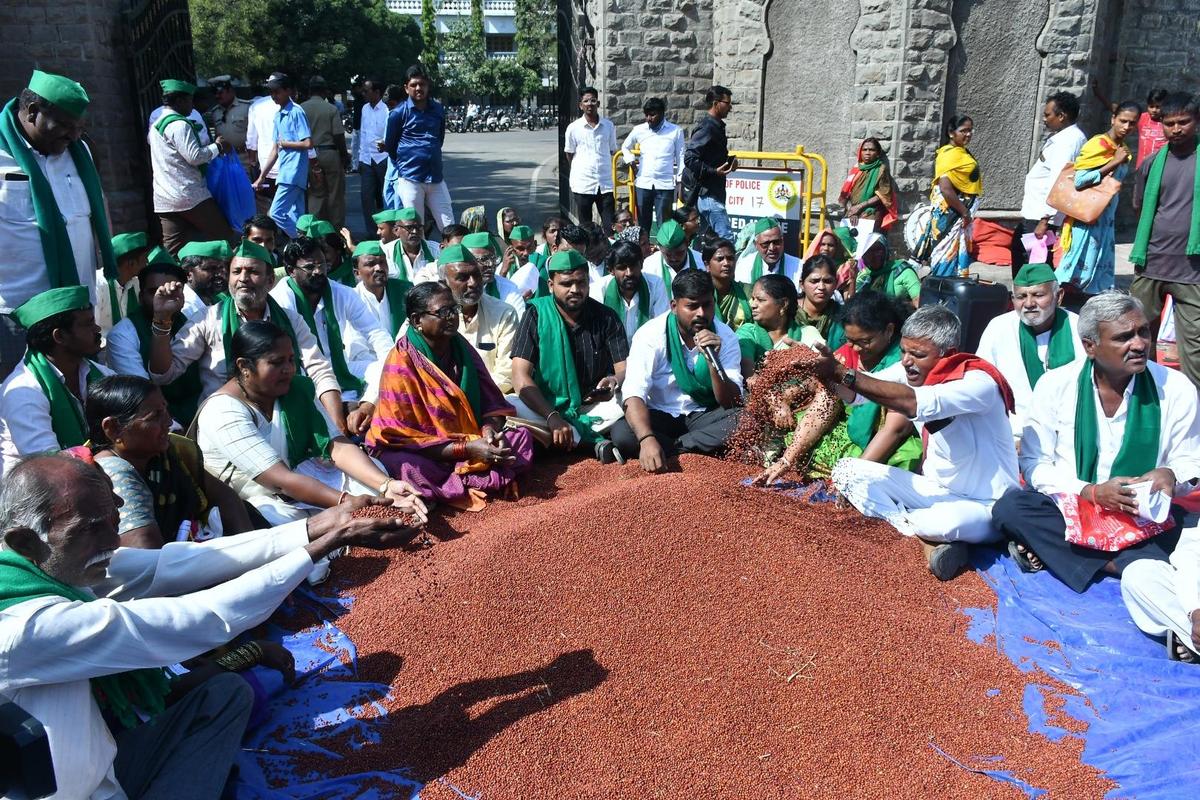
A Growing Crisis Fuelled by Procurement Gaps
Officials from the Agriculture Department acknowledged that procurement has been slower than expected but insisted that measures are underway to accelerate operations. They cited logistical challenges, limited storage space, and procedural audits as reasons for delays. Farmers, however, reject these explanations, arguing that administrative preparedness should have been in place well before harvest season began. They allege that the same pattern repeats every year, leading to preventable disruptions that erode trust. Several leaders accused authorities of treating farmers only as statistics, rather than stakeholders who rely on timely support.
Activists following the issue said the current crisis highlights deeper structural deficiencies in the region’s agricultural supply chain. They argue that Kalaburagi and neighbouring districts require more procurement centres, better warehousing, and transparent digital systems to prevent corruption and delays. Some pointed out that while MSP announcements generate positive headlines, the real test lies in execution, where inconsistencies remain common. Farmers have urged the government to decentralise procurement, expand market yards, and deploy more staff during peak seasons to prevent long queues and wastage.
The protests also brought attention to the rising cost of cultivation. Farmers stated that fertilisers, labour, and equipment rentals have all become significantly more expensive. In such a scenario, selling red gram below MSP results in direct losses. Many described this year as particularly harsh, with increased borrowing from private lenders at high interest rates. Without immediate intervention, they fear being trapped in a cycle of debt that could push many out of farming altogether. The emotional undertone of the protest was evident as farmers spoke about the pressure on their families and the uncertain future facing younger generations.
Local political representatives visiting the protest site expressed solidarity but faced questions about the lack of concrete action. Farmers demanded timelines, official notifications, and on-ground accountability rather than statements of support. They urged elected leaders to push both State and central governments for coordinated intervention. Many criticised the frequent delays in transferring procurement payments, stating that even when their produce is finally purchased, payments can take weeks to reach their accounts. This lag adds to their financial tensions during crucial periods of the agricultural cycle.
The police maintained a visible presence during the protest to ensure order. Authorities allowed farmers to express their grievances without interference, acknowledging the seriousness of the situation. Traffic disruptions occurred at several points due to the dumped red gram, but local officers moved quickly to manage movement and prevent escalation. By the afternoon, negotiations began between farmer representatives and district administrators. Though discussions remained inconclusive, officials promised to forward the demands to the higher authorities and take corrective measures at procurement centres.
The Demand for MSP Enforcement Gains Momentum
The call for MSP enforcement is gaining momentum not only in Kalaburagi but across multiple agricultural districts. Farmers argue that while announcements of MSP are often made with much fanfare, the practical delivery of guaranteed prices remains unreliable. Activists emphasised that MSP should be more than a policy tool—it should be a binding commitment that shields farmers from market fluctuations. They said the current protest should serve as a wake-up call for planners to reform procurement mechanisms with modernised systems and real-time monitoring.
Some farmer leaders highlighted the need for insurance payouts for crop losses caused by heavy rain earlier in the season. They said insurance companies often cite technicalities to avoid settlements, leaving farmers without compensation. This, combined with low prices for harvested crops, creates a double crisis. Protestors demanded a comprehensive relief package for affected red gram growers, including compensation, faster insurance settlements, and immediate procurement at full MSP rates. A few also suggested the creation of a price-stabilisation fund exclusively for pulses to protect growers during market crashes.
Agricultural economists analysing the situation say that red gram cultivation in Kalaburagi follows a pattern of boom-and-bust cycles. In years of good harvest, oversupply tends to crash prices. Economists argue that MSP can only succeed when complemented by strong procurement networks and processing industries that absorb excess supply. They recommend strengthening pulse-based food programmes in schools, hostels, and public institutions to stabilise demand. With red gram being a staple protein source, the crop holds both nutritional and economic importance, making it vital for planners to manage supply chains effectively.
The protest has already sparked discussions within State-level committees responsible for monitoring pulse procurement. Initial reports suggest that additional procurement staff may be deployed to Kalaburagi in the coming days. Officials are also exploring temporary storage arrangements to manage incoming produce. However, farmer groups remain sceptical until they see visible improvements at procurement centres. They insist that reforms must be implemented consistently across seasons, not just during protest-driven interventions.
As evening approached, farmers reiterated that the protest was not political but a cry for survival. Many said their frustration stems from years of unfulfilled commitments that have eroded confidence in the system. They vowed to continue their agitation unless procurement at MSP begins in full swing. Several farmers also mentioned the emotional pain of seeing their hard-earned produce dumped on the road. They described the act as symbolic of their helplessness in a system where market forces often overpower the support mechanisms promised to them.
The protest has now put significant pressure on the administration to respond quickly and decisively. Observers believe that the coming days will be crucial in determining whether tensions escalate or resolve. The government faces the task of balancing financial constraints with social responsibility, a challenge that becomes sharper when dealing with staple crops that affect thousands of livelihoods. For farmers of Kalaburagi, the expectation is clear: they want action, not assurances, and they want it immediately.
As the region continues to monitor developments closely, one thing is certain—the act of dumping red gram on the road has sent a powerful message. It reflects the emotional and economic turmoil faced by farmers who feel unheard and unsupported. Their protest has become a reminder that agricultural policies must translate into real benefits on the ground. The coming weeks will show whether authorities are prepared to make the swift, meaningful changes needed to restore trust and provide stability to red gram growers in this critical agricultural belt.
Follow: Karnataka Government
Also read: Home | Channel 6 Network – Latest News, Breaking Updates: Politics, Business, Tech & More
