
The Karnataka government has categorically stated that the regularisation of licensed surveyors is not possible under existing legal and administrative frameworks, putting to rest long-standing demands from sections of surveyors who have been seeking permanent status. Revenue Minister clarified in the Legislature that licensed surveyors are engaged under a specific statutory arrangement and do not fall within the definition of government employees, making their absorption into regular service legally untenable. The statement has triggered renewed debate among professionals, unions, and policy experts, many of whom argue that the issue reflects deeper structural gaps in land administration rather than a simple employment dispute.
The clarification came amid repeated representations from associations of licensed surveyors, who have been demanding regularisation citing years of continuous service, growing workload, and the critical role they play in land-related processes. The Minister, however, maintained that while the government recognises their contribution, policy decisions must conform strictly to constitutional provisions, service rules, and judicial precedents. Any deviation, he said, would invite legal challenges and undermine established recruitment norms.
Legal Boundaries and Administrative Constraints
At the heart of the government’s position is the distinction between licensed professionals and appointed civil servants. Licensed surveyors operate under permissions granted by the Revenue Department to undertake survey-related work for citizens, particularly in land measurement, boundary demarcation, and mutation-related processes. They are paid through fees collected from applicants rather than receiving a salary from the State exchequer. According to the Minister, this fundamental difference makes regularisation legally impossible, as there is no sanctioned cadre or recruitment process under which they were originally engaged.
Officials explained that regularisation typically applies to individuals appointed against sanctioned posts through a defined selection process, even if such appointments were initially temporary or contractual. In contrast, licensed surveyors function more like authorised service providers. Courts have consistently held that regularisation cannot be claimed as a right by individuals who entered service through non-statutory routes. The Minister cited multiple judgments to underline that policy decisions must align with constitutional principles of equality and fair opportunity in public employment.
The government also expressed concern that regularising licensed surveyors would set a precedent affecting other licensed or outsourced professionals across departments. Such a move, officials argued, could open the floodgates to similar demands from categories such as document writers, notaries, and other authorised intermediaries who support government processes but are not employees in the strict sense.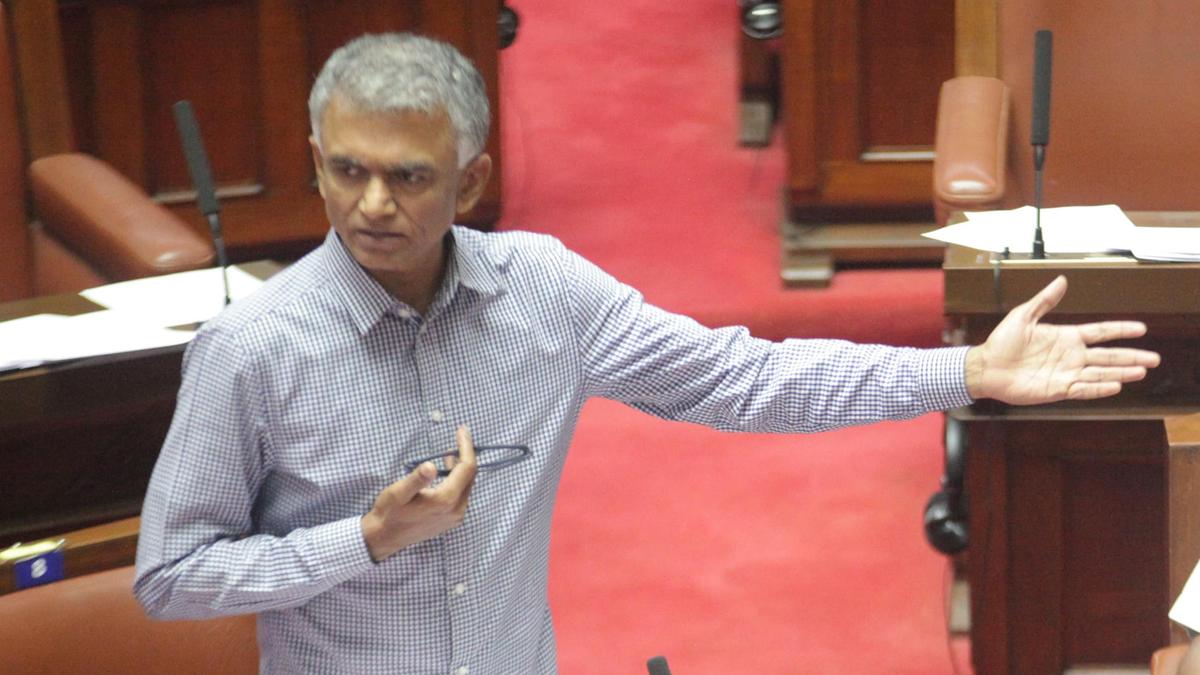
Surveyors’ Role and Ground Realities
Despite the legal position, there is broad acknowledgment of the indispensable role played by licensed surveyors in Karnataka’s land administration system. With increasing land fragmentation, urban expansion, and a surge in property transactions, demand for survey services has grown sharply. Licensed surveyors are often the first point of contact for citizens seeking to resolve boundary disputes, update land records, or regularise property ownership.
Many surveyors argue that while they are technically independent professionals, their work is deeply intertwined with government functions. They operate under departmental supervision, follow prescribed procedures, and are accountable to revenue officials. Over the years, several surveyors have spent decades in this role, building expertise comparable to that of regular government survey staff. From their perspective, denial of regularisation feels like a denial of recognition for long years of service.
Surveyors’ associations point out that the number of regular government surveyors has steadily declined due to retirements and limited recruitment. As a result, licensed surveyors now shoulder a significant portion of the workload, especially in rural areas. They argue that the system effectively relies on them while withholding job security, social protection, and career progression.
Government’s Alternative Measures
Responding to these concerns, the Minister said the government is exploring alternative measures to improve working conditions without violating legal norms. These include revising fee structures, streamlining licensing procedures, and expanding training opportunities. The government is also considering the use of technology to reduce workload pressures and ensure transparency in survey operations.
One proposal under discussion involves strengthening the regulatory framework governing licensed surveyors. Officials believe clearer guidelines, better monitoring, and periodic skill upgradation can enhance service quality while safeguarding professionals from arbitrary action. The Minister also indicated that the government is open to dialogue with surveyor associations to address operational grievances, even if regularisation itself is off the table.
There is also a push to modernise land records through digital surveys, satellite imagery, and geographic information systems. While these initiatives aim to reduce disputes and delays, they have raised fresh concerns among surveyors about job displacement. The government has assured that technological adoption will be gradual and that human expertise will continue to play a crucial role, particularly in complex or contested cases.
Political and Union Reactions
The Minister’s statement has elicited mixed reactions across the political spectrum. Opposition members accused the government of being insensitive to the plight of surveyors who have served the public for years under difficult conditions. They argued that legal constraints should not become an excuse for inaction and urged the government to find innovative solutions, including the creation of a new cadre through legislative intervention.
For licensed surveyors across Karnataka, the announcement is both a setback and a moment of reckoning. While their demand for permanent status has been rejected, the spotlight on their role has never been sharper. How the State chooses to support, regulate, and integrate their services in the coming years will shape not only their future but also the effectiveness and credibility of Karnataka’s land administration system.
Some legislators pointed to past instances where governments have regularised categories of workers by amending rules or enacting special provisions. They questioned why a similar approach could not be explored for licensed surveyors, especially given their critical role in revenue administration. The government countered that such measures have often been struck down by courts, resulting in prolonged litigation and uncertainty.
Surveyor unions have announced plans to intensify their agitation, including protests and representations to senior officials. Union leaders insist that their demand is not merely about job security but about dignity and recognition. They argue that without institutional support, surveyors face increasing pressure from landowners, local power structures, and even departmental officials, often without adequate legal protection.
Impact on Land Governance
Experts warn that prolonged uncertainty surrounding the status of licensed surveyors could have wider implications for land governance in Karnataka. Delays in surveys and demarcations already contribute to a backlog of cases in revenue offices and courts. If surveyors feel demoralised or withdraw services, the impact could be felt across property transactions, infrastructure projects, and welfare schemes dependent on accurate land records.
Land policy specialists note that Karnataka’s experience reflects a broader national challenge. Many States rely heavily on licensed or outsourced professionals to bridge gaps in administrative capacity. While this model offers flexibility, it also creates grey zones in accountability and labour rights. Addressing these issues requires a comprehensive rethink of how public services are delivered in an era of expanding demand and limited government staffing.
There is also concern that the absence of a clear career pathway discourages young professionals from entering the field. Surveying requires technical skill, fieldwork, and familiarity with complex regulations. Without long-term incentives, the profession risks losing talent, further straining the land administration system.
Judicial Precedents and Policy Dilemmas
Legal experts say the government’s position is largely consistent with prevailing judicial doctrine. Courts have repeatedly emphasised that regularisation cannot be used to bypass open recruitment or constitutional safeguards. At the same time, the judiciary has occasionally urged governments to address exploitative arrangements where workers perform essential functions without adequate protection.
This tension places policymakers in a difficult position. On one hand, they must uphold legal principles and fiscal discipline. On the other, they face genuine human and administrative concerns arising from long-term reliance on quasi-formal labour arrangements. The licensed surveyor issue exemplifies this dilemma, highlighting the need for policy solutions that go beyond binary choices of regularisation or rejection.
Some analysts suggest creating a structured public service provider model with defined rights, responsibilities, and benefits, distinct from regular government employment. Such a framework, they argue, could offer stability without violating constitutional norms. Whether the government will explore such an approach remains to be seen.
Looking Ahead
As matters stand, the government’s clarification has closed the door on regularisation, at least for now. However, the debate is far from settled. Continued pressure from surveyors, political interventions, and evolving administrative needs may yet force a re-examination of existing models. The Minister has reiterated the government’s willingness to engage constructively, even as he draws a firm line on legal boundaries.
For licensed surveyors across Karnataka, the announcement is both a setback and a moment of reckoning. While their demand for permanent status has been rejected, the spotlight on their role has never been sharper. How the State chooses to support, regulate, and integrate their services in the coming years will shape not only their future but also the effectiveness and credibility of Karnataka’s land administration system.
In the larger context, the issue serves as a reminder that governance is as much about people as it is about rules. Bridging the gap between legal formality and lived reality remains one of the most pressing challenges for public policy, and the fate of licensed surveyors may well become a test case for how that balance is struck.
Follow: Karnataka Government
Also read: Home | Channel 6 Network – Latest News, Breaking Updates: Politics, Business, Tech & More
