
The Forest Minister has attributed the steady rise in human–animal conflict across Karnataka to a significant increase in wildlife populations, particularly elephants, leopards, and wild boar, asserting that conservation success has brought with it complex new challenges. Speaking in the Legislature, the Minister said sustained protection measures, improved forest cover in select regions, and stricter enforcement of wildlife laws have allowed animal numbers to recover over the years. However, he cautioned that the same success has intensified pressure on landscapes shared by humans and animals, resulting in more frequent encounters, crop damage, and, in some tragic cases, loss of human life.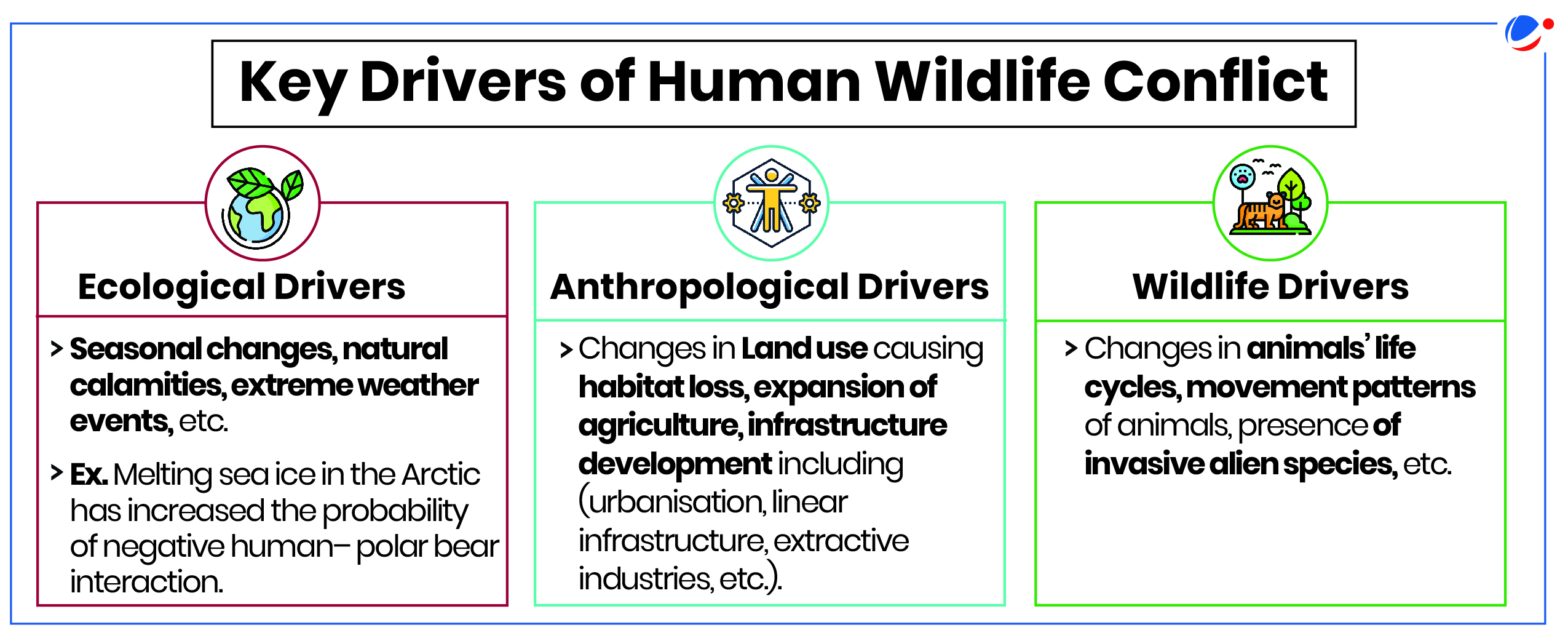
The Minister stressed that human–animal conflict must be understood as a multi-dimensional issue rather than a simple law-and-order or forest management problem. He said animals do not recognise administrative boundaries, and their movement patterns are increasingly influenced by fragmented habitats, shrinking corridors, and expanding human settlements. As wildlife populations grow within limited forest spaces, animals are compelled to move beyond traditional habitats in search of food, water, and territory, inevitably bringing them into closer contact with villages and farmlands.
Another emerging concern highlighted by conservation planners is the rapid transformation of buffer zones around protected forests. Areas once designated as low-intensity human use have seen a rise in real estate activity, resorts, plantations, and linear infrastructure such as roads and power lines. These developments, experts say, create ecological traps where animals are drawn by crops or water sources but find their movement restricted, leading to repeated conflict. The Minister acknowledged that better regulation of buffer zones is essential, noting that unplanned development undermines both conservation goals and human safety.
Forest officials also pointed to changing agricultural practices as an indirect contributor to conflict. The shift towards water-intensive and high-nutrition crops has made farmlands increasingly attractive to wildlife. Crops such as sugarcane, banana, and maize offer easy calories, encouraging animals to repeatedly raid fields. Once such patterns are established, officials said, deterrence becomes difficult, as animals remember food-rich locations and return season after season, escalating conflict over time.
There is growing recognition within the department that conflict mitigation cannot be handled by forest authorities alone. The Minister stressed the need for inter-departmental coordination involving revenue, rural development, irrigation, and local governance bodies. Issues such as land records, compensation, water access, and alternative livelihoods fall outside the forest department’s direct control but are critical to reducing friction at the human–wildlife interface. Without coordinated governance, he warned, even well-designed forest interventions will have limited impact.
Academics studying conflict dynamics cautioned against relying solely on reactive responses such as capture or relocation. They noted that translocated animals often struggle to adapt to new environments and may create conflict in receiving areas. In some cases, relocated animals attempt to return to their original ranges, traversing dangerous landscapes in the process. This, experts argue, reinforces the need for place-based solutions that focus on coexistence rather than displacement.
Concluding the discussion, the Minister said the path forward requires patience and societal consensus. He emphasised that coexistence is not a static goal but an evolving process that must adapt to ecological, social, and climatic change. As wildlife populations recover and human landscapes expand, conflict management will test governance capacity at every level. The success of Karnataka’s approach, he said, will depend not on isolated measures, but on the collective willingness to recognise shared spaces, shared risks, and shared responsibility.
Data presented by the Forest Department shows a steady increase in reported incidents over the past decade, particularly in districts bordering forested regions and newly urbanising belts. Elephants account for a substantial share of fatalities and property damage, while leopard encounters have become more common even near city outskirts. Crop-raiding by wild boar and deer has added to rural distress, affecting livelihoods and aggravating tensions between communities and forest officials.
Conservation Success Meets Habitat Stress
According to the Minister, Karnataka’s wildlife population growth reflects decades of conservation investment, including anti-poaching measures, protected area expansion, and community-based conservation initiatives. He noted that flagship species such as elephants and tigers have shown measurable recovery, a trend mirrored in several other States. However, he said conservation outcomes must now be viewed alongside ecological carrying capacity, which determines how many animals a given habitat can sustainably support.
Forest officials explained that many forest landscapes are reaching saturation points. Natural food sources fluctuate due to climate variability, invasive species, and degradation of grasslands, pushing animals to venture outside forest boundaries. Seasonal water scarcity further compounds the problem, particularly during prolonged dry spells, when animals follow traditional water routes that now pass through human habitations.
The Minister rejected claims that forest diversion alone was responsible for rising conflict, saying the issue was more nuanced. While acknowledging that infrastructure projects and land-use change have altered habitats, he said conflict trends were also visible in relatively undisturbed landscapes where animal populations had grown faster than habitat expansion. This, he argued, underscores the need for scientific population management rather than reactive blame.
Wildlife experts point out that elephants, in particular, have complex social structures and long memory of migratory routes. When corridors are disrupted or crowded, herds may alter paths, leading them into agricultural zones. Leopards, being adaptable predators, thrive in mosaic landscapes of scrub, plantations, and villages, increasing the likelihood of encounters.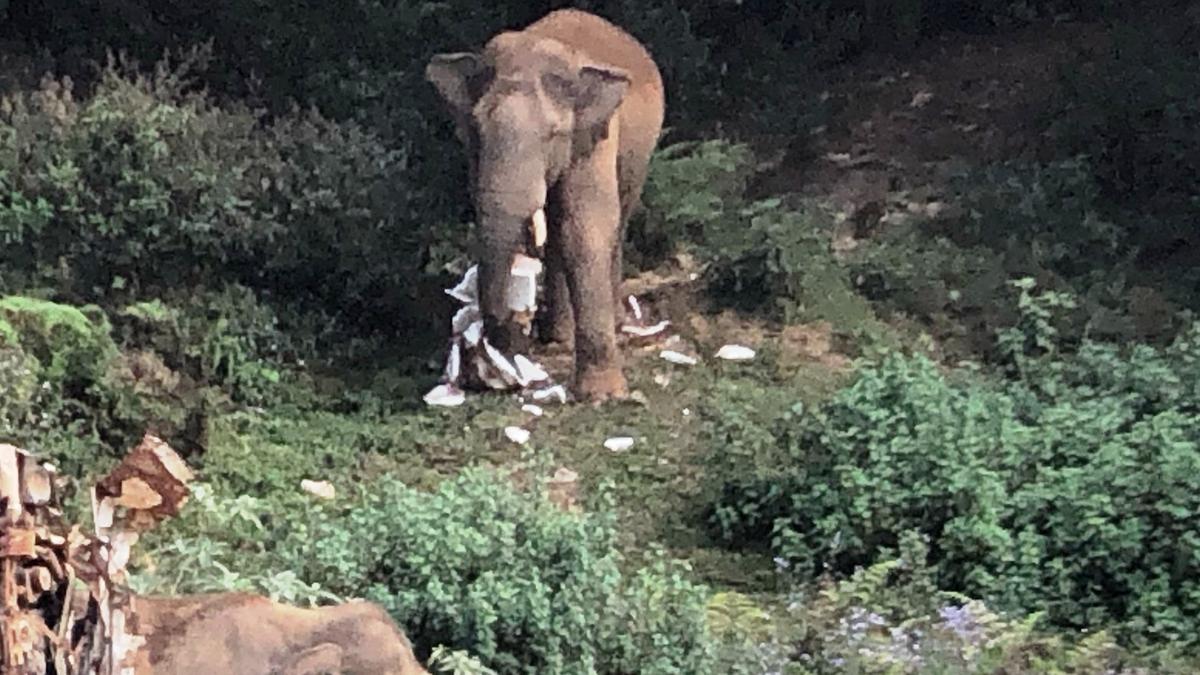
Policy Responses and Ground-Level Challenges
The Forest Minister outlined a series of measures being undertaken to address the situation, including strengthening rapid response teams, improving early warning systems, and enhancing compensation mechanisms for affected families. He said the government is investing in technology such as radio collars, camera traps, and real-time alert systems to track animal movement and issue timely warnings to villagers.
He also emphasised the importance of physical barriers such as solar-powered fences and elephant-proof trenches, while cautioning that these are not permanent solutions. Maintenance challenges, funding constraints, and terrain limitations often reduce their effectiveness. In some cases, barriers merely divert animals to neighbouring villages, shifting rather than solving the problem.
Compensation for crop loss and human casualties remains a sensitive issue. The Minister acknowledged delays and procedural hurdles, saying efforts are underway to simplify processes and ensure timely relief. He said compensation alone cannot address emotional trauma or livelihood insecurity but is essential to maintaining public trust in conservation efforts.
At the same time, forest officials face operational challenges, including staff shortages, vast patrol areas, and growing expectations from both conservationists and local communities. Field staff often operate under intense pressure, responding to emergencies at odd hours while navigating public anger and political scrutiny.
Community Perceptions and Political Undercurrents
Human–animal conflict has increasingly become a political issue, particularly in rural and semi-urban constituencies. Opposition members accused the government of prioritising wildlife over human lives, citing repeated incidents of fatalities and crop destruction. They demanded stricter control measures and questioned the emphasis on conservation without parallel investment in human safety.
The Minister countered that framing the issue as humans versus animals was misleading and dangerous. He said conservation and human welfare are not mutually exclusive and warned that reactionary policies could undermine decades of ecological progress. He urged lawmakers to approach the issue with empathy and scientific temper rather than political expediency.
Villagers living along forest fringes expressed mixed feelings. While many recognise the importance of wildlife protection, repeated losses have bred resentment and fear. Farmers spoke of sleepless nights guarding crops and children walking long distances to school through forest paths. In some areas, fear of animal movement has altered daily routines, affecting education, work, and social life.
Civil society groups argue that meaningful community participation is often missing from policy implementation. They advocate for locally tailored solutions, including crop diversification, community vigilance groups, and shared decision-making in conflict-prone zones. They also stress the need for mental health support for families affected by traumatic encounters.
Long-Term Strategies and Ethical Dilemmas
Looking ahead, the Minister said Karnataka must rethink how landscapes are planned and governed. He called for integrated land-use planning that accounts for wildlife corridors, agricultural needs, and urban expansion. Protecting and restoring corridors, he said, is critical to reducing conflict by allowing animals to move safely between habitats.
The question of population control has emerged as a contentious topic. While some have called for translocation or fertility control measures, experts caution that such interventions are complex, expensive, and fraught with ethical concerns. The Minister said no decision would be taken without scientific evidence and broad consultation.
Climate change adds another layer of complexity. Altered rainfall patterns, rising temperatures, and extreme weather events affect vegetation and water availability, indirectly influencing animal movement. Forest officials warn that conflict patterns may become less predictable in the coming years, requiring adaptive management strategies.
Education and awareness were highlighted as long-term solutions. The Minister said fostering coexistence requires changing perceptions, particularly among younger generations. Programmes aimed at teaching safe behaviour, respect for wildlife, and understanding animal behaviour are being expanded in schools and villages.
Balancing Coexistence in a Crowded Landscape
As Karnataka grapples with rising human–animal conflict, the Minister’s remarks underscore a difficult reality: conservation success brings new responsibilities. Protecting wildlife in an increasingly crowded and changing landscape demands constant adaptation, sustained funding, and social consensus.
The challenge lies in balancing ecological integrity with human safety and dignity. Simplistic narratives risk deepening divisions and eroding support for conservation. Instead, experts argue for a holistic approach that recognises humans as part of the ecosystem, not external to it.
For now, the government maintains that rising wildlife populations are both a triumph and a test. How Karnataka responds to this test will shape not only the future of its forests and fauna, but also the lives and livelihoods of millions who live alongside them. In this delicate equation, coexistence is no longer a choice but an urgent necessity, demanding patience, innovation, and collective will.
Follow: Karnataka Government
Also read: Home | Channel 6 Network – Latest News, Breaking Updates: Politics, Business, Tech & More
