
Karnataka’s traditional toys, once a symbol of childhood, craftsmanship and cultural continuity, are facing an uncertain future as ageing artisans struggle to find successors willing to carry forward the legacy. From the brightly lacquered wooden toys of Channapatna to regional craft traditions passed down within families, the question today is no longer about market demand alone, but about who will make these toys in the years to come. As senior artisans retire or pass away, the absence of younger hands threatens to turn a living craft into a museum artefact.
The role of local governance institutions is increasingly being seen as crucial in determining the survival of traditional toy-making clusters. Panchayats and urban local bodies in craft-dense regions can influence outcomes through zoning support, infrastructure provision and local procurement policies. Artisans argue that if government-run anganwadis, schools and cultural centres are encouraged to source traditional toys locally, it could create a steady, institutional demand that sustains livelihoods beyond seasonal markets and festivals.
Another emerging concern is the loss of raw material access. Traditional toy-making depends heavily on specific types of softwood and natural lac, both of which are becoming harder to procure due to regulatory restrictions and rising costs. While environmental protection is essential, artisans say the absence of clear, craft-sensitive policies has made legal sourcing complicated and expensive. Younger artisans, in particular, find it difficult to navigate these regulations, further discouraging their participation in the craft.
Cultural scholars warn that once the chain of transmission breaks, revival becomes far more difficult. Skills refined over generations cannot be easily recreated through short-term training programmes alone. The nuances of carving, proportion, colour balance and storytelling embedded in traditional toys are learned through years of observation and practice. Losing master artisans without documenting and passing on their knowledge could result in irreversible gaps.
There is also a growing debate on intellectual property and cultural ownership. While traditional toy designs inspire contemporary adaptations, artisans often see their motifs reproduced commercially without acknowledgment or fair compensation. This has led to resentment and a sense of exploitation. Experts argue that stronger protection mechanisms and benefit-sharing models could restore trust and make the craft economically meaningful for future generations.
As Karnataka positions itself as a hub of innovation and culture, the fate of its traditional toys stands as a test of inclusive development. Whether policy, markets and society can come together to support those who keep this heritage alive will determine if future generations encounter these toys in living homes and classrooms, or only as remnants of a fading past preserved in archives and exhibitions.
For decades, toy-making clusters in Karnataka have relied on generational knowledge, with skills transmitted orally and through practice rather than formal training. Workshops doubled as homes, and children grew up watching their parents carve, paint and polish wooden figures. Today, many of those children have chosen different paths, seeking education and employment outside the craft, leaving behind ageing parents and silent workbenches.
Artisans say the decline is not due to lack of pride in the craft, but economic reality. Traditional toy-making is labour-intensive and time-consuming, yet earnings remain uncertain and often insufficient. While the toys are celebrated for their eco-friendly materials and cultural value, artisans struggle to compete with mass-produced plastic toys that are cheaper and widely available.
The situation has raised concerns among cultural historians, craft activists and policymakers, who warn that without urgent intervention, Karnataka risks losing not just a craft, but a form of storytelling embedded in wood and colour. Each toy, they argue, reflects local myths, rural life and artistic sensibilities shaped over centuries.
Senior artisans recall a time when toy-making was a viable livelihood. Festivals, fairs and local markets ensured steady demand, and families could sustain themselves through the craft. Globalisation and changing consumer habits, however, have disrupted this ecosystem. Today, even artisans recognised with awards find it difficult to ensure financial stability.
Government initiatives, cooperatives and design interventions have provided periodic relief, but many artisans say these measures have not addressed the core issue of generational continuity. Young people, they note, are reluctant to commit to a profession that offers uncertain income and limited social security.
As workshops fall quiet and tools gather dust, the pressing question remains: who will make Karnataka’s traditional toys next, and what will it take to ensure that the craft survives as a living tradition rather than a nostalgic memory?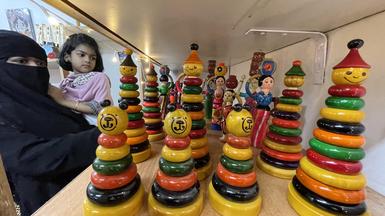
Why Younger Generations Are Walking Away
Artisans and researchers point to a complex mix of economic, social and educational factors driving younger generations away from traditional toy-making. One of the most significant is income instability. Earnings fluctuate based on seasonal demand, exhibitions and occasional bulk orders, making it difficult to plan for the future or meet rising living costs.
Younger artisans also compare their prospects with peers who pursue salaried jobs or migrate to cities. For many, the choice is stark: continue a demanding craft with uncertain returns, or seek alternative employment that promises regular income, social security and perceived social mobility. Even those emotionally attached to the craft often choose stability over sentiment.
Education has played a dual role. While increased access to schooling has expanded opportunities, it has also distanced children from the workshop environment. Artisans say earlier generations learned the craft informally while attending school, but today’s academic pressures leave little room for apprenticeship within the family.
There is also a shift in aspirations. Many young people associate traditional crafts with hardship and social marginalisation. Despite growing appreciation for handmade and sustainable products among urban consumers, artisans feel that this recognition has not translated into respect or financial security at the grassroots level.
Women artisans face additional challenges. While women have always played a crucial role in painting and finishing toys, their labour often remains undervalued. Younger women, given a choice, prefer jobs that offer independence and recognition beyond the confines of home-based work.
Market access remains another barrier. Artisans often depend on middlemen, who control pricing and limit profits. Without direct access to buyers or digital platforms, young artisans feel disadvantaged in an increasingly connected economy. The lack of business training further discourages them from continuing in the craft.
Health concerns also weigh heavily. Long hours of repetitive work can lead to physical strain, while exposure to chemicals, even natural dyes, poses risks without proper safety measures. For parents, encouraging children to pursue other careers is often seen as an act of care rather than abandonment of tradition.
Craft experts argue that the decline of young artisans is not due to lack of interest alone, but the absence of a supportive ecosystem. Without assured income, modern infrastructure and social security, traditional toy-making struggles to compete with contemporary career options.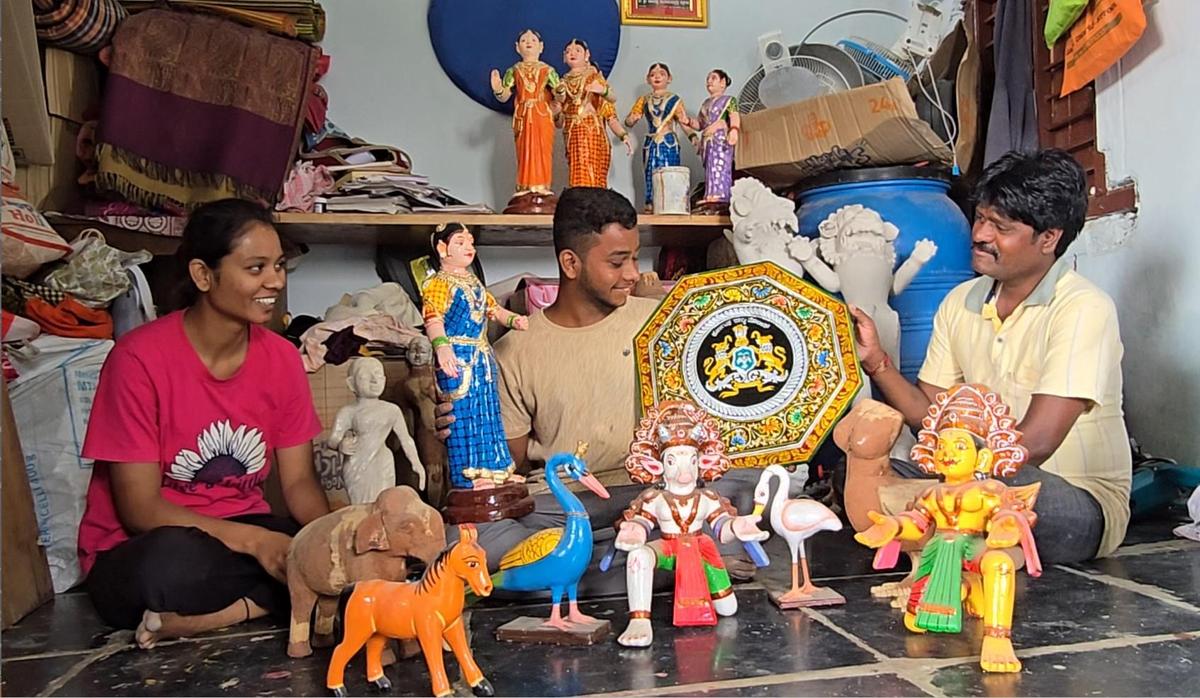
Can Tradition Be Reimagined for the Future?
Despite these challenges, there are signs of cautious optimism. Some younger artisans are returning to the craft, driven by renewed interest in sustainability, cultural identity and entrepreneurship. They are experimenting with contemporary designs, storytelling themes and digital marketing to reach new audiences.
Design interventions have played a role in this revival. Collaborations with designers have introduced modern aesthetics while preserving traditional techniques. Artisans say such partnerships help make the craft relevant to contemporary consumers without compromising its essence.
Government support, though uneven, has provided some relief. Training programmes, common facility centres and financial assistance have helped improve production capacity. However, experts argue that these measures must go beyond short-term schemes and focus on long-term viability.
One proposed solution is integrating craft education into formal curricula. By introducing traditional toy-making in schools and vocational institutes, young people can learn the craft without sacrificing academic goals. Such exposure could also foster respect for manual skills and cultural heritage.
Digital platforms offer another opportunity. Direct-to-consumer sales through online marketplaces allow artisans to bypass middlemen and access wider markets. Younger artisans familiar with technology are better positioned to leverage these platforms, potentially making the craft more attractive to the next generation.
Social security remains a critical concern. Artisans and activists argue that health insurance, pension schemes and minimum income support could significantly change perceptions about the viability of traditional crafts. Knowing that their future is protected may encourage young people to stay.
Cultural recognition also matters. While awards and exhibitions celebrate craftsmanship, experts say everyday recognition through fair pricing and consistent demand is more meaningful. Consumers, they argue, play a role in sustaining the craft by valuing handmade toys beyond novelty purchases.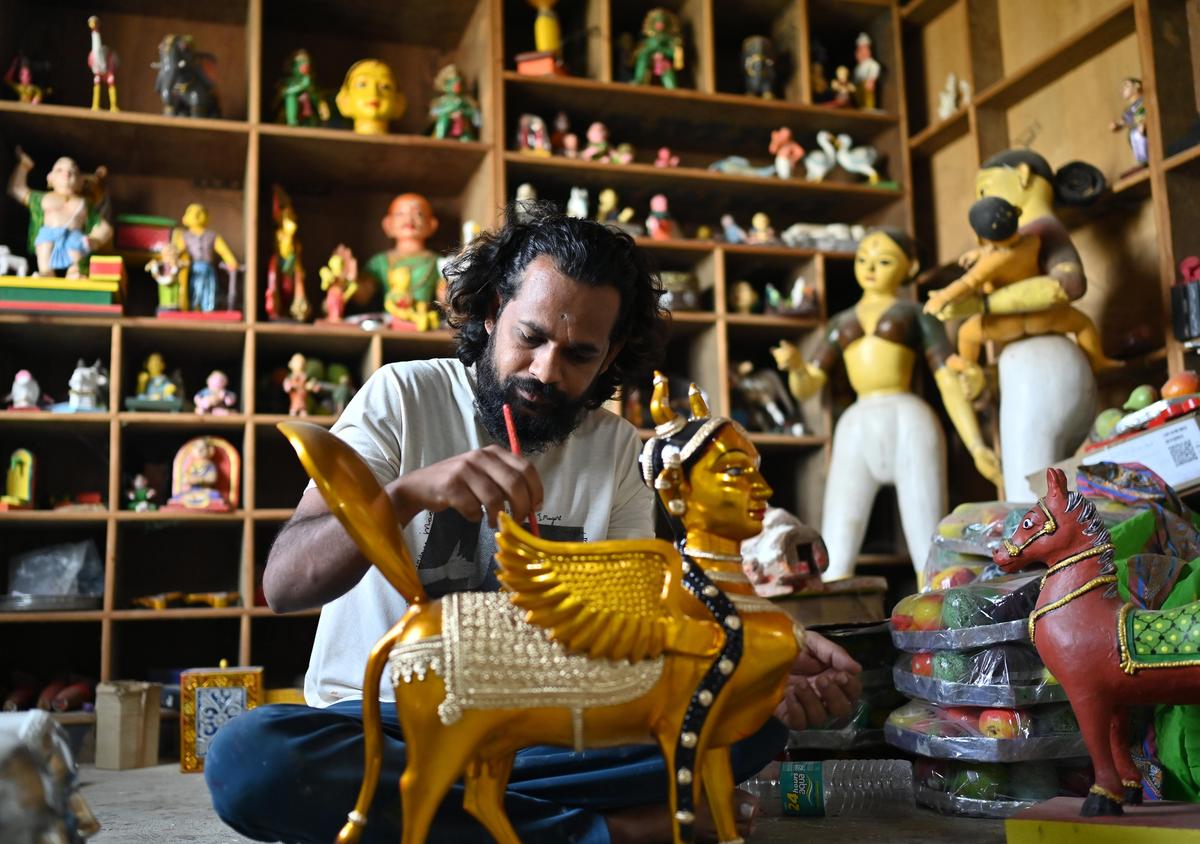
There is also a growing movement to position traditional toys as educational tools. Made from natural materials and rooted in cultural narratives, these toys align with concerns about screen addiction and environmental sustainability. If integrated into mainstream education and parenting practices, demand could become more stable.
Ultimately, the future of Karnataka’s traditional toys depends on collective effort. Artisans, governments, designers, educators and consumers must work together to create an ecosystem where craftsmanship is not just preserved, but valued as a viable livelihood.
The question of who will make these toys next is, therefore, not merely about succession within artisan families. It is about whether society is willing to invest in the people behind the craft, ensuring dignity, security and opportunity.
If such support materialises, the sound of chisels on wood may continue to echo in Karnataka’s toy-making clusters, carrying forward stories shaped by generations. If not, these toys may survive only behind glass cases, admired for what they once were, rather than cherished for what they continue to be.
Follow: Karnataka Government
Also read: Home | Channel 6 Network – Latest News, Breaking Updates: Politics, Business, Tech & More
