
In a gesture steeped in devotion and cultural meaning, a Bengaluru-based man has donated a traditional Thanjavur painting of Sri Ram to Ayodhya, turning a deeply personal act of faith into a moment of wider spiritual resonance. The donation has drawn attention not only for its religious significance but also for the way it symbolically connects two regions of India through shared belief, artistic heritage, and reverence for tradition. The act has been widely viewed as an offering of devotion rather than a transfer of property, reflecting values of surrender, gratitude, and continuity.
The painting, crafted in the classical Thanjavur style, depicts Sri Ram in a calm and composed form, embodying righteousness, compassion, and moral strength. Created using traditional techniques involving gold foil, natural pigments, and intricate embossing, the artwork represents centuries-old craftsmanship passed down through generations. Such paintings are often treated as sacred icons in households, forming part of daily worship rather than mere decoration.
According to people familiar with the matter, the donor had preserved the painting for several years, maintaining it with ritual care and reverence. The decision to donate it to Ayodhya was not impulsive but evolved over time, guided by a belief that sacred art ultimately belongs in spaces where collective devotion can flourish. For the donor, offering the painting to a city so closely associated with Sri Ram’s life was seen as an act of fulfilment and spiritual completion.
The donation has also inspired reflection on the role of individual initiative in preserving India’s rich artistic and devotional heritage. While institutional efforts are crucial, acts like this demonstrate that personal faith and responsibility can keep traditions alive in meaningful ways. By choosing to share a sacred painting with a wider community of devotees, the Bengaluru donor has ensured that the artwork continues to serve its original spiritual purpose, allowing it to inspire reverence and contemplation among generations beyond his own household.
For many observers, the gesture underscores the enduring power of devotion expressed through art. In an age dominated by material accumulation and rapid urbanisation, such selfless acts remind society that cultural and spiritual continuity often depends on personal commitment. The journey of the Thanjavur painting from Bengaluru to Ayodhya symbolizes a connection that transcends geography, blending artistry, faith, and tradition into a living testament of India’s shared heritage.
The handover was conducted following traditional religious practices, underscoring the sanctity of the act. Prayers and rituals accompanied the donation, transforming it into a ceremonial offering rather than a formal transaction. Those present during the occasion described it as emotionally moving, marked by a sense of humility and quiet devotion rather than celebration.
The gesture has resonated with devotees across Bengaluru, many of whom see it as a reminder that even in a rapidly modernising urban environment, expressions of faith remain deeply rooted. The city, often associated with technology and growth, continues to nurture spiritual traditions that find expression through personal acts of devotion such as this one.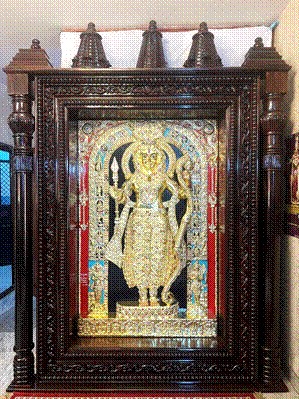
Cultural observers note that the donation reflects a broader tradition within Indian society, where individuals contribute to religious and cultural spaces not for recognition but as part of a lifelong spiritual journey. In this context, the painting’s journey from a private home in Bengaluru to Ayodhya represents a transition from personal worship to shared devotion.
The act has also sparked conversations around the responsibility of individuals in preserving and sharing cultural heritage. While institutions play a crucial role in conservation, individual choices often determine whether traditions remain living practices or become static relics. This donation, many believe, exemplifies how personal faith can actively sustain artistic and spiritual legacies.
As word of the donation spread, it evoked admiration and reflection among devotees and art enthusiasts alike. Many described it as a quiet yet powerful reminder that devotion expressed through giving can transcend regional boundaries and speak to a shared cultural consciousness.
Thanjavur Art, Sacred Craft, and Spiritual Meaning
Thanjavur paintings hold a distinctive place in India’s artistic and devotional traditions. Originating in Tamil Nadu and flourishing under royal patronage centuries ago, the art form is renowned for its opulence, durability, and spiritual symbolism. Typically portraying Hindu deities, saints, and mythological scenes, these paintings are created with an intent that goes beyond aesthetics, serving as objects of worship and contemplation.
Art historians explain that the process of creating a Thanjavur painting is both meticulous and ritualistic. A wooden base is prepared and layered with cloth, natural adhesives, and limestone paste to create raised surfaces. Gold foil is then applied, followed by carefully mixed natural pigments that give the painting its characteristic depth and brilliance. Each stage requires patience and skill, reflecting the sacred purpose behind the art.
The depiction of Sri Ram carries profound spiritual significance. Revered as the embodiment of dharma, duty, and compassion, Sri Ram’s image is often associated with moral clarity and inner strength. A Thanjavur painting of Sri Ram thus becomes a focal point for devotion, symbolising ideals that guide personal and collective life.
Traditionally, many such paintings were commissioned for temples and public worship spaces. Over time, they also became part of household shrines, where families integrated them into daily rituals. The donation of a household Thanjavur painting back to a major spiritual centre can be seen as a return of sacred art to a shared devotional space.
Ayodhya, deeply intertwined with the narrative of the Ramayana, offers a context where the painting’s spiritual resonance is magnified. Devotees visiting the city seek connection with Sri Ram’s legacy, and the presence of a Thanjavur painting adds a layer of artistic and regional diversity to that experience. It allows visitors to engage with a southern Indian art tradition within a northern spiritual landscape.
Cultural commentators have highlighted the importance of such exchanges in reinforcing India’s pluralistic heritage. When art travels across regions through acts of devotion rather than commerce, it fosters unity through shared values. The Bengaluru-to-Ayodhya journey of the painting thus becomes symbolic of cultural continuity across linguistic and regional boundaries.
The donation has also renewed interest in Thanjavur art among younger generations. Art educators and cultural groups in Bengaluru have noted increased curiosity about traditional painting techniques and their relevance today. They view this moment as an opportunity to encourage learning and appreciation of classical crafts that risk being overshadowed in a fast-paced, digital age.
Beyond its artistic value, the painting represents faith-driven preservation. Unlike museum displays that emphasise historical context, sacred placements allow art to remain part of living tradition, continuously engaged through prayer and ritual. This dynamic relationship between art and devotion is central to understanding the significance of such donations.
For custodians in Ayodhya, receiving the painting is both an honour and a responsibility. Ensuring its preservation while allowing devotional access requires careful balance. Those involved have indicated that the painting will be placed in a setting that respects its sanctity, craftsmanship, and spiritual intent.
Personal Faith, Cultural Continuity, and Collective Meaning
The Bengaluru man’s decision to donate the painting has been widely interpreted as an expression of faith shaped by a sense of cultural responsibility. In a time often marked by material accumulation, the act of parting with a cherished and valuable possession for spiritual reasons stands out as a reaffirmation of traditional values centred on giving and humility.
Sociologists observe that such gestures often emerge from a desire to contribute to something larger than oneself. By offering the painting to Ayodhya, the donor aligned his personal devotion with a collective spiritual experience shared by millions. This transformation of a private object into a communal symbol reflects a deeply ingrained cultural ethos.
The response to the donation has been largely positive, with many seeing it as an example of how individuals can actively participate in preserving heritage without institutional mediation. It underscores the idea that cultural continuity depends as much on personal choices as on formal conservation efforts.
Religious scholars have reflected on the symbolism inherent in the act. Sri Ram’s life and teachings emphasise sacrifice, duty, and service. Donating a sacred representation of Sri Ram to a place central to his legacy is seen as an embodiment of these very principles, reinforcing the moral narrative associated with the deity.
Those close to the donor suggest that the act was guided by introspection rather than external influence. The absence of any desire for recognition has been highlighted as central to the gesture’s sincerity. In this sense, the donation is viewed not as a public statement but as a personal milestone in the donor’s spiritual journey.
At a broader level, the story illustrates how art continues to serve as a bridge between regions, generations, and belief systems. As India navigates rapid social and technological change, such acts remind society of the enduring relevance of tradition and the ways it can adapt without losing its essence.
For Bengaluru, the gesture adds another layer to its identity as a city that harmonises modern aspirations with deep-rooted cultural practices. For Ayodhya, it represents the ongoing flow of devotion from across the country, reaffirming its place in the collective spiritual imagination.
As the Thanjavur painting of Sri Ram finds its new home in Ayodhya, it carries with it more than gold and pigment. It embodies faith, history, craftsmanship, and emotion, woven together through an act of giving. The journey from a Bengaluru household to a sacred city stands as a quiet yet powerful reminder that devotion, when expressed through selfless action, has the ability to unite hearts across distance, time, and tradition.
Follow: Karnataka Government
Also read: Home | Channel 6 Network – Latest News, Breaking Updates: Politics, Business, Tech & More
