
The political temperature in Ballari rose sharply as the Bharatiya Janata Party alleged “goondaism” in the recent clashes that rocked the district and demanded a judicial probe into the sequence of events that led to violence and loss of public order. The party’s accusation has intensified an already volatile situation, transforming a local law-and-order incident into a full-fledged political confrontation with statewide implications. As Ballari struggles to regain normalcy, competing narratives are emerging, each attempting to define who bears responsibility for the unrest.
The BJP, addressing the media, claimed that organised violence was unleashed under political patronage and that ordinary citizens were terrorised during the clashes. Party leaders alleged that the administration failed to act impartially and allowed lawlessness to prevail, forcing people to live in fear. They argued that the incident was not spontaneous but the result of deliberate mobilisation, calling it a clear case of goondaism that warranted an independent judicial inquiry rather than an internal or executive-led probe.
The clashes erupted following tensions linked to political symbolism and public displays, which quickly escalated into stone-pelting, damage to property, and confrontations with the police. What began as a dispute over banners soon spiralled into widespread unrest, drawing large crowds and paralysing parts of the city. Police were forced to deploy additional forces and impose preventive measures to bring the situation under control. However, the violence left behind deep political scars and public anxiety.
BJP leaders alleged that their workers and supporters were specifically targeted during the violence, accusing rival political groups of orchestrating attacks. They claimed that several party workers were injured and that vehicles and offices associated with the party were damaged. According to them, complaints filed by BJP members were either delayed or inadequately addressed, further reinforcing their claim of administrative bias.
The demand for a judicial probe, the BJP said, was rooted in the need for credibility and transparency. Party leaders argued that only an independent judicial authority could examine the roles of political actors, police officials, and administrators without fear or favour. They warned that failure to order such a probe would deepen mistrust and fuel further unrest, not just in Ballari but across other politically sensitive districts.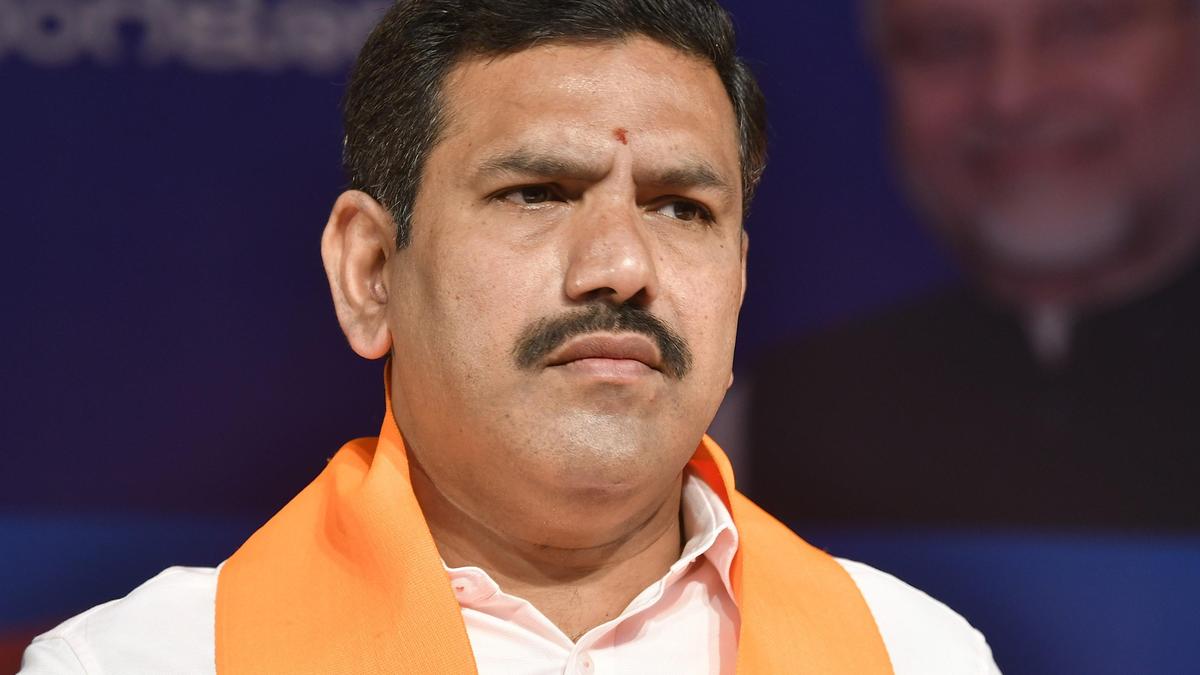
Meanwhile, the state government has maintained that law and order is under control and that appropriate inquiries are already underway. Officials have reiterated that the police acted according to standard procedures under challenging circumstances. However, the BJP has dismissed these assurances as insufficient, insisting that executive-controlled inquiries cannot inspire public confidence in such a charged atmosphere.
For residents of Ballari, the political war of words has done little to ease lingering fear. Many areas that witnessed violence remain tense, with a visible police presence and heightened vigilance. Shopkeepers and daily wage earners have spoken of economic losses due to disruptions, while families worry about the safety of their children amid recurring political confrontations.
POLITICAL BLAME GAME AND THE QUESTION OF ACCOUNTABILITY
The BJP’s allegation of goondaism has added a sharp edge to the political blame game surrounding the Ballari clashes. Party leaders accused the ruling establishment of either shielding those responsible or failing to act decisively against violent elements. They argued that when political violence is normalised or ignored, it erodes the very foundations of democracy and rule of law.
Senior BJP leaders claimed that Ballari has become a testing ground for aggressive political tactics, where power is asserted through intimidation rather than democratic engagement. They alleged that supporters of rival factions were allowed to act with impunity, creating an environment where violence was used as a tool to silence opposition. Such practices, they warned, could set a dangerous precedent if left unchecked.
The ruling side, however, has rejected these allegations, accusing the BJP of politicising a sensitive law-and-order issue. Government representatives argued that violence erupted due to provocation and that the police were compelled to act swiftly to prevent a larger breakdown. They insisted that inquiries already ordered would examine all aspects of the incident, including any lapses by officials.
Political analysts note that Ballari’s history makes it particularly susceptible to such confrontations. The district has long been shaped by strong personalities, intense rivalries, and symbolic assertions of dominance. In this context, even minor disputes can escalate rapidly, especially when amplified by political mobilisation and social media messaging.
The BJP’s call for a judicial probe has also been framed as a fight for justice for victims of violence. Party leaders highlighted testimonies of residents who allegedly faced threats and vandalism. They argued that these voices risk being drowned out unless an independent authority documents and addresses their grievances.
Civil society organisations have expressed concern over the recurring cycle of violence and inquiry. While acknowledging the need for accountability, activists argue that repeated probes have failed to address underlying causes such as unchecked political symbolism, weak enforcement of permissions, and inadequate conflict-prevention mechanisms. Without systemic reform, they warn, judicial probes may offer momentary relief but little long-term change.
Legal experts point out that judicial probes, while powerful, are not a panacea. Their effectiveness depends on scope, cooperation from authorities, and the willingness of the political class to accept findings. In politically charged cases, even judicial inquiries can become contested spaces, with competing interpretations of conclusions.
For Ballari’s residents, the core issue remains safety and stability. Many express fatigue over political rivalries that spill into streets and disrupt everyday life. They question whether leaders truly represent public interests when confrontations repeatedly endanger ordinary citizens.
IMPACT ON GOVERNANCE AND THE ROAD AHEAD
The BJP’s demand for a judicial probe has placed the state government at a crossroads. Acceding to the demand could signal a commitment to transparency but might also be perceived as conceding administrative failure. Rejecting it, on the other hand, risks intensifying opposition protests and prolonging political instability in Ballari.
Governance experts suggest that beyond deciding on the probe, the government must focus on restoring trust. This includes clear communication, swift action against proven wrongdoing, and visible efforts to prevent recurrence. Failure to do so could deepen cynicism toward institutions meant to protect citizens.
The clashes have also highlighted gaps in crowd control and intelligence gathering. Analysts argue that early warning signs were ignored and that preventive measures could have defused tensions before they turned violent. Strengthening coordination between local administration, police, and community leaders is being seen as essential to avoid future flashpoints.
Political observers believe the Ballari episode will reverberate in upcoming political debates. Law and order, political violence, and accountability are likely to become central themes, with parties using the incident to frame broader narratives about governance and democracy. For the BJP, the allegation of goondaism aligns with its attempt to project itself as a defender of law and order.
At the grassroots level, community leaders are calling for dialogue and reconciliation. Some have initiated peace meetings to bridge divides and discourage provocative actions. They stress that while political disagreements are inevitable, violence undermines collective well-being and development.
The economic cost of the clashes is another concern. Disruptions to trade, transport, and daily work have hurt livelihoods, particularly among informal workers. Prolonged instability could deter investment and development in a district already grappling with socio-economic challenges.
As investigations continue and political rhetoric intensifies, Ballari stands at a critical juncture. The demand for a judicial probe reflects deeper anxieties about power, accountability, and justice. Whether these anxieties are addressed through transparent action or prolonged confrontation will shape the district’s immediate future.
The episode has also triggered introspection within administrative circles about the limits of reactive governance. Senior officials privately acknowledge that recurring political clashes point to a deeper failure in anticipating conflict and enforcing preventive regulations. Experts argue that unless permissions for rallies, banners, and public displays are strictly regulated and violations penalised consistently, Ballari will remain vulnerable to sudden eruptions of violence driven by symbolism rather than substance.
Public trust in institutions has emerged as a central casualty of the clash. Many residents feel that repeated assurances of inquiry and action have yielded little visible change over the years. This erosion of trust, analysts warn, is dangerous in a democratic setup, as it fuels cynicism and disengagement. Rebuilding confidence will require not just probes, but demonstrable accountability and a commitment to protect citizens irrespective of political affiliations.
The role of youth in such politically charged environments has also come under focus. With limited employment opportunities and strong political mobilisation, young people often become the most visible participants in street-level confrontations. Social workers stress the need for constructive engagement through education, employment, and civic initiatives to prevent political actors from exploiting youthful energy for confrontational ends.
As Ballari moves forward, the broader lesson emerging from the clash is the urgent need to redefine political expression. Symbols, slogans, and shows of strength, critics argue, cannot replace dialogue, governance, and service delivery. Whether the demand for a judicial probe translates into systemic reform or fades into partisan memory will determine if Ballari breaks free from its cycle of unrest or continues to relive it in different forms.
Ultimately, the BJP’s allegation of goondaism has forced a broader reckoning. It has raised uncomfortable questions about how political competition is conducted and at what cost. For Ballari, the hope is that this moment leads not just to another probe, but to meaningful reform that prioritises peace, dignity, and democratic values over spectacle and force.
Follow: Karnataka Government
Also read: Home | Channel 6 Network – Latest News, Breaking Updates: Politics, Business, Tech & More
