
Senior Congress leader and Home Minister G. Parameshwara’s public expression of ambition to become Chief Minister this year has sent ripples across Karnataka’s political landscape, triggering intense discussion within party circles and beyond. Known for his measured tone and long political career, Parameshwara’s statement is being seen as more than a personal aspiration. It is being interpreted as a calculated political signal at a time when leadership dynamics within the ruling Congress remain fluid and closely watched.
Parameshwara’s remarks came during an interaction with party workers, where he stated that aspiring for the top post was natural for any senior leader who had devoted decades to public life. He emphasised that ambition should not be mistaken for disloyalty and added that his commitment to the party and the state remained paramount. The statement, while carefully worded, marked one of the clearest acknowledgements yet of his desire to occupy the chief minister’s chair.
The timing of the declaration is significant. Karnataka’s Congress government, though stable on the surface, continues to navigate internal power-sharing equations, expectations of senior leaders, and regional aspirations. Parameshwara, a Dalit leader with deep roots in the party’s organisational structure, is seen by many as a strong claimant should leadership transition discussions gain momentum. His articulation of ambition has reignited debates about representation, merit, and succession within the party.
Within Congress ranks, reactions have been mixed but measured. Some leaders have publicly downplayed the statement, describing it as a personal sentiment rather than a formal claim. Others have privately acknowledged that Parameshwara’s experience, administrative background, and mass base make him a credible contender. However, there is also recognition that leadership decisions are influenced by a complex interplay of high command strategy, electoral calculations, and coalition management within the party.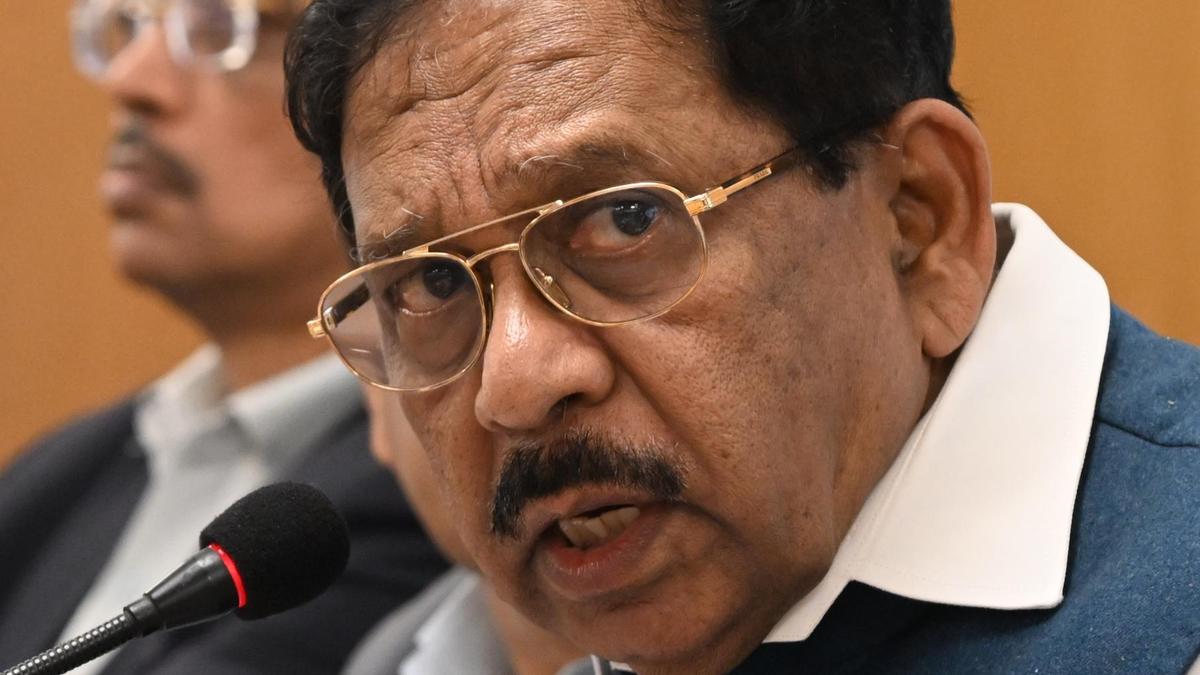
Opposition parties were quick to seize on the development, portraying it as a sign of internal disquiet within the ruling Congress. Leaders from rival camps suggested that open expressions of ambition could destabilise governance and distract the government from addressing public issues. Congress leaders, however, dismissed these claims, asserting that democratic expression within the party should not be misconstrued as factionalism.
For Parameshwara, the statement has placed him firmly in the political spotlight. As Home Minister, he currently oversees a critical portfolio that demands constant engagement with law and order, internal security, and administrative coordination. Supporters argue that his performance in this role strengthens his claim to higher responsibility, while critics insist that ambition must be matched by broader political consensus.
The response from party workers at the grassroots level has been notably enthusiastic. Many see Parameshwara’s rise as symbolic, reflecting the aspirations of communities that have historically sought greater representation in leadership roles. For them, his ambition is not merely personal but collective, representing a possibility of social and political empowerment.
POWER, REPRESENTATION, AND THE CONGRESS EQUATION
Parameshwara’s ambition cannot be viewed in isolation from Karnataka’s complex political and social fabric. As one of the most prominent Dalit leaders in the state, his potential elevation carries significance beyond individual leadership. Congress has long positioned itself as a party committed to social justice, and leadership choices are often scrutinised through that lens. A Parameshwara-led government, supporters argue, would reinforce that ideological commitment.
Within the Congress organisation, Parameshwara is known as a disciplined leader who has served the party in various capacities, including as state party president. His journey from student politics to senior ministerial roles is often cited as evidence of perseverance and organisational loyalty. These credentials strengthen his standing among party cadres who value internal experience over populist appeal alone.
However, leadership transitions in Karnataka have historically been sensitive. The state has witnessed frequent changes in chief ministers, often driven by internal negotiations rather than electoral mandates alone. This history adds caution to any open ambition, as leaders are aware of the risks of appearing overly assertive. Parameshwara’s careful framing of his statement reflects this awareness, balancing aspiration with deference to party processes.
Political analysts note that the Congress high command plays a decisive role in leadership matters. While state-level dynamics are important, national leadership considerations often shape final decisions. Parameshwara’s public expression of ambition may therefore be aimed as much at signalling readiness to the central leadership as at mobilising local support. By articulating his aspiration openly, he positions himself as a legitimate option rather than a silent contender.
The issue of power-sharing within the Congress government also looms large. Senior leaders with strong regional bases and ministerial influence are part of an intricate balance that keeps the government stable. Any shift in leadership would require careful negotiation to avoid alienating key stakeholders. In this context, Parameshwara’s ambition adds another variable to an already complex equation.
Opposition leaders argue that such ambitions reflect unresolved leadership questions within the ruling party. They claim that governance could suffer if leaders focus on internal jockeying rather than policy delivery. Congress leaders counter this narrative by insisting that ambition and governance are not mutually exclusive and that healthy internal democracy strengthens the party rather than weakens it.
Public perception remains divided. Some citizens view Parameshwara’s statement as refreshingly honest, breaking away from the tradition of denying ambition while quietly nurturing it. Others worry that such declarations could fuel speculation and political instability. For many, however, the question is less about ambition and more about performance and vision.
POLITICAL CALCULUS AND THE ROAD AHEAD
As the debate unfolds, the immediate impact of Parameshwara’s statement will likely be subtle rather than dramatic. The Congress leadership has not indicated any imminent change, and governance continues as usual. Yet, political observers agree that the statement has shifted the tone of internal discussions, making leadership aspirations more explicit and open to debate.
In the coming months, Parameshwara’s actions as Home Minister will be closely scrutinised. Any major administrative success or controversy could significantly influence perceptions of his suitability for higher office. Supporters believe that strong performance will reinforce his claim, while detractors may seize on any shortcomings to question his readiness.
The Congress high command’s response will be crucial. Whether it chooses to encourage open discussion of leadership ambitions or prefers to keep succession plans opaque will shape the party’s internal dynamics. Parameshwara’s long-standing loyalty to the party may work in his favour, but final decisions will depend on broader political calculations, including electoral prospects and alliance management.
For Karnataka’s political landscape, the episode highlights an enduring reality: leadership is as much about timing and consensus as it is about capability. Parameshwara’s ambition has surfaced at a moment when the party is balancing governance responsibilities with future strategy. How this balance is managed will determine whether ambition becomes a catalyst for renewal or a source of friction.
Grassroots mobilisation could play an important role in shaping outcomes. If party workers and supporters rally behind Parameshwara’s leadership vision, it could strengthen his position within internal deliberations. At the same time, overt factionalism could prompt the leadership to adopt a more cautious approach.
Civil society voices have also weighed in, calling for stability and focus on governance. They argue that while leadership discussions are inevitable, the government must prioritise policy implementation, economic development, and social welfare. For them, ambition must translate into tangible outcomes for citizens rather than remaining confined to political discourse.
Ultimately, Parameshwara’s statement has achieved one undeniable outcome: it has brought leadership aspirations into the open. In a political culture where ambition is often cloaked in ambiguity, this candour has sparked conversation and reflection. Whether it leads to a change in leadership this year or simply reshapes internal equations, its impact will be felt across Karnataka’s political spectrum.
As the year progresses, the state will watch closely how the Congress navigates this moment. Parameshwara’s ambition represents hope for some, uncertainty for others, and a test of internal democracy for the party. In the interplay between aspiration and authority, Karnataka’s next political chapter is quietly being written, with every statement, silence, and strategic move adding to its unfolding narrative.
The development has also revived conversations around leadership pathways within the Congress, particularly for leaders who have built their careers through organisational work rather than electoral charisma alone. Parameshwara’s trajectory is often cited as an example of steady ascent through party structures, making his ambition resonate with workers who see longevity and discipline as qualifications for top office. This sentiment could subtly influence internal discussions about how the party rewards commitment and experience.
Caste representation has inevitably entered the public discourse, though party leaders have been careful to frame the issue in inclusive terms. Supporters argue that Parameshwara’s potential elevation would reflect Congress’s stated commitment to social justice and inclusive leadership. Critics caution against reducing leadership debates to identity alone, stressing that governance capability and consensus-building must remain central. The interplay of these perspectives adds another layer of complexity to the unfolding political narrative.
Within the legislature, colleagues are expected to observe Parameshwara’s moves with heightened attention. His interactions, policy positions, and responses to crises may now be interpreted through the prism of leadership ambition. Political observers note that such scrutiny can either elevate a leader’s stature or expose vulnerabilities, making the coming months particularly consequential for his political standing.
As Karnataka navigates this phase, the larger question extends beyond one individual’s ambition. It touches on how parties manage aspirations without undermining stability, and how leaders balance personal goals with collective responsibility. Parameshwara’s statement has opened that conversation decisively. Whether it culminates in a leadership transition or reinforces the existing order, it has already reshaped the contours of political debate in the state.
Follow: Karnataka Government
Also read: Home | Channel 6 Network – Latest News, Breaking Updates: Politics, Business, Tech & More
