
The Karnataka government has announced that alternative housing for eligible families affected by the Kogilu demolition drive will be distributed on January 2, offering a measure of relief to residents displaced from the northern outskirts of Bengaluru. The announcement comes after days of uncertainty, distress, and public criticism following the demolition of alleged unauthorised structures in Kogilu village. For hundreds of families who suddenly found themselves without shelter, the government’s assurance marks a critical moment in an unfolding humanitarian and administrative crisis.
The demolition at Kogilu, carried out as part of an enforcement drive, triggered widespread outrage as residents claimed they were not given adequate notice or rehabilitation plans. Many affected families said they had lived in the area for years, investing their savings into homes they believed were secure. Images of flattened houses and displaced residents sparked intense debate about urban development, legality, and the responsibility of the state toward vulnerable communities.
Government officials have stated that the demolition was conducted following legal orders and after identifying structures built on encroached land. However, they acknowledged that the displacement of families required immediate corrective action. The decision to distribute alternative housing to eligible families on January 2 is being presented as part of that response, aimed at balancing enforcement with welfare.
According to officials, surveys were conducted to identify families eligible for rehabilitation based on residency status, documentation, and compliance with prescribed criteria. Only those found eligible will receive alternative housing, a point that has already generated concern among residents who fear exclusion due to paperwork gaps. Authorities insist that the verification process was necessary to ensure fairness and prevent misuse.
The lead-up to January 2 has already seen authorities making logistical arrangements to ensure an orderly distribution process. Officials have indicated that verification teams will be stationed at the housing sites to cross-check documents, assist residents with paperwork, and address queries on the spot. Temporary help desks are being set up to guide beneficiaries, ensuring that confusion or delays are minimised during the handover of keys and official documents.
Community leaders have also stepped in to coordinate with residents, particularly vulnerable groups such as women-headed households, the elderly, and differently-abled individuals. Their involvement aims to prevent exclusion and ensure that eligible families receive their allotted homes without unnecessary bureaucratic hurdles. Many view this collaborative approach as a positive step toward building trust between the administration and residents.
While relief is anticipated, concerns remain about the long-term sustainability of rehabilitation. Experts stress that relocating families is only part of the solution; access to utilities, health care, schools, and livelihood opportunities is essential for meaningful resettlement. Without these measures, relocated residents may face new hardships, potentially undermining the objective of rehabilitation.
Finally, the Kogilu case serves as a reminder of the broader urban planning challenges facing Bengaluru. As the city expands rapidly, balancing enforcement with humane solutions is critical. How the January 2 distribution unfolds will not only affect the immediate lives of displaced families but also set a precedent for handling similar urban housing crises in the future.
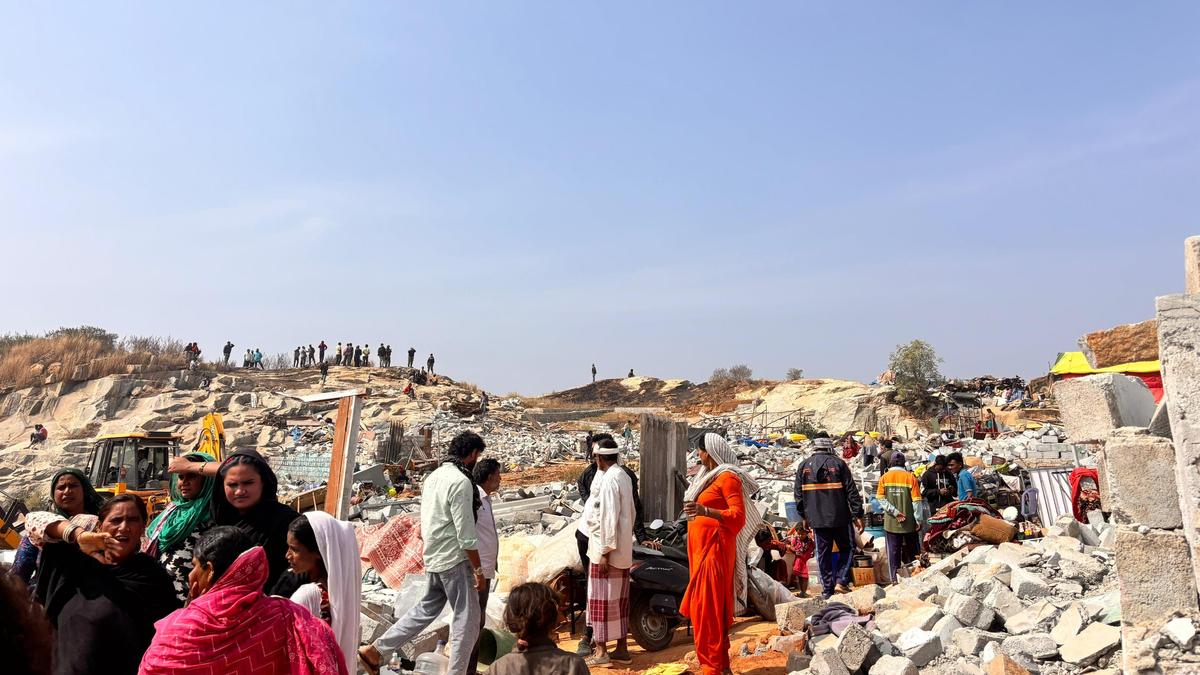
For families awaiting rehabilitation, the days following the demolition have been marked by hardship. Many have been staying in temporary shelters, with relatives, or in makeshift arrangements near the demolished sites. Parents expressed anxiety over children’s schooling, while elderly residents struggled with health issues exacerbated by displacement. The promise of alternative housing, though welcome, is being viewed cautiously by those who have experienced similar assurances in the past.
The government has said that the housing units to be distributed are part of existing rehabilitation schemes and are located in designated areas with access to basic amenities. Officials claim that efforts have been made to ensure that beneficiaries are not relocated to areas far removed from livelihoods and schools. Whether this assurance translates into reality will be closely watched.
Political reactions to the Kogilu demolition have been sharp. Opposition parties accused the government of insensitivity and poor planning, arguing that enforcement without rehabilitation undermines trust in governance. The ruling establishment, however, has defended its actions, stating that illegal constructions cannot be allowed to proliferate, but that genuine residents will not be left without support.
DEMOLITION, DISPLACEMENT, AND QUESTIONS OF DUE PROCESS
The Kogilu demolition has reopened long-standing debates about urban expansion and the treatment of informal settlements. As Bengaluru continues to grow outward, land values have soared, and conflicts over ownership and legality have become increasingly common. Informal housing clusters often emerge in these transitional zones, occupied by working-class families who serve the city but lack secure housing options.
Residents affected by the demolition argue that they were victims of administrative ambiguity. Many claim they possessed electricity connections, water supply, and other civic services, which they believed legitimised their occupation. The sudden declaration of illegality, followed by demolition, has left them questioning how responsibility is shared between citizens and the state.
Legal experts note that while demolitions may be legally justified, the manner of execution matters. Due process, adequate notice, and rehabilitation are essential to ensure that enforcement does not become punitive. In the Kogilu case, the speed of the demolition and the initial lack of clarity on rehabilitation have been criticised as avoidable failures.
The government maintains that notices were issued and that residents were aware of the illegality of the structures. Officials argue that repeated warnings were ignored, leaving authorities with no option but to proceed. However, the emotional testimonies of displaced families have complicated this narrative, highlighting the gap between legal compliance and lived reality.
Civil society organisations have stepped in to provide temporary relief, distributing food, blankets, and legal assistance. Activists argue that the state must adopt a more humane approach to urban governance, recognising that informal settlements are often the result of systemic housing shortages rather than deliberate lawbreaking. They warn that demolitions without robust rehabilitation deepen social inequality.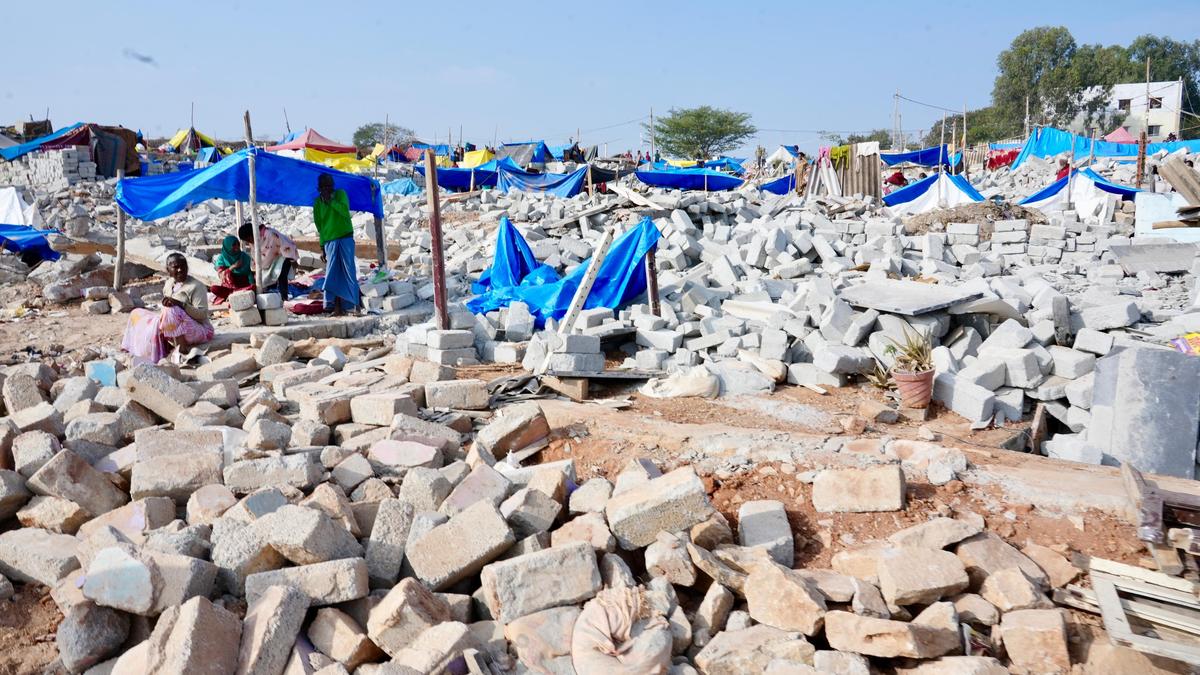
The announcement of alternative housing distribution on January 2 has been framed by the government as evidence of responsiveness. Yet, scepticism remains. Previous experiences of delayed or inadequate rehabilitation have left many residents wary. The key concern is whether the housing provided will be timely, adequate, and truly accessible to those most in need.
The eligibility criteria have emerged as a flashpoint. Families lacking formal documents, despite long-term residence, fear exclusion. Women-headed households and migrant workers are particularly vulnerable in such processes. Officials have said that grievance redressal mechanisms will be available, but details remain unclear.
Urban planners observing the episode argue that Kogilu reflects a broader failure to integrate affordable housing into city planning. When low-income workers are pushed to the margins without legal options, informal settlements become inevitable. Demolitions, they say, address symptoms rather than causes.
REHABILITATION PROMISES AND THE TEST AHEAD
As January 2 approaches, attention is firmly on how the alternative housing distribution will be executed. Officials have stated that beneficiaries will be handed allotment documents and given access to housing units equipped with basic infrastructure. The process, they say, will be overseen by senior administrators to ensure transparency and order.
For displaced families, the day represents both hope and anxiety. Many worry about last-minute exclusions, delays, or inadequate facilities. Mothers have voiced concerns about sanitation and safety, while workers are anxious about commuting distances that could affect livelihoods. These practical considerations will shape how the rehabilitation is ultimately judged.
Political leaders have indicated that they will monitor the process closely. Some have promised to be present during the distribution to ensure accountability. Opposition parties, meanwhile, have warned that any failure to deliver on promises will be raised aggressively in public forums. The Kogilu issue has thus become a litmus test for the government’s approach to urban justice.
Experts emphasise that rehabilitation should not be seen as a one-time gesture but as part of a sustained policy framework. Providing a house is only the first step; access to services, employment opportunities, and social integration are equally important. Without these, relocation risks becoming another form of marginalisation.
The administration has also hinted at reviewing its communication strategies to prevent similar backlash in the future. Officials acknowledge that clearer engagement with communities prior to enforcement could reduce conflict and build trust. Whether these lessons are institutionalised remains to be seen.
For Bengaluru, the Kogilu demolition is a reminder of the human cost of rapid urbanisation. As infrastructure projects and land enforcement intensify, more such confrontations may emerge unless housing policy keeps pace with growth. The city’s global aspirations, observers argue, must be matched by inclusive planning.
Residents not directly affected by the demolition have also been watching developments closely. Many empathise with displaced families but also express concern about unauthorised constructions and infrastructure strain. This tension reflects a broader urban dilemma: how to balance legality, development, and compassion.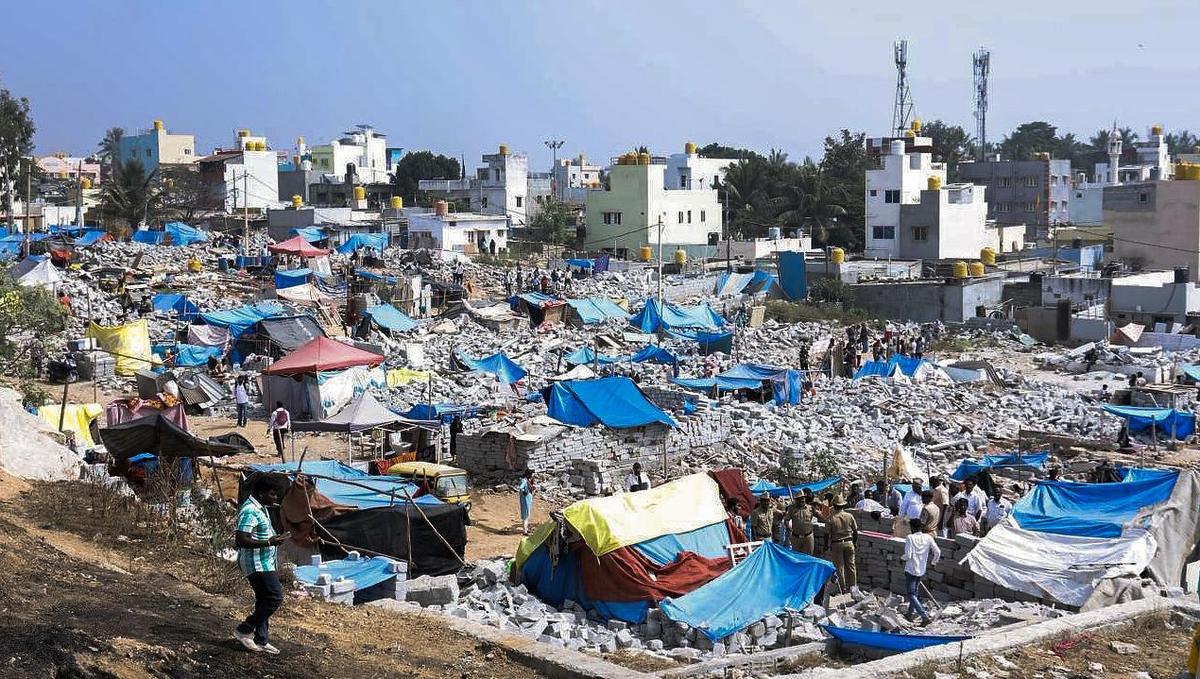
Social workers stress that children are among the most affected in such crises. Displacement disrupts education, healthcare access, and emotional stability. They urge authorities to prioritise schooling continuity and psychosocial support alongside housing distribution.
As the government prepares for the January 2 distribution, the credibility of its assurances hangs in the balance. A smooth, fair process could help restore trust and offer a model for handling similar situations. Conversely, missteps could deepen resentment and prolong suffering.
Ultimately, the Kogilu episode forces a reckoning with how cities treat their most vulnerable residents. Enforcement of law is essential, but so is empathy. The alternative housing distribution is not just an administrative exercise; it is a statement about the kind of urban future Karnataka envisions.
For the families waiting to rebuild their lives, January 2 is more than a date on the calendar. It is a moment that could determine whether loss gives way to recovery, or whether displacement becomes another unresolved chapter in the city’s relentless expansion.
Follow: Karnataka Government
Also read: Home | Channel 6 Network – Latest News, Breaking Updates: Politics, Business, Tech & More
