
Karnataka is reportedly considering a major policy pivot as it prepares to challenge the central government’s VB-G RAM G Act while simultaneously rolling out its own state-level schemes aimed at similar objectives. The move signals a rare assertion of state autonomy in the face of federal legislation and reflects growing discontent among policymakers and citizens about the applicability and impact of the VB-G RAM G Act in Karnataka. Government sources indicate that discussions are underway to craft a multi-pronged strategy that combines legal, administrative, and welfare measures to safeguard the interests of residents while pursuing independent development priorities.
The VB-G RAM G Act, enacted by the central government, aims to regulate certain sectors across the country, introducing uniform standards and compliance protocols. While its proponents argue that it is intended to streamline governance and bring consistency, critics in Karnataka claim that it may overlook state-specific conditions, local socio-economic realities, and administrative challenges unique to the region. This perception has fuelled political debates and prompted the state to explore alternative approaches.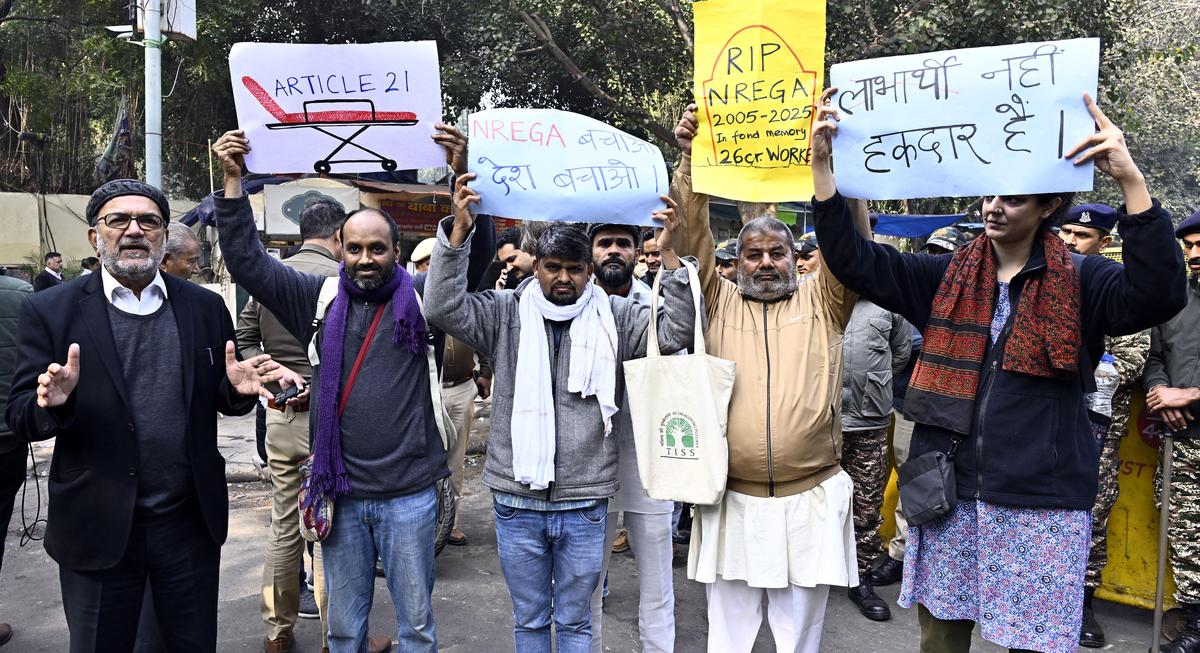
Officials in Karnataka argue that, in several areas, the VB-G RAM G Act conflicts with existing state policies and schemes. The Act, they contend, centralises authority in a way that could limit the state’s flexibility in addressing local priorities, particularly in rural development, resource allocation, and welfare schemes tailored for Karnataka’s diverse communities. By starting its own state-specific schemes, the government seeks to bridge gaps left by the central legislation while reinforcing its commitment to citizens.
POLITICAL AND ADMINISTRATIVE SIGNALS
Sources within the state government suggest that legal experts have been tasked with examining the VB-G RAM G Act’s provisions in detail, identifying clauses that may be challenged under the constitutional framework of federalism. The emphasis is on ensuring that Karnataka retains decision-making powers in sectors where the state has traditionally exercised jurisdiction. Officials believe that a combination of legal scrutiny and independent policy action will allow the state to assert its autonomy without entirely rejecting the Act’s objectives.
Political analysts note that Karnataka’s move is also designed to send a clear signal to both the central government and the public. By publicly considering independent schemes, the state demonstrates responsiveness to citizen concerns and positions itself as a proactive administrator rather than a reactive implementer of central directives. This approach, they argue, may have electoral implications, enhancing the ruling party’s image as a defender of state rights and local interests.
Within bureaucratic circles, discussions have focused on the administrative feasibility of launching parallel state-level initiatives. Officials emphasise that these schemes will leverage existing infrastructure, local governance networks, and technological platforms to ensure efficiency. By aligning with ongoing state priorities, the government hopes to deliver tangible benefits to citizens while maintaining compliance with overarching legal frameworks.
Critics of the central Act argue that its uniform application risks marginalising regional identities and priorities. Karnataka, with its diverse socio-economic landscape, faces unique challenges in sectors such as agriculture, water management, and local governance. State leaders maintain that their schemes will be tailored to these realities, providing more practical solutions than the one-size-fits-all provisions of the VB-G RAM G Act.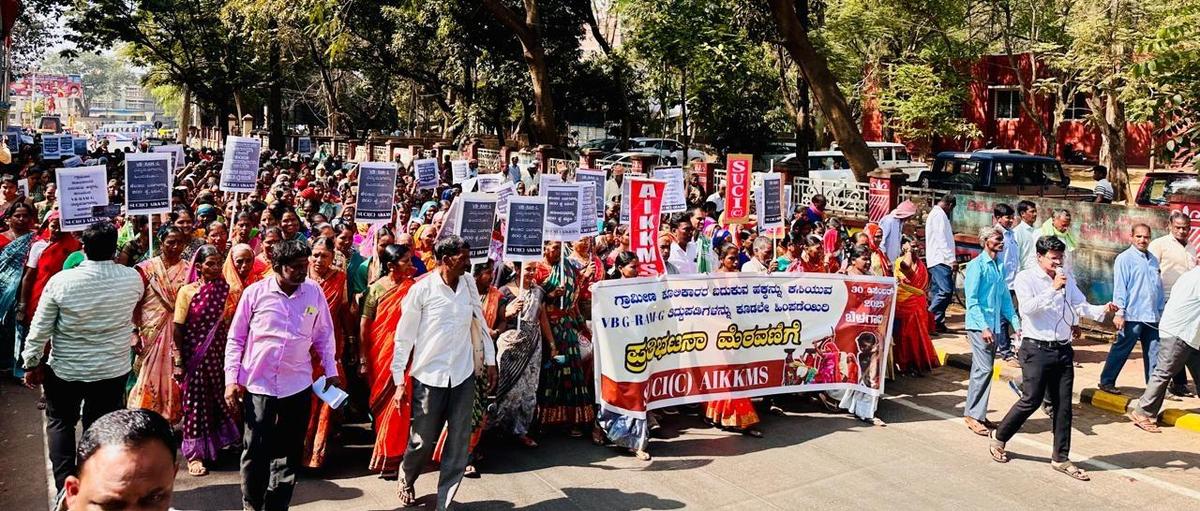
STATE SCHEMES AND DEVELOPMENT PRIORITIES
While details of the proposed state-level schemes remain under discussion, insiders indicate that they will focus on key sectors such as rural development, employment generation, infrastructure improvement, and welfare for vulnerable communities. By designing programs specifically for Karnataka, the government aims to fill gaps left by central regulations, ensuring that residents do not face delays or obstacles in accessing benefits.
Officials highlight that these schemes will incorporate feedback from local representatives, Panchayati Raj institutions, and civil society groups. This participatory approach is intended to ensure that programs are inclusive, context-sensitive, and directly address citizen needs. Observers suggest that such engagement could improve governance outcomes, enhance citizen satisfaction, and strengthen accountability mechanisms.
Legal experts note that Karnataka’s approach—challenging certain provisions while simultaneously rolling out state initiatives—is not unprecedented. Several states have historically adopted similar strategies when central legislation conflicted with regional priorities. The key challenge lies in ensuring that state schemes complement rather than contradict central mandates, avoiding legal ambiguities and administrative confusion.
By framing its strategy as both defensive and proactive, Karnataka hopes to balance legal compliance with innovative governance. Officials emphasise that the goal is not to undermine central authority but to assert state discretion in areas where local realities demand tailored solutions. This balancing act will be critical in ensuring that the state’s approach withstands scrutiny and delivers meaningful benefits to citizens.
LEGAL AND CONSTITUTIONAL CHALLENGES
The potential legal challenge to the VB-G RAM G Act centers on the constitutional division of powers between the state and the center. Article 246 and the Seventh Schedule of the Indian Constitution outline the distribution of legislative powers, which Karnataka’s legal team is scrutinising for possible overreach. Officials suggest that certain provisions of the Act may encroach upon state subjects, providing grounds for judicial review if necessary.
Political observers note that any legal confrontation would be closely watched across India, given its implications for federalism and state autonomy. A successful challenge could set a precedent for other states seeking to assert regional priorities in the face of uniform central legislation. Conversely, failure could reaffirm central authority, potentially influencing policy approaches in multiple states.
Karnataka’s approach also raises questions about administrative coordination. Implementing state-specific schemes while a central Act remains in effect requires careful alignment of guidelines, reporting structures, and resource allocation. Government officials have indicated that inter-departmental task forces will be established to manage these complexities, ensuring that citizens receive benefits seamlessly and without duplication.
Legal analysts highlight the importance of clarity in communication during such a policy initiative. Misunderstandings or perceived conflicts between state and central authorities could generate confusion among beneficiaries. Therefore, the state plans to issue detailed advisories and conduct awareness campaigns to inform citizens about eligibility criteria, application procedures, and grievance redressal mechanisms under its independent schemes.
POLITICAL IMPLICATIONS AND CITIZEN EXPECTATIONS
The VB-G RAM G Act controversy comes at a time of heightened political sensitivity in Karnataka. Opposition parties have criticised the central legislation, citing concerns about uniformity versus state-specific needs, while also questioning the timing and intent of the Act. The ruling state government’s decision to explore independent schemes allows it to address citizen concerns, maintain political credibility, and strengthen its standing ahead of future electoral contests.
Citizens, particularly in rural areas and sectors affected by the Act, are closely monitoring developments. Many view Karnataka’s initiative as a proactive measure to protect local interests, ensuring that benefits reach intended recipients without bureaucratic hurdles. Observers suggest that transparent communication and timely implementation of state schemes will be crucial in shaping public perception and trust.
Community leaders have welcomed the state’s move but emphasised that success depends on execution. They argue that legal challenges and scheme design must go hand in hand with robust monitoring, grievance redressal, and participatory governance. Without these measures, even well-intentioned programs risk being ineffective or inaccessible to those who need them most.
The opposition has signalled cautious support, framing Karnataka’s initiative as a responsible assertion of state rights. However, political debates are likely to intensify as the state moves from discussion to implementation, with scrutiny of both the legal strategy and the design of independent schemes. Analysts predict that public messaging and stakeholder engagement will play a key role in shaping the narrative.
IMPLEMENTATION STRATEGIES AND MONITORING
Officials have indicated that the rollout of Karnataka-specific schemes will be phased, prioritising sectors where the VB-G RAM G Act has the most significant impact. This phased approach allows the government to test administrative processes, identify potential gaps, and make adjustments before wider implementation. By ensuring operational readiness, the state hopes to minimise disruption and maximise benefits.
Digital tools are expected to play a central role in the administration of independent schemes. Government portals, mobile applications, and local governance networks will be leveraged for beneficiary registration, fund disbursal, and progress monitoring. This approach aims to reduce corruption, ensure accountability, and provide real-time tracking of outcomes.
Monitoring committees comprising officials, civil society representatives, and independent experts are likely to be set up to oversee both the legal and administrative aspects of Karnataka’s strategy. These committees will evaluate the effectiveness of state schemes, assess compliance with existing laws, and recommend corrective measures as needed. Experts note that such oversight mechanisms are essential for maintaining transparency and ensuring public trust.
The government has also stressed the importance of communication with central authorities. Officials maintain that Karnataka’s strategy is not confrontational but seeks cooperative engagement wherever possible. By negotiating administrative alignment and clarifying the state’s unique circumstances, the government hopes to prevent conflicts while asserting its autonomy in policy implementation.
SOCIO-ECONOMIC IMPACT AND CITIZEN BENEFITS
The independent schemes proposed by Karnataka aim to have wide-ranging socio-economic impact. Officials suggest that they will address local employment, skill development, rural infrastructure, and welfare initiatives, particularly for marginalised communities. By focusing on local needs, the state hopes to achieve higher participation, improve livelihoods, and ensure equitable access to resources.
Follow: Karnataka Government
Also read: Home | Channel 6 Network – Latest News, Breaking Updates: Politics, Business, Tech & More
