
Most Expensive Saree and the Story Behind an Unmatched Indian Masterpiece
Most Expensive Saree ever created is not just a garment but a documented milestone in Indian textile history. The Vivaah Pattu Kanjeevaram saree, crafted by Chennai Silks, earned global attention after it entered the Guinness World Records as the costliest silk saree in the world. Sold in 2008 for ₹39.31 lakh, this creation stood apart not because of brand value alone, but because of the depth of craftsmanship, time, and materials involved.
Unlike traditional silk sarees designed mainly for weddings, this saree was conceived as a tribute to Indian art, heritage, and weaving excellence. Every element of the saree was planned with precision, making it less of a fashion product and more of a cultural artifact.
Most Expensive Saree and the Materials That Made It Extraordinary
Most Expensive Saree gained its value largely due to the rare materials used in its making. Weighing close to eight kilograms, the saree was woven using pure silk combined with threads of gold, silver, and platinum. These metals were not surface embellishments but part of the weaving process itself, making the saree structurally complex.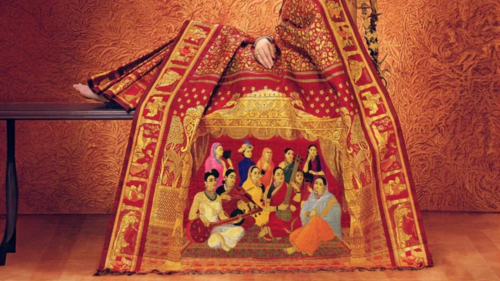
Adding to its rarity, the saree was decorated with navratna gemstones, including diamonds, rubies, emeralds, and other precious stones. These were carefully embedded to enhance the visual richness without disturbing the fabric’s balance. The use of such materials significantly increased the cost, but more importantly, raised the technical difficulty of the weaving process.
What separated this saree from luxury clothing was that nothing was mass-produced. Every thread, stone, and color placement was handled manually by experienced artisans trained in traditional Kanjeevaram weaving techniques.
Most Expensive Saree and Its Artistic Significance
Most Expensive Saree is also known for its strong connection to Indian fine art. One of its most defining features was the handwoven recreation of 11 paintings by Raja Ravi Varma, one of India’s most respected painters. These artworks were not printed or embroidered later; they were woven directly into the fabric.
The pallu featured the famous “Galaxy of Musicians,” recreated thread by thread using 64 different colors. Achieving such visual detail through weaving required double warp techniques and exceptional coordination among artisans. Each figure, expression, and background element had to be translated into textile form without losing artistic accuracy.
This level of integration between classical art and textile craftsmanship is rarely seen, even in high-end couture. It turned the saree into a moving canvas rather than a decorative outfit.
Most Expensive Saree and the Time Behind Its Creation
Most Expensive Saree was the result of sustained effort rather than speed. A team of 36 master weavers worked on the project for over 4,760 hours, taking more than one year to complete a single saree. Each artisan was responsible for a specific section, ensuring consistency and precision throughout the fabric.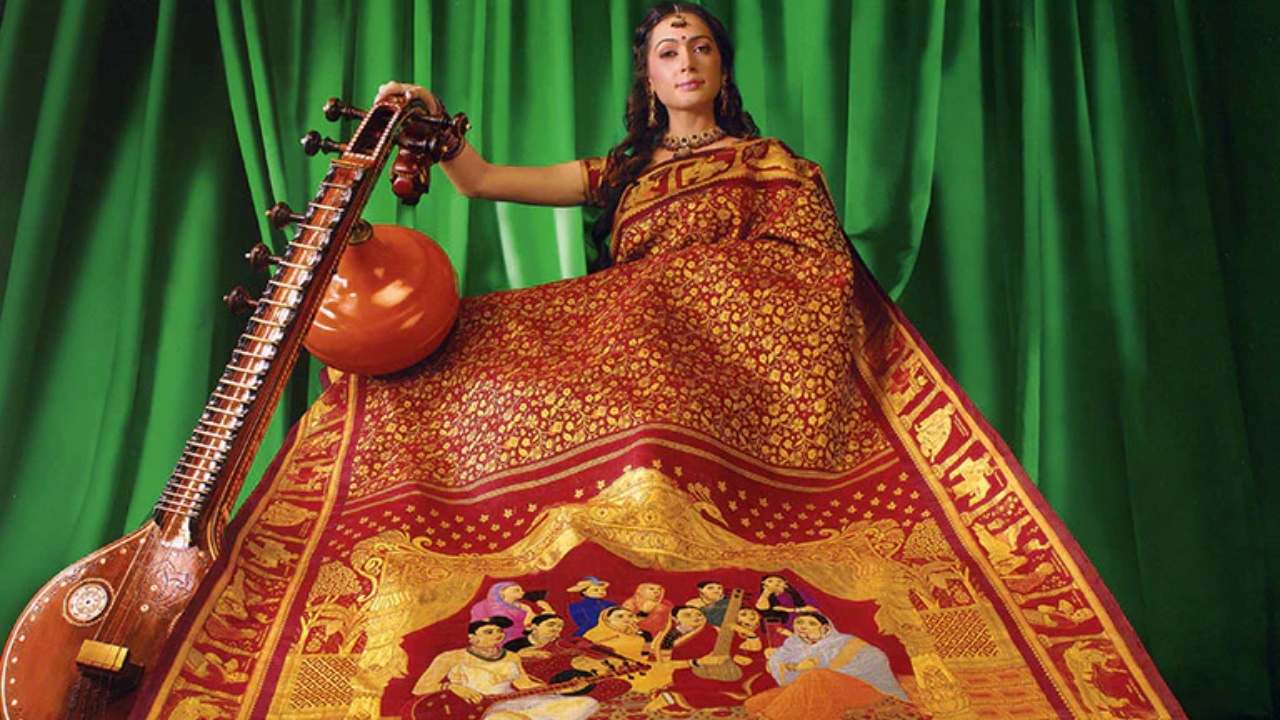
The long production time was necessary due to the complexity of weaving metallic threads and gemstones without damaging the silk base. Any mistake could have ruined months of work. This careful, slow process reflects the discipline behind traditional Indian weaving, where speed is secondary to perfection.
The effort did not end with the first saree. In 2009, a second version of the Vivaah Pattu Kanjeevaram was created and sold for around ₹40 lakh, reinforcing its status as a benchmark in luxury textiles.
Most Expensive Saree as a Cultural Symbol
Most Expensive Saree represents more than wealth or exclusivity. It stands as evidence that traditional Indian craftsmanship can achieve global recognition without compromising authenticity. In an era dominated by machine-made fashion, this saree reminded the world of the value of skilled human labor.
View this post on Instagram
It also highlighted how regional crafts like Kanjeevaram weaving can evolve into international symbols when supported by vision, investment, and respect for artisans. The saree became a point of pride not just for the brand but for Indian textile heritage as a whole. Also Read: Dharmendra Pradhan Releases “Khutbat-e-Modi: Lal Qila Ki Faseel Se”, Urdu Compilation of PM’s Independence Day Speeches: 2026
Conclusion
Most Expensive Saree remains unmatched because it combined art, tradition, and craftsmanship at an extraordinary scale. More than its price, it is remembered for proving that heritage, when preserved correctly, can create history.
