
India is set to achieve a major technological milestone with the deployment of the country’s first commercial quantum computer at the Indian Institute of Information Technology, Dharwad. Announcing the development, Minister for Information Technology and Biotechnology Priyank Kharge said the initiative would place Karnataka and India firmly on the global map of next-generation computing. The move is being hailed as a landmark step in India’s journey towards advanced research, deep technology innovation, and strategic technological self-reliance.
The quantum computer, once operational, is expected to significantly enhance India’s capabilities in complex problem-solving areas such as cryptography, material science, drug discovery, climate modelling, financial optimisation, and artificial intelligence. Unlike conventional computers that process information in bits, quantum computers operate using quantum bits or qubits, enabling them to perform calculations at speeds unimaginable with classical systems. Officials said the deployment at IIIT-Dharwad marks the transition of quantum technology in India from experimental research to practical, commercial application.
Speaking on the occasion, the Minister described the initiative as a “defining moment” for India’s digital future. He noted that positioning such advanced infrastructure in Dharwad reflects the State’s commitment to decentralising technological growth and promoting innovation beyond metropolitan cities. The project, he said, aligns with Karnataka’s broader vision of becoming a global technology and innovation hub.
WHY IIIT-DHARWAD MATTERS
The selection of IIIT-Dharwad as the host institution is significant. Located in North Karnataka, the institute has been steadily emerging as a centre for advanced computing research and talent development. By hosting India’s first commercial quantum computer, IIIT-Dharwad is expected to become a focal point for quantum research, skill development, and industry collaboration.
Officials said the facility will not be limited to academic research alone. It will also support startups, industry partners, and government agencies working on real-world applications of quantum computing. Researchers from across the country will be able to access the system, fostering a collaborative ecosystem that accelerates innovation and practical use cases.
The move is also expected to inspire students and researchers in the region, providing them direct exposure to frontier technologies. Academic leaders believe that access to such infrastructure at an early stage will help build a strong domestic talent pipeline in quantum science, an area where global demand for skilled professionals is rapidly growing.
BOOST TO INDIA’S QUANTUM MISSION
The deployment aligns closely with India’s National Quantum Mission, which aims to develop indigenous quantum technologies and applications over the coming years. Experts note that commercial deployment is a crucial step in moving beyond laboratory-scale experiments to scalable, usable systems.
By hosting a commercial quantum computer, India signals its readiness to compete with global leaders in quantum technology. The system is expected to support research in secure communications, optimisation problems, and next-generation algorithms that could have strategic and economic implications.
Officials emphasised that the initiative will also contribute to reducing India’s dependence on foreign quantum infrastructure. Developing domestic expertise and usage capacity is seen as essential for safeguarding national interests in an era where quantum technology could redefine cybersecurity and data protection.
INDUSTRY AND STARTUP OPPORTUNITIES
Industry leaders have welcomed the announcement, describing it as a catalyst for innovation in deep-tech startups. Access to commercial quantum computing infrastructure within India is expected to lower entry barriers for startups experimenting with quantum algorithms and applications.
Startups working in areas such as logistics optimisation, financial modelling, healthcare analytics, and advanced simulations are likely to benefit. The presence of the system at IIIT-Dharwad also opens the door for public-private partnerships, with companies collaborating directly with academic researchers to develop solutions tailored to Indian and global markets.
Officials indicated that incubation and innovation programmes may be linked to the quantum facility, enabling startups to test and validate ideas in a real-world environment. This could position Karnataka as a leading destination for quantum entrepreneurship in Asia.
DECENTRALISING TECHNOLOGY GROWTH
One of the most notable aspects of the announcement is the emphasis on regional development. By choosing Dharwad over established technology hubs, the government aims to demonstrate that cutting-edge innovation can thrive outside major cities.
The Minister said the move would help bridge regional disparities in access to advanced infrastructure. It is expected to attract talent, investment, and academic collaboration to North Karnataka, contributing to balanced economic growth. Local stakeholders believe this could have a multiplier effect, strengthening educational institutions, research culture, and employment opportunities in the region.
CHALLENGES AND THE ROAD AHEAD
While the announcement has generated excitement, experts caution that sustaining a quantum ecosystem requires continuous investment in skills, research funding, and industry engagement. Quantum computers demand specialised expertise, robust maintenance, and constant upgrades to remain relevant.
Officials acknowledged these challenges and said plans are in place to train faculty, researchers, and students in quantum programming and hardware concepts. Collaborative programmes with national and international institutions are also being explored to ensure knowledge exchange and best practices.
A DEFINING MOMENT FOR INDIA’S TECH FUTURE
The deployment of India’s first commercial quantum computer at IIIT-Dharwad represents more than a technological achievement. It symbolises a shift in ambition, signalling India’s intent to lead in frontier technologies rather than follow global trends.
For Karnataka, the initiative reinforces its reputation as the country’s technology powerhouse while extending that promise to new regions. For India, it marks a critical step towards mastering technologies that could shape economies, security, and innovation in the decades to come.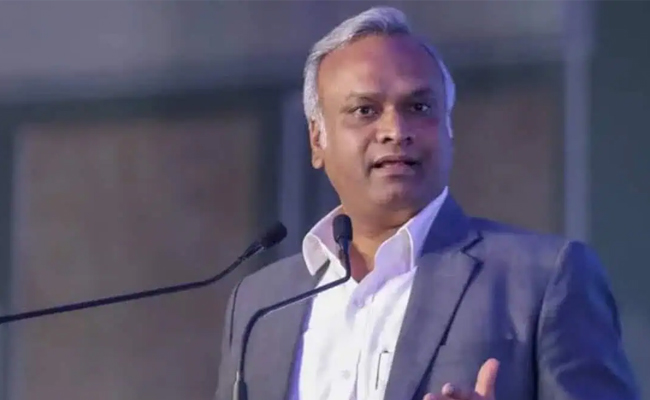
As the system becomes operational, expectations are high that it will not only advance research but also inspire a new generation of scientists, engineers, and entrepreneurs. In that sense, the quantum computer at Dharwad is not just a machine, but a statement of India’s readiness to embrace the future.
The deployment of India’s first commercial quantum computer is also expected to reshape academic curricula at IIIT-Dharwad and partner institutions. Faculty members indicated that specialised courses in quantum algorithms, quantum hardware fundamentals, and applied quantum computing will be gradually introduced. This will ensure students are not merely observers of the technology but active participants in its evolution. Exposure to hands-on quantum systems at the undergraduate and postgraduate levels is rare even globally, and such access could give Indian students a decisive edge in higher studies and research careers.
From a research perspective, the quantum computer will allow Indian scientists to tackle problems that were previously computationally impractical. Fields such as molecular modelling, advanced materials research, and energy optimisation stand to benefit significantly. Researchers explained that quantum systems can simulate complex molecular interactions far more efficiently than classical supercomputers. This could accelerate breakthroughs in battery technology, sustainable materials, and pharmaceutical research, reducing development timelines and costs while enhancing India’s innovation competitiveness.
Cybersecurity is another area expected to see major gains from the quantum deployment. As quantum computing evolves, it poses both opportunities and threats to existing encryption systems. Experts believe that having early access to commercial quantum infrastructure will help India prepare for a post-quantum security environment. Research into quantum-resistant encryption and secure communication protocols can be conducted proactively, strengthening national digital security frameworks and protecting sensitive data across government, finance, and critical infrastructure sectors.
The initiative also reflects Karnataka’s long-term policy focus on deep technology investments. Officials said the State has been consciously moving beyond conventional IT services towards emerging areas such as artificial intelligence, semiconductors, biotechnology, and now quantum computing. The quantum computer at IIIT-Dharwad is expected to integrate with existing AI and data science research, enabling hybrid approaches that combine classical and quantum techniques for enhanced performance and innovation.
Economists and policy analysts see the development as a strategic investment rather than a short-term achievement. Quantum technologies are expected to influence global economic power structures over the next few decades. By entering the commercial quantum space early, India positions itself to capture future value in high-impact sectors. Analysts note that countries investing today in quantum research are likely to dominate tomorrow’s intellectual property, standards, and global supply chains.
The presence of such advanced infrastructure is also likely to attract international collaboration. Academic institutions and research organisations from abroad may seek partnerships with IIIT-Dharwad, bringing global expertise into India’s quantum ecosystem. Officials said collaborative research projects, joint workshops, and visiting scholar programmes could follow, enhancing knowledge exchange while showcasing India’s growing capabilities in frontier science and technology.
Local industry stakeholders believe the project will have long-term regional benefits beyond research outcomes. Increased academic prominence could lead to improved infrastructure, higher student intake, and greater private investment in the Dharwad region. Over time, this could stimulate the creation of a technology corridor in North Karnataka, generating employment opportunities and encouraging skilled professionals to work outside traditional metropolitan hubs.
Ultimately, the deployment of the commercial quantum computer represents a convergence of ambition, policy vision, and technological readiness. While challenges remain in scaling applications and nurturing expertise, the initiative signals confidence in India’s scientific talent and institutional capacity. As quantum computing gradually moves from theory to real-world impact, the Dharwad facility is expected to play a defining role in shaping India’s position in the global technology landscape.
Follow: Karnataka Government
Also read: Home | Channel 6 Network – Latest News, Breaking Updates: Politics, Business, Tech & More
