
Janata Dal (Secular) leader Nikhil Kumaraswamy on Tuesday said that no final decision had been taken on whether the party would contest the upcoming local body elections on its own or explore electoral understandings. Addressing reporters, he clarified that internal discussions were still underway and that the party leadership would arrive at a decision only after assessing political conditions, organisational preparedness, and grassroots feedback across districts.
Nikhil emphasised that local body elections required a different approach compared to Assembly or Parliamentary polls, as they were deeply rooted in local issues, community dynamics, and candidate credibility. “We are listening to our workers, local leaders, and district units. Their inputs are crucial before taking any major electoral decision,” he said, adding that speculation about a final call was premature.
Grassroots Feedback Drives Strategy
Party insiders say district-level meetings have revealed mixed opinions on contesting alone. While some leaders believe a solo run will help revive the JD(S)’s independent identity, others argue that strategic adjustments are needed in urban centres. Nikhil Kumaraswamy said such differing views were natural in a democratic party and must be respected. He stressed that feedback from ward-level workers, not just senior leaders, would influence the final call. “Local body elections are about proximity to people. Those working on the ground understand voter mood better than anyone else,” he said, underscoring the importance of decentralised decision-making.
Urban Challenge Acknowledged
Nikhil openly acknowledged that urban local bodies remain a challenging terrain for the JD(S). He said the party was aware of its limited presence in big cities and municipal corporations, where politics is often shaped by resource mobilisation and visibility. However, he added that recent civic issues such as water shortages, poor waste management, and rising property taxes had created space for alternative voices. “Urban voters are increasingly issue-conscious. If we present credible candidates and practical solutions, we can slowly rebuild trust,” he said, calling for patience rather than quick electoral fixes.
Youth and Women in Focus
The JD(S) leader said special emphasis would be placed on encouraging youth and women to contest local body polls. According to him, empowering these groups was essential for responsive governance at the grassroots. He said the party was working on identifying potential candidates from self-help groups, student organisations, and farmer collectives. “Local governance should reflect the diversity of society. Women and young people bring new perspectives to civic administration,” Nikhil said, adding that training programmes and mentoring would be part of the party’s preparatory efforts.
Candidate Selection to Be Crucial
Nikhil Kumaraswamy said candidate selection would play a decisive role in local body elections, often more than party affiliations. He stressed that the JD(S) would prioritise clean image, local acceptance, and service record while finalising nominees. “People know their local representatives personally. If the candidate lacks credibility, no alliance or symbol can compensate,” he said. The party, he added, would avoid parachuting candidates from outside wards and would instead rely on individuals with long-standing engagement in community issues and civic initiatives.
No Hurry Amid Political Noise
Reacting to speculation from rival parties, Nikhil said the JD(S) would not be pressured into announcing its strategy prematurely. He described the ongoing political commentary as part of election-season noise. “Every party is trying to project confidence. That does not mean we must rush our decisions,” he said. He reiterated that the JD(S) preferred preparedness over announcements and would focus on organisational consolidation until the election notification was issued. “Silence should not be mistaken for indecision,” he added.
Role of Local Bodies Highlighted
Nikhil used the opportunity to stress the importance of local self-governments in Karnataka’s administrative structure. He said prolonged delays in holding elections had weakened civic accountability and affected service delivery. “When elected councils are absent, bureaucracy fills the gap, but democratic representation suffers,” he said. He urged the State government to ensure timely elections and empower local bodies with adequate funds and authority. According to him, strengthening municipalities and panchayats was essential for inclusive development and effective decentralisation.
Balancing Identity and Pragmatism
Political observers note that JD(S) faces a delicate balance between preserving its regional identity and adapting to changing electoral realities. Nikhil acknowledged this tension, saying the party did not want to lose its ideological core while responding to voter expectations. “We are a party rooted in Karnataka’s soil. At the same time, politics is dynamic, and strategies must evolve,” he said. He added that the leadership was conscious of long-term implications, not just immediate electoral outcomes, while weighing its options.
Final Word Awaited
Concluding his remarks, Nikhil Kumaraswamy said the party would communicate its decision clearly and transparently once consultations were complete. He assured workers that their voices would matter in the process and urged them to focus on public outreach in the meantime. “Elections are not just about winning seats, but about building relationships with people,” he said. Until the final call is made, the JD(S) leadership appears intent on keeping all options open while reinforcing its grassroots base ahead of the local body polls.
Focus on Cadre and Ground Strength
The JD(S) leader said the party’s immediate priority was strengthening its organisational structure at the booth and ward levels. According to him, rebuilding cadre confidence and energising workers was essential, irrespective of whether the party chose to go solo or enter into alliances. He noted that local body elections offered an opportunity to reconnect with voters on everyday civic issues such as water supply, sanitation, roads, and basic services.
Nikhil pointed out that JD(S) had traditionally maintained a strong presence in several rural and semi-urban pockets of Karnataka, particularly in the Old Mysuru region. “Our strength lies in our connection with farmers, rural communities, and local leaders. That strength does not disappear overnight,” he said, asserting that the party remained relevant in grassroots politics.
Alliance Question Still Open
Responding to questions about possible tie-ups, Nikhil Kumaraswamy said the party had not closed its doors on any option. However, he made it clear that alliances could not be driven by compulsion or short-term arithmetic. “Any decision on alliances must be based on mutual respect, ideological clarity, and benefit to our cadre. We will not rush into anything,” he said.
He added that local body elections often differed from State-level contests, where broader coalitions played a larger role. At the grassroots level, he said, voter preference was shaped more by individual candidates and local performance than by party symbols alone. This reality, he suggested, required careful thought before committing to either a solo or alliance-based strategy.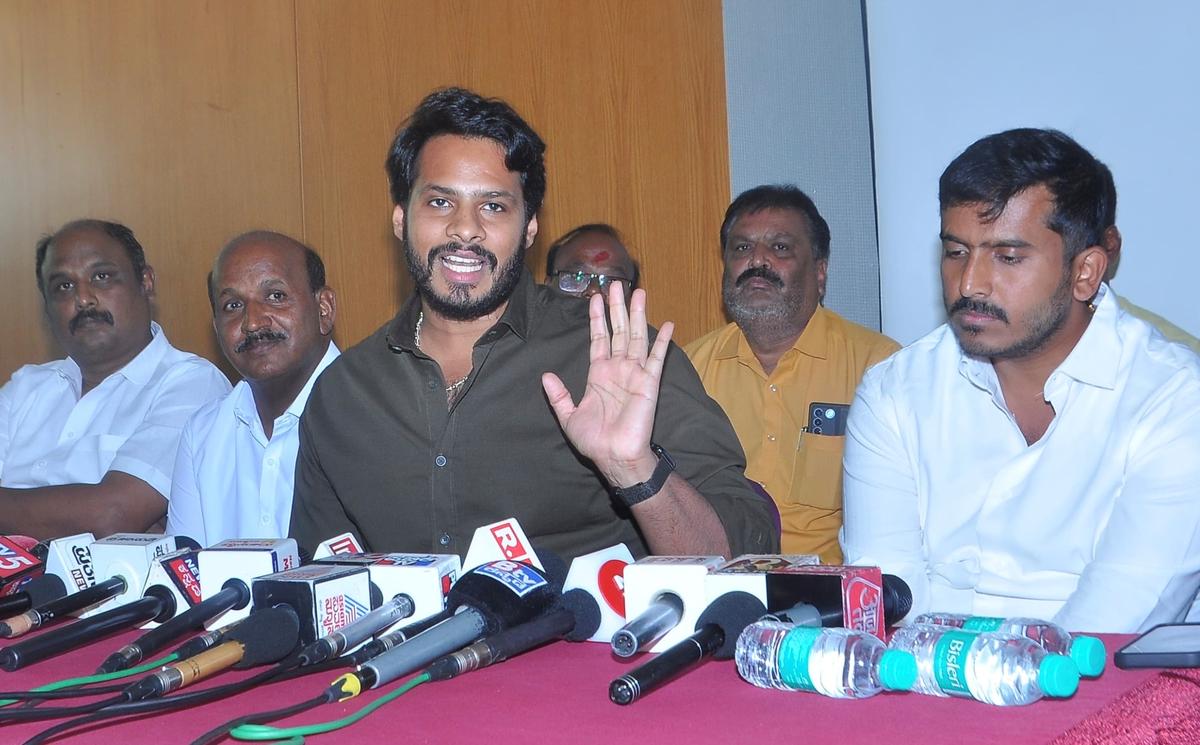
Lessons from Recent Elections
Nikhil acknowledged that recent electoral outcomes had prompted introspection within the party. He said the JD(S) leadership was reviewing its performance, identifying organisational gaps, and working on corrective measures. “Every election teaches us something. We are analysing what went wrong and what needs to improve, especially in urban local bodies,” he said.
He also stressed that the party was keen on giving opportunities to young leaders and first-time candidates in local elections. According to him, decentralised governance required representatives who were accessible, accountable, and familiar with local problems. “Local bodies are training grounds for future leadership,” he said.
State Political Context
The statement comes amid intense political activity in Karnataka, with major parties gearing up for elections to municipal corporations, city councils, and other local bodies that have been pending for several years. Delimitation exercises, reservation issues, and legal challenges have delayed polls, but political parties are now preparing for a possible announcement.
Within this context, the JD(S) faces strategic choices as it seeks to retain relevance in a political landscape dominated by the Congress and the BJP. Analysts note that a solo contest could help the party reassert its independent identity, while alliances could offer tactical advantages in urban areas where it has traditionally been weaker.
Emphasis on Issue-Based Politics
Nikhil Kumaraswamy said the party intended to centre its campaign on local governance issues rather than State or national-level political confrontations. He criticised what he described as excessive politicisation of civic bodies, arguing that local institutions should focus on service delivery instead of partisan rivalry.
“People want clean streets, reliable water supply, functioning streetlights, and transparent administration. That is what local body representatives are elected for,” he said, adding that JD(S) would highlight these concerns in its outreach programmes and meetings with residents’ associations.
Decision After Consultations
Reiterating that no final decision had been taken, Nikhil said the party would announce its stand only after completing consultations at all levels. He indicated that senior leaders, including former Chief Minister H.D. Kumaraswamy, would be involved in the decision-making process.
“Our party believes in collective leadership. We will not impose decisions from the top without hearing our workers,” he said. The timing of the announcement, he added, would depend on the election schedule and the completion of organisational reviews.
Looking Ahead
As uncertainty continues over the format and timing of local body elections, Nikhil Kumaraswamy’s remarks underline the JD(S)’s cautious approach. By keeping its options open, the party appears keen to balance electoral pragmatism with organisational rebuilding.
Whether the JD(S) ultimately chooses to go it alone or align with other parties, the decision is likely to shape its future trajectory in Karnataka’s grassroots politics. For now, the leadership maintains that patience, consultation, and preparation will guide its next move rather than haste or external pressure.
Follow: Karnataka Government
Also read: Home | Channel 6 Network – Latest News, Breaking Updates: Politics, Business, Tech & More
