
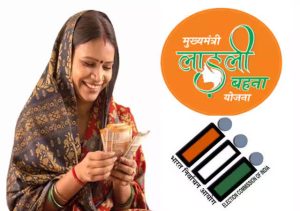
The Maharashtra government has announced that ₹ 3,000 will be credited to the bank accounts of beneficiaries under the Ladli Behna scheme on the occasion of Makar Sankranti, a move that has triggered a political debate just weeks ahead of the upcoming civic and state-level electoral milestones. The scheme, aimed at providing direct financial assistance to women from economically weaker sections, has been projected by the state administration as a key welfare initiative designed to improve household stability and empower women.
Under the plan, eligible women registered under the Ladli Behna scheme will receive a direct cash transfer into their linked bank accounts. The government has said that the transfer has been timed with Makar Sankranti to symbolise a fresh beginning for beneficiary families, many of whom rely on such support to meet daily expenses, healthcare costs and education needs of their children.
However, the opposition Congress has raised strong objections, alleging that the timing of the disbursement is politically motivated and aimed at influencing voters. Party leaders have questioned whether public money is being used to gain electoral advantage rather than being distributed strictly based on administrative schedules and welfare planning.
What is the Ladli Behna Scheme
The Ladli Behna scheme is one of Maharashtra’s flagship women-focused welfare programmes. It provides regular financial support to eligible women, particularly those from low-income households, widows, and single mothers. The scheme is designed to ensure a basic level of economic security for women, allowing them to manage household expenditures and emergencies without depending entirely on others.
The government has stated that the ₹ 3,000 payment for Makar Sankranti is part of the scheme’s continued rollout and not an extraordinary or one-time benefit. According to officials, funds have been allocated in the state budget to ensure timely transfers, and the banking system has been instructed to complete the credit process within a fixed window.
Authorities also said that digital monitoring tools are being used to ensure transparency and to prevent duplication or misuse. Beneficiaries are required to have Aadhaar-linked bank accounts to receive the amount, which helps verify identity and eligibility.
Why the Makar Sankranti Transfer Matters
Makar Sankranti holds cultural and social significance across Maharashtra and many parts of India. It is seen as a festival marking the transition into a brighter phase of the year, often associated with new beginnings and prosperity. By choosing this date for the transfer, the government is aiming to create a positive emotional and financial impact for beneficiaries.
For many families, ₹ 3,000 is a meaningful amount. It can help pay for essential groceries, school supplies, utility bills or medical needs. In rural and semi-urban areas, where income can be irregular, such assistance provides a sense of stability.
Government representatives have said that the scheme reflects their commitment to inclusive development and women’s welfare. They argue that empowering women financially has a direct impact on nutrition, education and overall family well-being.
Congress Raises Concerns Over Timing
The Congress party has strongly criticised the announcement, claiming that releasing funds just before crucial elections creates an unfair advantage for the ruling alliance. Party leaders argue that welfare schemes should operate on a fixed calendar rather than being aligned with festivals or politically sensitive periods.
Congress spokespersons have said that while they do not oppose financial assistance to women, they question the intent behind the Makar Sankranti timing. According to them, the move blurs the line between governance and campaigning, and could potentially violate the spirit of election fairness.
The party has also demanded clarity on how many beneficiaries will receive the amount and whether the payments were already scheduled or specially arranged for this date. They have called on the Election Commission and relevant authorities to examine the matter closely.
Government’s Response to Opposition Criticism
In response to the allegations, the Maharashtra government has defended its decision, stating that the Ladli Behna scheme has been operational for months and that regular transfers are part of its design. Officials have insisted that the Makar Sankranti transfer is simply one of the scheduled installments and not an election-driven announcement.
State leaders have also pointed out that welfare schemes should not be stalled or altered because of political calendars. They argue that beneficiaries should not be deprived of their entitled funds simply because elections are approaching.
The government has further emphasised that all financial disbursements are routed through proper administrative channels, audited and monitored to ensure accountability. They have urged opposition parties not to politicise programmes meant to support vulnerable sections of society.
Impact on Beneficiaries
For the women enrolled in the Ladli Behna scheme, the debate in political circles matters less than the actual receipt of money. Many beneficiaries see the ₹ 3,000 as crucial support that helps them manage rising costs of living.
Women in rural districts have said that such financial aid allows them to contribute to household decisions and reduce their dependence on male family members. In urban areas, beneficiaries often use the money for school fees, rent supplements or healthcare expenses.
The government has highlighted stories of women who have used the scheme’s benefits to start small businesses, pay for vocational training or invest in their children’s education, underlining the long-term impact of such welfare programmes.
Broader Political Implications
The Ladli Behna payment has become a focal point in Maharashtra’s wider political contest. Welfare schemes targeted at women and lower-income groups have increasingly become a central strategy for parties seeking to expand their voter base.
With multiple elections on the horizon, every major decision is being closely scrutinised for political intent. The opposition sees the Makar Sankranti transfer as part of a larger pattern of using welfare announcements to shape public opinion, while the government maintains that governance should continue uninterrupted.
Analysts note that women voters form a significant and influential segment of the electorate, making schemes like Ladli Behna politically as well as socially important. How voters perceive this latest transfer could play a role in shaping electoral outcomes.
What Comes Next
As the ₹ 3,000 transfers begin reaching beneficiary accounts, attention will shift to how smoothly the process is executed. Any technical glitches or delays could affect public perception, while a seamless rollout could strengthen confidence in the scheme.
At the same time, political debate over the timing and intent of the disbursement is likely to continue. The coming weeks will see more scrutiny of government welfare programmes as parties prepare for the electoral battles ahead.
For now, thousands of women across Maharashtra are set to receive financial assistance on Makar Sankranti, a development that underscores both the importance of social welfare and the intensity of the state’s political climate.
Read More: https://channel6network.com/raut-annamalai-mumbai-row/
