
The Election Commission of India has ordered an immediate halt to the transfer of funds under the Ladki Bahin welfare scheme in Maharashtra as the Brihanmumbai Municipal Corporation elections approach. The decision, taken under the Model Code of Conduct, aims to ensure that no government welfare measure is perceived as influencing voters during the sensitive pre-election period. The move has sparked widespread debate across political and civil society circles, with supporters calling it a necessary safeguard for free and fair elections while critics argue it disrupts financial assistance meant for women from economically vulnerable households.
Why the Election Commission Halted Ladki Bahin
The Ladki Bahin scheme was launched to provide direct cash support to eligible women, particularly those from low-income families, with the goal of improving household security, nutrition, and women’s financial independence. Over the past months, the initiative had been rolled out across multiple districts, and beneficiaries were receiving regular installments directly into their bank accounts through a direct benefit transfer system. With the BMC polls now imminent, the Election Commission has stepped in to prevent any continuation of the payments until the electoral process concludes.
According to officials familiar with the decision, the halt applies only to new or scheduled transfers that would have taken place during the period when the Model Code of Conduct is in force. The Election Commission has clarified that the scheme itself has not been cancelled and that funds will resume once the election process is completed. However, for many beneficiaries who rely on the money for essential expenses such as food, school fees, or medical needs, even a temporary pause has created uncertainty and anxiety.
Political Reactions and Impact on Beneficiaries
The ruling coalition in Maharashtra has defended the Ladki Bahin scheme as a long-term social welfare measure that should not be politicised. Leaders from the government side argue that the initiative was designed well before the BMC elections were announced and that its interruption could hurt women who have come to depend on the financial support. They maintain that welfare schemes are a routine part of governance and should not be automatically viewed as electoral inducements.
Opposition parties, on the other hand, have welcomed the Election Commission’s intervention. They claim the timing of recent transfers and promotional activities surrounding the scheme appeared aimed at boosting the ruling coalition’s prospects in urban civic polls, particularly in Mumbai, where women voters form a significant segment of the electorate. By stopping the transfers, they argue, the Commission has restored a level playing field and upheld the spirit of electoral neutrality.
Legal experts note that the Model Code of Conduct empowers the Election Commission to restrict government actions that could influence voter behavior, even if those actions are part of ongoing schemes. While the Commission generally avoids disrupting essential services, cash transfer programs are often scrutinized more closely because of their potential to be perceived as immediate benefits linked to voting decisions. Past elections in various states have seen similar pauses on new project announcements, subsidies, and financial disbursements once polling dates are declared.
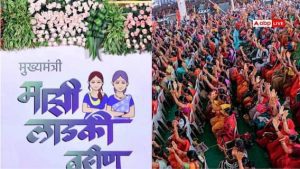
For beneficiaries, the impact is both practical and emotional. Many women enrolled in the Ladki Bahin scheme use the funds to manage household budgets in a period marked by rising prices of food, fuel, and utilities. Community groups have reported that some recipients had planned expenses around the expected installment dates and are now being forced to make short-term adjustments. While most understand that the pause is temporary, the lack of a clear timeline for resumption has added to their worries.
Read More: https://channel6network.com/maharashtra-ladli-behna-rs3000-transfer/
In Mumbai, where the BMC elections are being closely watched as a barometer of political strength, welfare schemes like Ladki Bahin have become part of the broader electoral narrative. Civic polls determine who controls one of India’s wealthiest municipal bodies, responsible for crucial services such as water supply, waste management, public health, and urban infrastructure. With high stakes on both sides, every policy move is being closely examined for its potential electoral impact.
The Election Commission has reiterated that its role is not to judge the merits of any welfare program but to ensure that the electoral process remains free from undue influence. Officials have stated that once polling is over and results are declared, the Maharashtra government will be free to resume transfers under the scheme, provided they follow standard administrative procedures. This assurance has been offered to calm fears among beneficiaries and to underline that the pause is procedural rather than punitive.
Political analysts suggest that the controversy could shape campaign messaging in the days leading up to voting. The ruling parties may highlight their commitment to women’s welfare and promise a swift restart of payments after the polls, while the opposition is likely to focus on issues of transparency, timing, and the ethical use of public funds. For voters, especially women who directly benefit from the scheme, the episode underscores how closely social welfare and electoral politics are intertwined.
As the city prepares for voting, the Ladki Bahin pause has become a symbol of the broader tension between governance and campaigning. It raises important questions about how governments can continue delivering welfare without crossing electoral lines and how institutions like the Election Commission can enforce neutrality without causing hardship. The coming weeks will reveal whether the temporary suspension has any lasting impact on public opinion or on the eventual outcome of the BMC elections, but for now, it has firmly placed women’s welfare and electoral integrity at the center of Maharashtra’s political conversation.
Read More: https://channel6network.com/soldier-paternity-leave-death-maharashtra/
