
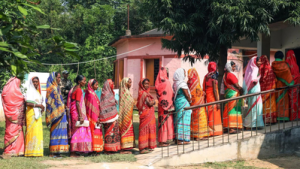
As elections loom across India, political parties are increasingly tailoring their campaigns around women voters, underscoring a shift towards “women first” as a key electoral strategy. From state assemblies to municipal polls, women have emerged as a critical voting bloc whose preferences can sway results, prompting parties to adopt women-centric agendas and welfare promises. This trend highlights how women’s political influence is rising at both local and state levels, turning gender-focused policies and outreach into instrumental components of electoral strategy.
Political analysts describe women as emerging “kingmakers” in elections, with parties seeking to address their aspirations and needs through targeted welfare programmes, promises of economic empowerment and increased political representation. The growing importance of women voters comes amid broader demographic changes and a recognition that women are not only a substantial portion of the electorate but also influential decision-makers within households and communities.
Women Voters as a Strategic Voting Bloc
In recent years, women’s participation in elections has gained prominence, influencing how political strategies are crafted. Parties increasingly recognise that when women voters turn out in high numbers, their choices can decisively affect outcomes. This shift is particularly visible in states where elections are closely contested and margins of victory are narrow. In such scenarios, engaging women voters through policies aimed at improving their socio-economic conditions can yield significant political dividends.
In states such as Maharashtra and Tamil Nadu, parties are designing messages and welfare proposals that speak directly to women’s concerns. These strategies include promises of financial assistance, improved healthcare access, education support and greater job opportunities. By foregrounding women’s issues, parties hope to forge stronger emotional and political bonds with a critical segment of the electorate.
Welfare Schemes and Women-Centric Policies
Welfare schemes that specifically benefit women have often played a central role in shaping political fortunes. Direct benefit transfer programmes, employment support initiatives and cash assistance plans aimed at women can have both social impact and political resonance. Political strategists contend that tangible benefits lead to visible improvements in daily life, enhancing public perceptions of governance and responsiveness.
Across states, the deployment of women-focused schemes has coincided with electoral cycles, making them a focal point in public discussions about governance effectiveness. This convergence of welfare and politics reflects how governments and political organisations are leveraging gender-targeted programmes to build trust and loyalty among voters, while also showcasing achievements that directly improve women’s quality of life.
Case Studies: Maharashtra and Tamil Nadu
In Maharashtra, the role of women voters has become increasingly significant in both municipal and state elections. Parties have emphasised schemes that support women’s economic participation, social welfare and protection. The narrative around women’s empowerment has been woven into broader electoral campaigns, where women’s issues are highlighted alongside development and infrastructure goals.
Similarly, in Tamil Nadu, political players are paying close attention to women as a voting bloc with specific expectations. Campaign outreach frequently includes commitments to enhance women’s safety, healthcare and economic opportunities, aiming to resonate with female voters across urban and rural constituencies. These states illustrate how gender-sensitive platforms are being integrated into mainstream electoral messaging to appeal to diverse voter groups.
Why Women Voters Are Becoming Central to Elections
Several factors help explain why women voters have become pivotal in electoral politics. Improved literacy rates, mobile connectivity and social awareness have increased women’s access to information, enabling them to make informed electoral choices. Women’s voting patterns often reflect priorities such as family welfare, education, community services and public safety, which in turn influence how parties frame their policy promises.
Furthermore, women’s collective influence is not limited to their own votes but extends to family and community decision-making, amplifying their political impact. As a result, parties view women not simply as a demographic category but as strategic partners whose support can determine electoral success.
Challenges and Criticisms
Despite the growing focus on women voters, some critics argue that rhetoric can sometimes outpace substantive action. While parties may promise benefits and representation for women, the effective implementation and sustainability of such policies remain crucial. There is also a debate over whether gender-centric electoral appeals genuinely address structural inequalities or primarily serve short-term political advantages.
Moreover, experts caution against oversimplifying women voters as a monolithic group. Women represent diverse socio-economic backgrounds, regional identities and ideological perspectives. Tailoring policies with nuance and genuine engagement is essential to address their varied needs and expectations.
Looking Ahead: Women as Decisive Electorate
As electoral contests unfold in 2026 and beyond, the increasing emphasis on women’s issues and voter outreach is likely to continue shaping political narratives. Parties that successfully align their platforms with women’s concerns, while demonstrating credible plans for implementation, may benefit from stronger support at the polls. At the same time, the trend reflects broader democratic dynamics, where inclusive engagement and representation are gaining prominence as cornerstones of electoral success.
Women’s expanded role in the electoral process underscores the evolving nature of democracy in India, where voter priorities are becoming more nuanced and reflective of socio-economic aspirations. Whether this leads to lasting structural changes in governance or remains a cyclical feature of electoral strategy will depend on how well political commitments translate into real-world improvements for women across states.
Read More: https://channel6network.com/ec-stops-ladki-bahin-funds-bmc-2026/
