
The National Human Rights Commission (NHRC) has taken suo motu cognisance of a complaint filed by students and parents of a local Urdu medium school in Ratnagiri district, raising serious concerns about the impact of dust and noise pollution caused by nearby bauxite mining operations. The move comes amid mounting community distress over environmental degradation and its effect on public health, particularly that of children attending the school.
The complainants allege that the sustained pollution from the mining site has created hazardous conditions, with fine particulate matter settling on school premises and noise levels frequently disrupting classes. The NHRC’s decision to intervene underscores the gravity of the situation and the authorities’ responsibility to address environmental rights alongside human rights obligations.
Students and Parents Raise Alarm Over Pollution Impact
Students from the Urdu school, backed by their parents and local community leaders, submitted written representations to the NHRC detailing their grievances. According to the complaint, dust from the bauxite mining activities drifts directly onto school grounds, covering textbooks, classroom furniture and playground areas. The effect, students say, is not only discomfort but health-related issues such as persistent coughing, eye irritation and breathing difficulties.
Parents have echoed these concerns, asserting that the mining site’s operations have intensified over recent months without adequate mitigation measures. Many families have reported that children have been falling sick more frequently, particularly with respiratory problems and allergic reactions. These complaints highlight the intersection of environmental degradation and children’s right to education and health.
The noise pollution emanating from heavy machinery and blasting operations at the mine has also been cited as a significant disturbance. School authorities claim that the constant clatter makes it difficult for teachers and students to maintain normal classroom functioning, affecting students’ concentration and learning outcomes.
NHRC Orders Response From State Government
In response to the complaint, the NHRC issued notices to the Maharashtra state government and relevant environmental regulatory authorities, asking for a detailed report on the situation. The commission has sought information on the measures taken by state agencies to monitor and control dust and noise pollution stemming from mining activities near the school.
The NHRC’s intervention is significant because it compels the government to justify existing monitoring systems and mitigation efforts. It also places the spotlight on enforcement of environmental norms stipulated under national and state pollution control regulations. The commission is expected to review the responses and may recommend corrective action if the situation is found to violate statutory norms or human rights standards.
Civil society advocates have welcomed the NHRC’s step, saying that it sends a strong message that environmental rights, particularly for vulnerable groups such as children, are inseparable from fundamental human rights. They argue that schools should be safe and healthy spaces, free from pollution that can imperil students’ wellbeing.
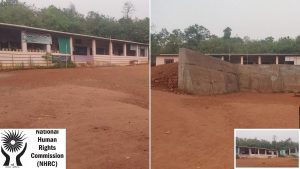
Bauxite Mining and Environmental Concerns in Ratnagiri
Ratnagiri district, located in the Konkan region of Maharashtra, has natural deposits of bauxite, an ore used in aluminium production. Mining companies have been active in the region for several years, contributing to local employment and economic activity. However, environmental activists and residents have long raised concerns about the ecological impact of extraction processes, including deforestation, soil erosion, water contamination and air pollution.
Bauxite mining typically involves removing topsoil and vegetation cover, which can loosen soil and increase dust dispersion. When mining is close to residential areas or public institutions like schools, the risk of pollution affecting daily life increases significantly. Noise pollution from drilling, blasting and heavy vehicle movement further compounds community grievances.
The Maharashtra Pollution Control Board (MPCB) has set standards to regulate dust emissions and noise levels from industrial activities, including mining. Nevertheless, enforcement of these standards is often a point of contention in areas where economic interests intersect with environmental protection.
Community Voices and Local Response
Local residents and community representatives have been vocal about the urgency of addressing pollution near the school. Many parents have expressed frustration at what they see as slow or insufficient action by local authorities to curb mining-related pollution. Some families have even considered relocating their children to schools in areas perceived to be less polluted, though financial constraints make such moves difficult for many.
Community activists have also urged the district administration to conduct independent environmental assessments around the mining site and the school. Such studies, they argue, would provide empirical data on air quality and noise levels, helping inform appropriate remedial measures.
The conflict highlights a broader challenge faced in many parts of India where industrial activities coexist with residential and public use spaces. Finding a balance between economic development and environmental health is often fraught with competing interests, making regulatory oversight and community engagement all the more important.
The NHRC’s involvement brings heightened scrutiny to these dynamics, potentially leading to stronger oversight and accountability. Residents are hopeful that a sustained focus from national authorities will lead to tangible improvements in pollution control and better protection for local schools and communities.
Experts Weigh In on Environmental and Health Risks
Environmental experts have noted that prolonged exposure to dust and noise pollution can have long-term health consequences, particularly for children whose respiratory systems and nervous systems are still developing. Fine particulate matter can penetrate deep into the lungs and even enter the bloodstream, increasing the risk of chronic respiratory conditions and other health problems.
Noise pollution, meanwhile, has been linked to stress, hearing impairment and cognitive disruption, especially in learning environments where concentration is critical. Experts say that when educational institutions are situated close to industrial sites without adequate buffer zones or pollution control measures, the risks to children’s health and academic performance increase substantially.
These concerns support the arguments made by the students and parents in Ratnagiri, giving additional weight to the NHRC’s decision to examine the matter at a national level.
Way Forward: Recommendations and Expectations
The NHRC has asked the state government to provide responses on mitigation measures, monitoring protocols and any steps taken to protect the school environment. In similar cases, the commission has recommended actions such as installing dust-suppressing systems, imposing noise restrictions during school hours, improving green cover around sensitive zones and ensuring compliance with environmental impact assessment norms.
Stakeholders expect that the NHRC may also suggest regular monitoring and community engagement mechanisms, including periodic reporting on pollution levels and redressal of citizen complaints. If the state’s response is found inadequate, the commission could recommend more stringent actions or direct supervisory measures.
For the parents and students who lodged the complaint, the NHRC’s involvement has offered a sense of validation and hope. Many believe that authoritative oversight is needed to ensure that industrial activities do not compromise children’s rights to health, education and a safe environment.
The outcome of the NHRC’s review could have implications beyond the Ratnagiri case, potentially influencing how environmental and human rights issues intersect in other parts of the country as well.
Read More: https://channel6network.com/thane-thackeray-brothers-marathi-pride-polls/
