
German Chancellor Friedrich Merz’s visit to Bengaluru marked a significant chapter in India–Germany relations, placing the city firmly at the centre of global conversations on technology, research, and innovation. As part of his official India tour, Merz visited the Bosch campus and the Indian Institute of Science (IISc), two institutions that symbolise Bengaluru’s role as a global hub for engineering excellence and scientific research. The visit was closely watched by policymakers, industry leaders, academics, and students, as it reflected Germany’s growing strategic interest in deepening partnerships with India, particularly in the areas of advanced manufacturing, clean technology, artificial intelligence, and higher education.
The Chancellor’s engagements in Bengaluru were carefully curated to highlight long-term collaboration rather than ceremonial diplomacy. At the Bosch campus, Merz interacted with senior executives, engineers, and researchers working on next-generation mobility, automation, and sustainability solutions. At IISc, one of India’s most prestigious research institutions, he engaged with scientists and students, underscoring the importance of academic exchange and joint research in addressing global challenges. Officials accompanying the Chancellor noted that Bengaluru was chosen deliberately, as it represents the intersection of industry, innovation, and academia that both countries seek to strengthen.
Merz’s visit comes at a time when Germany is reassessing its global partnerships amid shifting geopolitical realities and economic transitions. India, with its large talent pool, expanding economy, and focus on technology-led growth, has emerged as a key partner in this strategy. Bengaluru, often described as India’s Silicon Valley, provided the ideal backdrop for conversations on future-ready cooperation. The visit also carried symbolic weight, signalling trust, mutual respect, and a shared vision for inclusive and sustainable development.
The Karnataka government and local industry bodies welcomed the Chancellor’s presence, describing it as a boost to the city’s global standing. Officials highlighted that German companies have been long-term investors in the State, contributing to employment, skill development, and industrial growth. Merz’s engagements were seen as reaffirming Germany’s commitment to India not just as a market, but as a partner in innovation and knowledge creation.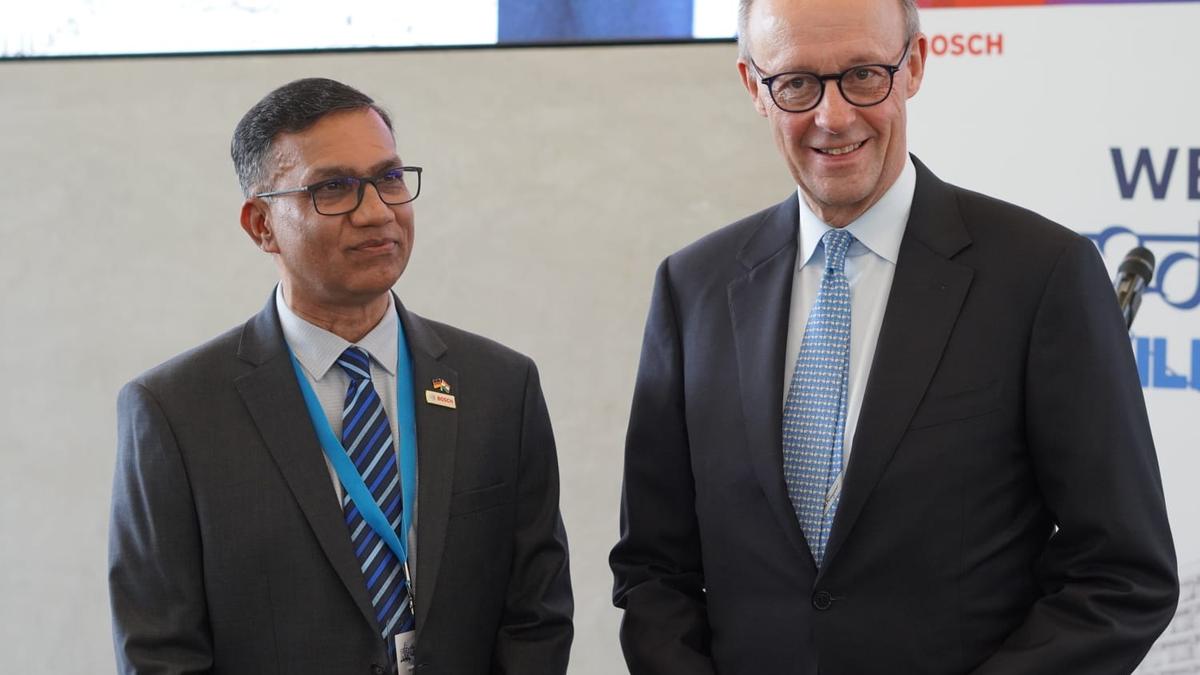
Technology, Industry, and the Bosch Engagement
The Bosch campus visit formed a central part of Chancellor Merz’s Bengaluru itinerary. Bosch, a flagship German multinational, has had a deep and enduring presence in India, with Bengaluru serving as one of its largest global R&D centres. During his interaction with company leadership, Merz was briefed on ongoing projects related to electric mobility, automotive software, industrial automation, and climate-friendly technologies. Engineers showcased innovations being developed in India for global markets, highlighting the country’s growing role in shaping international technology trends.
Merz reportedly expressed appreciation for the scale and sophistication of research being conducted at the Bengaluru campus. He noted that Indo-German industrial cooperation has evolved beyond manufacturing to encompass high-value research and digital innovation. According to officials, the Chancellor emphasised that such collaboration is essential for addressing challenges such as climate change, energy transition, and sustainable urbanisation. Bosch executives, in turn, highlighted the importance of India’s talent ecosystem and supportive policy environment in enabling long-term investments.
The interaction also touched upon workforce development and skill-building. Merz underscored the need for continuous upskilling in an era of rapid technological change, particularly in areas like artificial intelligence, robotics, and green technologies. He praised Bosch’s efforts in training young engineers and fostering a culture of innovation. The discussion reflected broader concerns in both Germany and India about preparing future workforces for technology-driven economies while ensuring social inclusion.
Industry observers noted that the Bosch visit sent a strong message to other German companies operating in or considering investments in India. It reinforced confidence in Bengaluru as a stable and dynamic destination for research and development. Analysts pointed out that German firms increasingly view India not only as a production base but also as a source of innovation that can influence global operations. Merz’s presence at the campus was thus seen as both symbolic and strategic, reinforcing long-standing industrial ties.
The Chancellor also interacted briefly with young professionals and engineers, listening to their experiences of working in a multicultural, global environment. Such interactions, officials said, reflect Germany’s interest in people-to-people connections as a foundation for diplomatic and economic relations. The emphasis on talent mobility and collaborative innovation resonated strongly in Bengaluru’s cosmopolitan ecosystem.
Science, Academia, and IISc Conversations
Chancellor Merz’s visit to the Indian Institute of Science highlighted the academic dimension of India–Germany relations. IISc, with its legacy of cutting-edge research and international collaboration, served as a fitting venue for discussions on science diplomacy. Merz met with senior faculty members, researchers, and students, engaging in conversations about joint research initiatives, doctoral exchanges, and innovation ecosystems.The visit highlighted Bengaluru’s unique position as a bridge between industry and academia, and as a city capable of shaping global innovation narratives.
During his interaction, Merz emphasised that universities and research institutions play a crucial role in shaping long-term global partnerships. He noted that challenges such as climate change, public health, and sustainable energy cannot be addressed by governments alone, but require collaboration between scientists across borders. IISc researchers briefed the Chancellor on ongoing work in areas such as renewable energy, materials science, aerospace engineering, and artificial intelligence, many of which already involve international cooperation.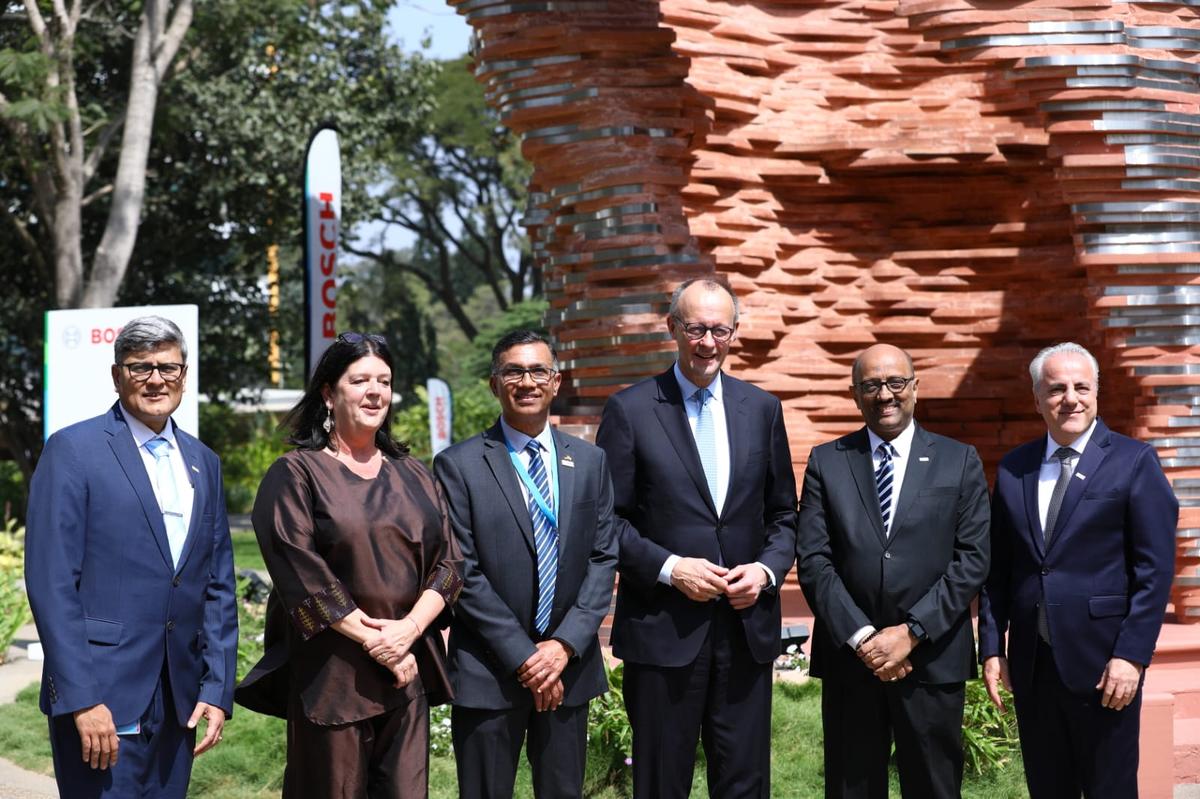
The Chancellor reportedly expressed interest in expanding institutional partnerships between German universities and IISc. He highlighted Germany’s strong tradition of applied research and vocational training, suggesting that deeper collaboration could combine theoretical excellence with practical impact. Faculty members welcomed this approach, noting that joint programmes and funding mechanisms could significantly enhance research outcomes and global visibility.
Students at IISc viewed the visit as a rare opportunity to engage with a global leader and gain insight into international research landscapes. Merz addressed questions on career opportunities, innovation ecosystems, and the role of science in policymaking. He encouraged young researchers to think globally while remaining rooted in solving local and regional problems. The interaction underscored the human dimension of diplomacy, where ideas and aspirations flow alongside formal agreements.
The IISc engagement also highlighted the growing importance of science and technology in diplomatic relations. Experts noted that Germany and India share complementary strengths, with Germany’s engineering tradition aligning well with India’s growing research capabilities. Bengaluru’s academic environment, they argued, offers fertile ground for translating research into real-world solutions, making it a natural partner for German institutions.
Beyond formal discussions, the visit was seen as a morale booster for India’s scientific community. Recognition from a global leader reinforced the international relevance of Indian research institutions. It also signalled that science and innovation remain central to global cooperation, even amid geopolitical uncertainties.
Broader Implications for India–Germany Relations
Chancellor Merz’s Bengaluru visit must be viewed within the larger context of India–Germany strategic relations. Both countries have been working to deepen cooperation in areas such as clean energy, digital transformation, defence, and education. Bengaluru, with its unique blend of industry and academia, offered a microcosm of these priorities. Observers noted that the visit reinforced Germany’s long-term commitment to engaging with India beyond traditional diplomatic channels.
The timing of the visit is also significant. As Germany navigates economic transitions and seeks resilient global partnerships, India’s growth trajectory and technological capabilities present valuable opportunities. For India, engagement with Germany brings access to advanced technologies, investment, and global best practices. The Bengaluru engagements highlighted how these interests converge at the ground level, through research labs, startups, and educational institutions.
Karnataka officials emphasised that the Chancellor’s visit could translate into tangible outcomes, including expanded research collaborations, increased investment, and skill development initiatives. They pointed out that German companies already play a significant role in the State’s industrial landscape, and deeper engagement could further strengthen this relationship. The visit was also seen as enhancing Bengaluru’s brand as a global innovation city.
Diplomatic analysts noted that such visits help build trust and familiarity, which are essential for sustained cooperation. By engaging directly with engineers, researchers, and students, Merz moved beyond protocol to connect with the people shaping the future of technology and science. This approach aligns with Germany’s emphasis on inclusive and knowledge-driven diplomacy.
A Visit That Resonates Beyond Protocol
In conclusion, German Chancellor Friedrich Merz’s visit to Bengaluru, including his engagements at the Bosch campus and the Indian Institute of Science, was more than a diplomatic stopover. It was a statement of intent, reflecting Germany’s desire to strengthen its partnership with India through technology, research, and people-to-people connections. The visit highlighted Bengaluru’s unique position as a bridge between industry and academia, and as a city capable of shaping global innovation narratives.
The interactions underscored shared values of sustainability, innovation, and collaboration, offering a hopeful vision of international cooperation in a complex world. For Bengaluru, the visit reinforced its global relevance and potential as a hub for future-ready partnerships. For India and Germany, it marked a step towards deeper, more meaningful engagement, rooted in mutual respect and shared aspirations. As the conversations initiated during this visit evolve into concrete collaborations, the impact of this landmark moment is likely to resonate well beyond the city and into the broader fabric of global cooperation.
Follow: Karnataka Government
Also read: Home | Channel 6 Network – Latest News, Breaking Updates: Politics, Business, Tech & More
