
A political controversy has erupted in Karnataka after a BJP Member of the Legislative Council alleged that the Congress-led State government is deliberately withholding crucial portions of the D’Cunha Commission report on the Bengaluru stampede, accusing it of attempting to “save face” rather than take responsibility for administrative lapses. The stampede, which claimed multiple lives and left several injured, had triggered public outrage and demands for accountability. The opposition now claims that the government’s selective disclosure of the findings amounts to suppressing the truth and shielding those responsible from scrutiny.
The BJP leader alleged that the report, prepared after extensive inquiry, contains serious observations on crowd management failures, police preparedness, and decision-making by senior officials. According to him, the government has only shared portions that are politically convenient, while omitting sections that point to systemic negligence. He said such an approach undermines the very purpose of a judicial or quasi-judicial inquiry, which is meant to bring transparency, fix responsibility, and ensure corrective action.
The stampede had occurred during a high-footfall event in the city, drawing large crowds under inadequate safety arrangements. In the aftermath, the State government announced the appointment of a one-man commission headed by retired High Court judge Justice Michael D’Cunha to probe the incident. The commission was tasked with examining the sequence of events, identifying lapses, and recommending measures to prevent similar tragedies in the future. When the report was submitted, expectations were high that it would provide a clear and comprehensive account of what went wrong.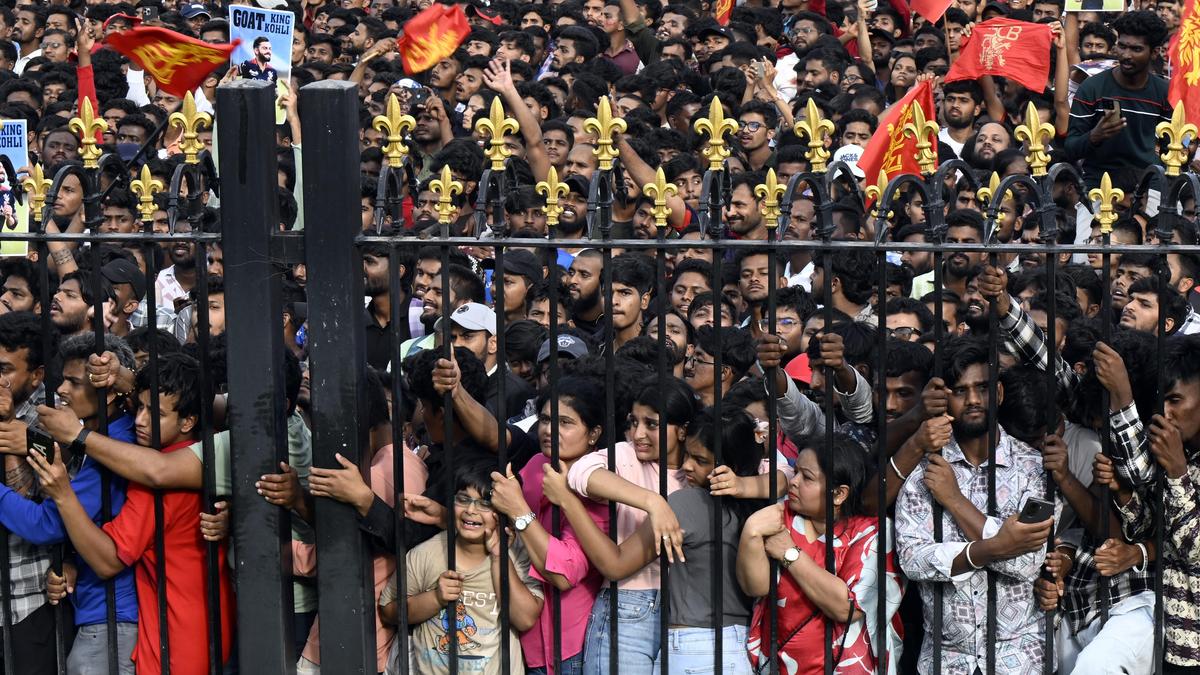
However, the BJP MLC alleged that the government’s handling of the report has only deepened public suspicion. He claimed that instead of placing the full report in the public domain or tabling it in the legislature in its entirety, the government has chosen to remain evasive. This, he argued, reflects a lack of political will to confront uncomfortable truths and accept institutional failures that may have occurred under its watch.
ALLEGATIONS OF SUPPRESSION AND POLITICAL MOTIVES
According to the BJP leader, the alleged suppression of the D’Cunha report is not an isolated incident but part of a broader pattern where inconvenient findings are quietly buried. He accused the ruling dispensation of prioritising image management over justice for victims and accountability for officials. “If the government has nothing to hide, why is it afraid of releasing the full report?” he asked, adding that transparency is the first step towards restoring public trust after such tragedies.
The opposition claims that the report includes pointed remarks on delayed decision-making, lack of coordination between agencies, and inadequate crowd control measures, despite advance knowledge of large gatherings. The BJP MLC alleged that certain recommendations, particularly those calling for disciplinary action or structural reforms, have not been acted upon or even acknowledged publicly. He warned that ignoring these findings could set a dangerous precedent, where lessons from tragedies are not learned, increasing the risk of recurrence.
The Congress government, meanwhile, has rejected the allegations, stating that due process is being followed. Government representatives have maintained that the report is under examination and that necessary steps will be taken after a thorough review. They have also argued that selective leaks and political statements by the opposition are aimed at creating sensationalism rather than contributing constructively to policy reform.
However, critics argue that such explanations do little to address concerns about transparency. Legal experts point out that while governments are entitled to study commission reports, prolonged delays or partial disclosures can raise legitimate questions. They note that commissions of inquiry are instituted not merely as internal advisory mechanisms but as tools to assure the public that the truth will be placed on record without fear or favour.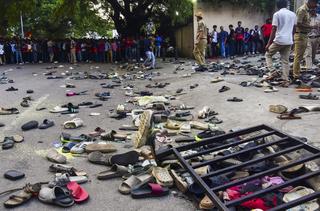
IMPACT ON VICTIMS, ACCOUNTABILITY, AND PUBLIC TRUST
Beyond the political sparring, the controversy has reopened wounds for families of those who lost their lives in the stampede. Many relatives have expressed frustration over the lack of clarity on who was responsible and what corrective steps have been taken. For them, the report represents not just a document but a pathway to closure and assurance that such negligence will not be repeated. Any perception that its contents are being hidden adds to their sense of injustice.
Civil society groups have echoed these concerns, calling for the immediate release of the full report. They argue that transparency is essential not only for accountability but also for informed public debate on urban safety, event management, and policing in a rapidly growing city like Bengaluru. With frequent large-scale events, protests, and religious gatherings, experts say the city remains vulnerable unless systemic reforms are undertaken based on honest assessments.
The issue has also sparked debate within legislative circles about the need for clearer norms on the publication of commission reports. Some legislators have suggested that time-bound disclosure should be made mandatory, except in cases involving national security or sensitive personal data. Such reforms, they argue, would prevent governments of any political colour from selectively using inquiry findings.
As the political heat intensifies, pressure is mounting on the Karnataka government to clarify its position and dispel allegations of suppression. Whether the full D’Cunha report is made public or not may significantly influence public perception of the government’s commitment to accountability. More importantly, it will determine whether the tragedy becomes a turning point for safer urban governance or another episode lost in political crossfire. For a city still grappling with the emotional and administrative fallout of the stampede, the demand remains simple yet powerful: truth, transparency, and tangible action.
The controversy has also sharpened focus on the institutional responsibility of commissions of inquiry themselves. While such panels are constituted to independently assess facts, their effectiveness ultimately depends on how governments act on their findings. Former judges and senior bureaucrats have observed that reports often lose significance when recommendations are neither debated nor implemented. In the Bengaluru stampede case, the demand is not only for disclosure but also for a clear action-taken report that explains which recommendations are being accepted, modified, or rejected, and on what grounds.
Urban governance experts argue that the stampede exposed deeper structural issues in Bengaluru’s event management ecosystem. They point to overlapping jurisdictions between civic bodies, police, and event organisers, which often result in confusion during emergencies. The D’Cunha report, they believe, likely addresses these coordination gaps. If such insights are kept from public scrutiny, experts warn, opportunities for systemic reform will be lost. Transparency, they stress, is essential for informed policy corrections in a city that routinely hosts large gatherings.
Within the ruling party, there are indications of unease over the growing criticism. Some Congress leaders privately acknowledge that prolonged silence over the report risks eroding public confidence. They argue that proactive disclosure could help the government frame the narrative around reform rather than blame. However, others fear that full disclosure may expose administrative lapses that could be politically damaging. This internal tension reflects the larger dilemma governments face between political caution and democratic accountability.
The opposition, meanwhile, has indicated that it will continue to raise the issue both inside and outside the legislature. BJP leaders have suggested that they may seek judicial intervention if the report is not released in full. They argue that the right to information and the public’s right to know cannot be subordinated to political convenience. By framing the issue as one of transparency rather than partisanship, the BJP hopes to broaden public support beyond party lines.
Legal commentators note that courts in the past have intervened when governments failed to act on commission reports, especially in cases involving loss of life. While the judiciary generally avoids encroaching on executive functions, it has emphasised transparency as a cornerstone of democratic governance. If litigation arises, the government may be required to justify any decision to withhold portions of the report, further intensifying scrutiny over its actions.
The controversy has also reignited discussions on crowd safety protocols across Karnataka. Following the stampede, authorities had announced temporary measures, including revised crowd limits and better deployment of personnel. However, activists argue that without publicly acknowledging what went wrong, such measures remain superficial. They insist that meaningful reform must be grounded in an honest assessment of failures, something only a full disclosure of the inquiry report can provide.
For Bengaluru’s residents, the issue resonates beyond politics. The city has witnessed multiple incidents linked to overcrowding and inadequate planning, raising concerns about public safety. Citizens’ groups have demanded that lessons from the stampede be incorporated into standard operating procedures for all major events. They believe that transparency over the D’Cunha report would empower citizens to demand better preparedness from authorities and organisers alike.
Media analysts observe that the government’s handling of the report could set a precedent for future inquiries. If selective disclosure becomes normalised, it may weaken the credibility of commissions as instruments of truth-finding. Conversely, full disclosure could strengthen democratic norms and reassure citizens that governments are willing to confront uncomfortable realities. The current standoff thus has implications far beyond a single report or incident.
As political rhetoric intensifies, the risk is that the core issue—preventing future tragedies—may be overshadowed. Experts caution that prolonged confrontation could delay implementation of crucial safety reforms. They urge all stakeholders to refocus attention on victims and preventive measures rather than political point-scoring. The stampede, they remind, was a human tragedy first and a political issue only later.
Ultimately, the debate over the D’Cunha report reflects a larger question confronting democratic governance: whether truth and accountability can prevail over political expediency. The coming days will test the Karnataka government’s commitment to transparency and reform. For the families affected by the stampede and for a city seeking safer public spaces, the outcome will signal whether lessons have truly been learned or merely deferred.
Follow: Karnataka Government
Also read: Home | Channel 6 Network – Latest News, Breaking Updates: Politics, Business, Tech & More
