
Revenue Minister Krishna Byre Gowda publicly expressed his frustration over the slow pace of work on the long-pending highway bypass project in Hassan along the Bengaluru–Mangaluru National Highway, signalling growing impatience within the government over infrastructure delays. During a site visit, the Minister was visibly upset with officials and contractors, questioning repeated assurances and missed deadlines. His remarks reflected not just administrative displeasure but also the mounting anger of local residents who have endured years of traffic congestion, accidents, and economic disruption due to the unfinished bypass.
Local elected representatives from Hassan have echoed the Minister’s concerns, stating that the bypass delay has become a recurring issue in every public grievance meeting. They pointed out that assurances given during previous inspections failed to materialise into tangible progress. According to them, the credibility of future infrastructure promises depends on how decisively the government handles this project now. Several MLAs have urged the administration to set non-negotiable deadlines and make contractors publicly accountable, arguing that symbolic inspections must be followed by strict administrative action.
From an administrative standpoint, the Hassan bypass delay has highlighted gaps in inter-agency coordination between the National Highways Authority, State departments, and district authorities. Officials admit that overlapping responsibilities often slow decision-making, especially when land acquisition, utility shifting, and environmental clearances intersect. The Minister’s strong remarks have reportedly triggered internal reviews to streamline coordination. Senior bureaucrats suggest that lessons from this project could inform a new framework for managing complex highway works more efficiently across Karnataka.
For commuters and local businesses, the hope is that the renewed focus will finally translate into uninterrupted construction activity. Shop owners along the existing highway say prolonged roadworks have reduced footfall and affected livelihoods. Daily commuters, especially students and office-goers, continue to face delays and unsafe travel conditions. Many now view the Minister’s frustration as a reflection of their own lived reality. They believe sustained political pressure is essential to ensure the Hassan bypass moves from prolonged delay to long-overdue completion.
The Hassan bypass is a critical component of the Bengaluru–Mangaluru corridor, one of Karnataka’s most important arterial highways connecting the State capital with the coastal region. Despite its strategic importance, the project has seen prolonged delays due to land acquisition hurdles, contractor inefficiencies, and coordination issues between agencies. The Minister’s outburst brought renewed attention to these systemic problems, underscoring the gap between project announcements and on-ground execution.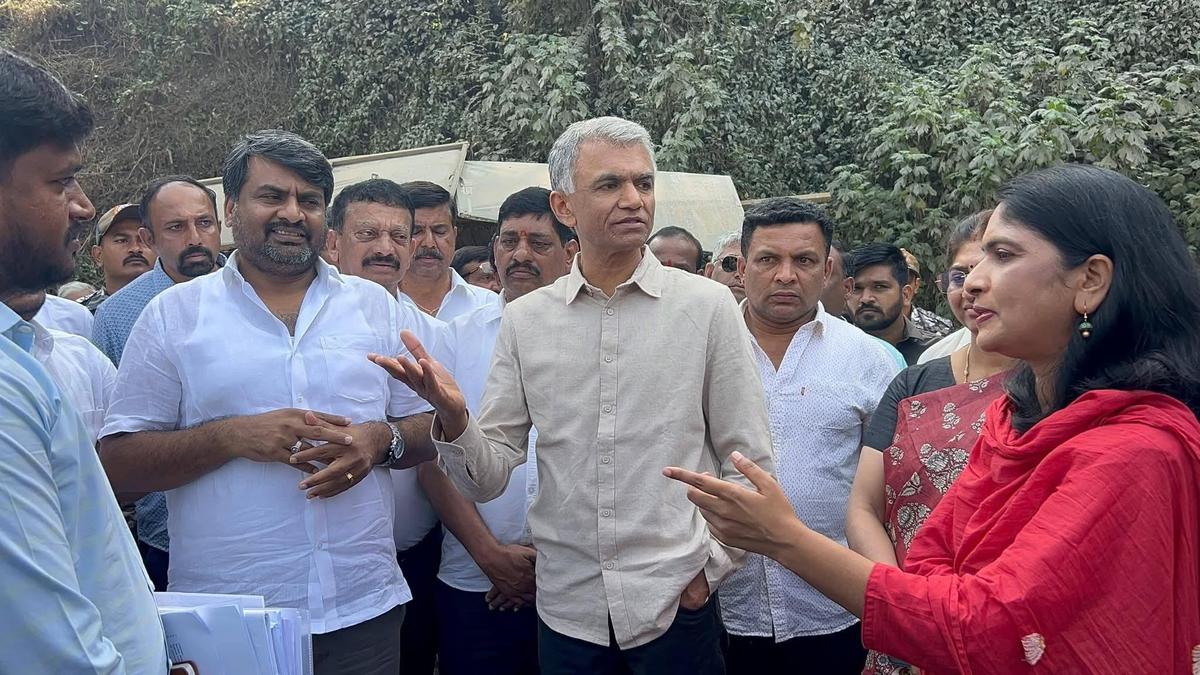
MINISTERIAL REBUKE AND ADMINISTRATIVE ACCOUNTABILITY
During the inspection, Krishna Byre Gowda reportedly questioned officials on why progress remained sluggish despite funds being sanctioned and clearances being granted. He expressed displeasure over what he described as a lack of urgency and accountability, warning that continued delays would not be tolerated. The Minister stressed that infrastructure projects directly affect public safety and livelihoods, and delays on busy highways like the Bengaluru–Mangaluru route have serious consequences.
Officials briefed the Minister on challenges including utility shifting, contractor mobilisation issues, and intermittent stoppages. However, sources said the explanations failed to satisfy him. He reportedly directed the concerned departments to submit a clear, time-bound action plan and warned of consequences if revised deadlines were not met. The sharp tone of the interaction indicated increasing political pressure on the bureaucracy to deliver visible results.
Local administrators present at the site acknowledged that public dissatisfaction has been growing. Frequent traffic jams, diversions through narrow roads, and accident-prone stretches have become routine for commuters passing through Hassan. The Minister noted that repeated complaints from citizens could no longer be met with assurances alone, emphasising that tangible progress was essential to restore public confidence.
PUBLIC IMPACT AND POLITICAL SIGNALS
The Minister’s frustration resonated strongly with local residents, traders, and transport operators who have long demanded completion of the bypass. Business owners along the existing highway stretch say congestion has reduced footfall and increased transportation costs. Daily commuters complain of lost time and heightened stress, while long-distance drivers describe the stretch as one of the most unpredictable bottlenecks on the Bengaluru–Mangaluru highway.
Political observers view the Minister’s public reprimand as a signal that infrastructure delays are becoming a sensitive issue for the government. With road connectivity playing a crucial role in economic growth and regional integration, prolonged stagnation can quickly turn into a political liability. By expressing frustration openly, the Minister appears to be aligning himself with public sentiment while placing responsibility squarely on executing agencies.
Experts point out that bypass projects are meant to decongest towns, improve safety, and boost regional development. When such projects stall, the costs extend beyond inconvenience, affecting logistics efficiency and emergency response times. In Hassan’s case, the delay has amplified risks for pedestrians and local traffic forced to mix with heavy vehicles on the existing highway.
As of now, officials have reiterated their commitment to accelerating work and resolving pending issues. Whether the Minister’s stern intervention translates into faster execution remains to be seen. For residents of Hassan and commuters on the Bengaluru–Mangaluru highway, the episode has raised cautious hope that long-standing promises may finally move closer to reality.
The Minister’s reaction has also drawn attention to the broader pattern of infrastructure delays across Karnataka, where ambitious road projects often struggle at the implementation stage. Analysts note that while approvals and funding are announced with speed, execution on the ground remains uneven. In the case of the Hassan bypass, repeated extensions of deadlines have eroded trust among citizens. Krishna Byre Gowda’s frustration highlighted this disconnect, reinforcing the need for stronger monitoring mechanisms and real-time accountability to ensure that nationally significant highways do not remain stuck in prolonged limbo.
For residents living near the proposed bypass alignment, the delays have created uncertainty and daily inconvenience. Many have faced partial land acquisition, dust pollution, and restricted access to their homes and farms without seeing meaningful progress. Some landowners say compensation was paid years ago, yet construction activity has moved at a crawl. The Minister acknowledged these grievances during his visit, stating that citizens who cooperated with the project should not be made to suffer indefinitely due to administrative inefficiency or contractor negligence.
Transporters using the Bengaluru–Mangaluru highway have been among the most vocal critics of the delay. Truck drivers report frequent bottlenecks near Hassan, especially during peak hours and festival seasons. These congestion points increase fuel consumption and travel time, raising costs that are ultimately passed on to consumers. The bypass was envisioned as a solution to streamline long-distance travel, but its incomplete status has instead become a symbol of missed opportunity for improving freight movement and regional trade connectivity.
Road safety experts have repeatedly flagged the Hassan stretch as accident-prone, partly due to mixed traffic conditions. Heavy vehicles, two-wheelers, pedestrians, and local traffic are forced to share limited road space, especially where construction-related diversions exist. The Minister reportedly expressed concern over accident data presented to him, noting that infrastructure delays have a direct human cost. He stressed that completing the bypass was not just a development priority but a safety imperative that could save lives.
Within government circles, the Minister’s remarks are being interpreted as a warning that patience at the political level is wearing thin. Sources indicate that higher-level reviews of delayed highway projects may follow, with stricter scrutiny of contractors’ performance. The Hassan bypass episode could become a test case for how decisively the government enforces timelines and penalties. Officials involved in the project are said to be under pressure to demonstrate visible progress in the coming months.
Opposition leaders, meanwhile, have seized upon the incident to criticise both the State and Central governments, pointing to coordination failures between departments and agencies. They argue that while responsibility is often shifted between authorities, the public continues to bear the consequences. The Minister’s open frustration, they say, indirectly validates these criticisms and underscores the need for clearer lines of responsibility in executing large infrastructure projects.
Civic groups in Hassan have welcomed the Minister’s candid remarks, viewing them as an acknowledgment of long-standing public frustration. Several local organisations have demanded regular progress updates and transparent timelines to keep citizens informed. They argue that public communication is as important as construction itself, as prolonged silence fuels speculation and mistrust. The Minister reportedly agreed that better communication with stakeholders could help manage expectations and rebuild confidence.
Economic planners point out that Hassan’s strategic location makes the bypass crucial for regional development. Improved connectivity could attract investment, boost tourism, and reduce logistical barriers for local industries. The delay, therefore, represents not just a transport issue but a missed economic opportunity. The Minister’s intervention has revived discussions on how infrastructure projects can be better aligned with regional growth strategies rather than treated as isolated engineering tasks.
Senior engineers involved in highway development have emphasised that delays often stem from fragmented responsibility and weak contract enforcement. They suggest that the Hassan bypass would benefit from a single-point authority empowered to resolve disputes quickly and push execution forward. The Minister’s sharp reaction has added weight to these arguments, potentially opening the door for administrative reforms in how large road projects are managed in the State.
As the dust settles on the Minister’s site visit, expectations among the public have risen sharply. Many see this moment as a turning point that could finally break the cycle of delay surrounding the Hassan bypass. Whether the strong words translate into swift action will determine how the episode is remembered. For now, Krishna Byre Gowda’s visible frustration has brought renewed urgency to a project that has long tested the patience of both the government and the people.
Follow: Karnataka Government
Also read: Home | Channel 6 Network – Latest News, Breaking Updates: Politics, Business, Tech & More
