
Mahayuti Dominates Maharashtra Civic Polls
The 2026 Maharashtra civic election results marked a decisive triumph for the BJP-led Mahayuti alliance, which emerged victorious in a majority of the state’s urban local bodies. According to final tallies released after counting, Mahayuti secured control of 25 out of 29 municipal corporations, demonstrating strong voter support across key cities including Mumbai, Pune and Nashik. The sweeping win signals broad public endorsement of development-oriented governance strategies and organisational strength that underpinned the alliance’s campaign.
In the most high-profile contest for the Brihanmumbai Municipal Corporation (BMC), the alliance secured a clear majority by winning 118 out of 227 seats, comfortably surpassing the 114-seat threshold needed to form the civic body. Within this tally, the BJP won 89 seats and its ally, the Shiv Sena led by Chief Minister Eknath Shinde, secured 29. Opposition parties won smaller shares of seats, reflecting a significant shift in urban political dynamics in the state.
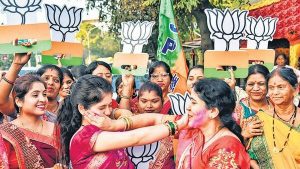
Breakdown of Key Civic Body Results
In addition to Mumbai, Mahayuti made substantial gains in other major municipal corporations. In Nashik, the alliance retained control by winning 72 of 122 seats, while the BJP emerged as the dominant party in Nagpur with an impressive 102 seats. Other civic bodies also recorded similar patterns, with Mahayuti candidates outperforming rivals across diverse urban regions.
These results marked a rebuke of traditional political forces in some strongholds, especially where established opposition groups had hoped to hold or expand their influence. In many cases, the alliance’s organisational presence and focus on infrastructure and service delivery were credited for its success.
Raj Thackeray’s Response: Call to Stand by Marathis
Despite the setback in the civic polls, Maharashtra Navnirman Sena (MNS) chief Raj Thackeray delivered a spirited response to the results, urging supporters and party workers to remain committed to the cause of the Marathi people. Thackeray described the election as a battle between “immense financial power and the power of authority versus Shivshakti,” emphasising that the contest was not simply a political loss but a deeper struggle for cultural identity and local rights.
He reiterated his party’s core ideological stance, asserting that the fight for the Marathi language, Marathi identity and a prosperous Maharashtra would continue despite the electoral outcome. “Our elected corporators will hold those in power accountable if anything seems to go against the Marathi people,” Thackeray said in his statement, underscoring the long-term nature of the struggle ahead.
Thackeray’s Marathi-centred rhetoric remained firm even as the MNS and its allies registered limited seats in the BMC. While his party secured only a handful of seats, the emphasis on cultural solidarity and community support signals a strategy focused on consolidating voter bases in traditional bastions.
Opposition Landscape and Performance
The results highlight a mixed picture for parties outside the Mahayuti umbrella. Shiv Sena (UBT), aligned with Uddhav Thackeray and the MNS in some areas, managed to retain influence in parts of central and South Mumbai, often referred to as the Marathi heartland, but failed to translate local strength into broader control of the civic body. Analysts note that while the alliance performed respectably in traditional Marathi-speaking wards, its appeal was limited outside these areas.
Congress, which contested in several urban bodies, also recorded modest results, securing wins in select municipalities such as Kolhapur, Latur and Chandrapur, but it did not pose a significant challenge in the major corporations dominated by Mahayuti candidates. Nationalist Congress Party (NCP) factions similarly trailed behind the ruling coalition in most urban centres.
Regional parties and independents had mixed outcomes, with some local leaders claiming victories in wards where community issues and neighbourhood leadership played decisive roles. These results reflect the varied political priorities of urban voters, blending local governance concerns with broader state and national narratives.
Voter Priorities and Electoral Dynamics
Analysts believe that Mahayuti’s success in the civic polls reflects voter prioritisation of infrastructure, development, urban services and administrative continuity. Issues such as road quality, drainage systems, housing redevelopment and public transport appeared to resonate strongly with urban electorates, who viewed delivery of civic services as a key criterion.
In contrast, identity-based campaigns, particularly those centred around Marathi cultural preservation, performed strongly in specific pockets but did not yield widespread appeal across the entire municipal landscape. This divergence underscores the complexity of urban electoral dynamics in Maharashtra, where governance performance and cultural messaging compete for voter attention.
Political Significance of the Results
The 2026 civic poll results carry implications that extend beyond municipal governance. Control of urban local bodies such as the BMC provides political parties with organisational leverage, administrative authority and influence over large budgets that directly affect public services and infrastructure development. By establishing leadership in a majority of municipal corporations, the Mahayuti alliance has reinforced its political footprint ahead of future state and national elections.
For Mahayuti leaders, including Chief Minister Devendra Fadnavis and Deputy Chief Minister Eknath Shinde, the comprehensive victory signifies strong public endorsement of their governance agenda and political strategy. Fadnavis hailed the outcome as an “unprecedented endorsement” of the alliance’s development focus and organisational work, emphasising that the results reflect the electorate’s preference for stability and progress.
Challenges and Future Outlook for Opposition Forces
The opposition, while facing setbacks, remains a presence with pockets of influence that could shape future political alignments. For the MNS and allied factions, the civic poll results provide an opportunity to reassess strategies and strengthen grassroots networks. Raj Thackeray’s call to “stand by Marathis” suggests a renewed focus on cultural advocacy and community mobilisation that could resonate in future elections, particularly in regions where identity politics remains strong.
Similarly, parties like Congress and NCP may evaluate local successes to build momentum in areas where their governance narrative aligns with voter priorities. These outcomes emphasise the multifaceted nature of electoral politics in Maharashtra, where alliances, development agendas and cultural identities intersect to shape voter behaviour.
Conclusion: Mandate Reflects Voter Priorities and Political Realignment
The 2026 Maharashtra civic election results underscore a clear victory for the Mahayuti alliance, which secured control of the majority of municipal corporations including the influential BMC. While this outcome demonstrates strong voter support for governance and development agendas, it also highlights ongoing challenges and opportunities for opposition parties. Raj Thackeray’s emphatic message of cultural solidarity signifies that identity politics will continue to play a role in Maharashtra’s political discourse, even as new political alignments take shape in the urban landscape.
Read More: https://channel6network.com/congress-maharashtra-civic-polls-result/
