
The long-standing demand for advanced healthcare infrastructure in Ramanagara district received renewed attention after the Bengaluru Rural Member of Parliament flagged the urgent need for a 650-bed hospital at the proposed Rajiv Gandhi University of Health Sciences medical college campus. Raising the issue at a public and administrative forum, the MP argued that merely establishing a medical college without a fully functional, high-capacity teaching hospital would defeat the broader purpose of improving healthcare access in the region. The intervention has brought healthcare planning in Ramanagara back into focus, highlighting both the district’s structural gaps and its growing population pressures.
Ramanagara, located strategically between Bengaluru and Mysuru, has long suffered from inadequate tertiary healthcare facilities. Residents often depend on Bengaluru for specialised treatment, resulting in delays, high out-of-pocket expenses, and overcrowding at city hospitals. The proposed RGUHS medical college campus was envisioned as a transformative project that could address these issues. However, concerns have been raised that without a sufficiently large hospital attached to it, the institution may remain largely academic in nature, offering limited real-world benefit to patients in the district and surrounding rural areas.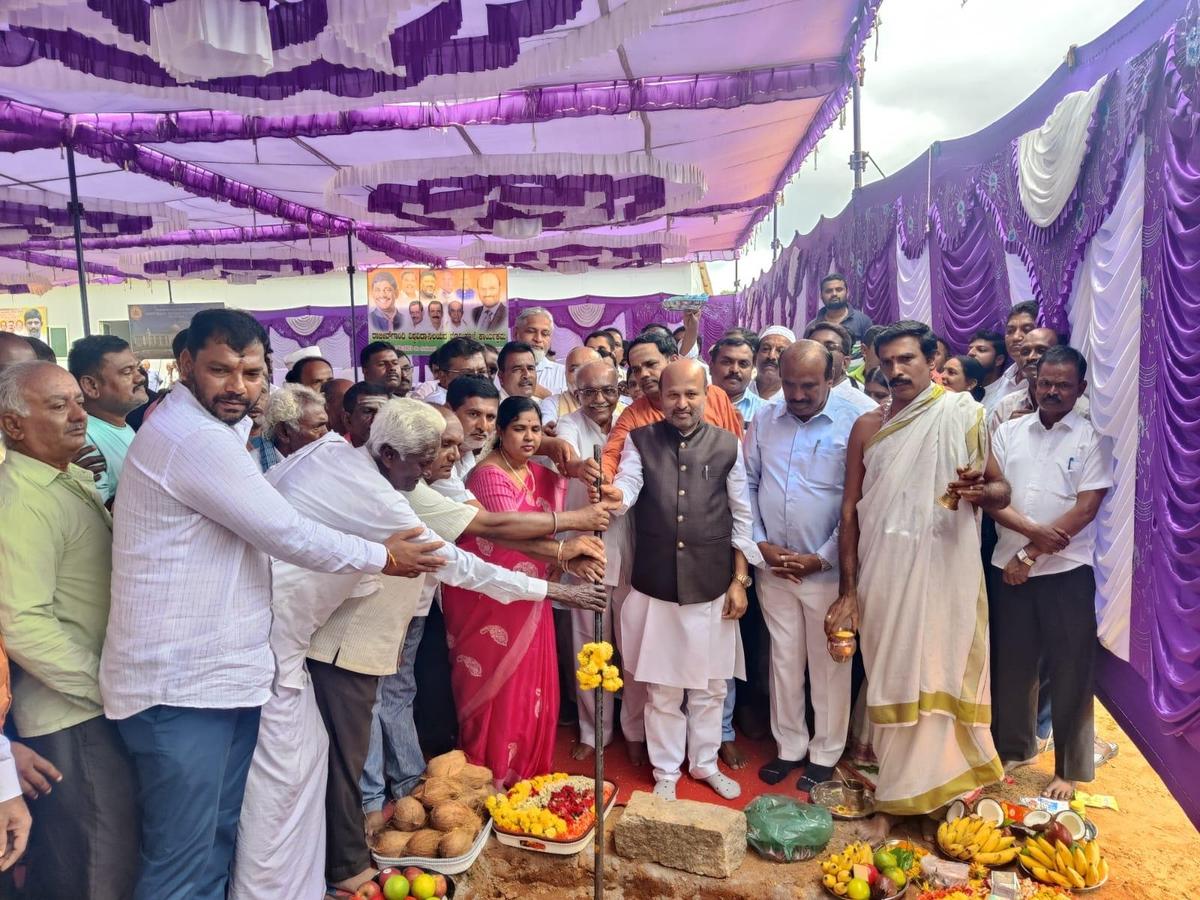
The MP emphasised that a 650-bed hospital is not an aspirational figure but a functional necessity. According to him, a hospital of this scale would ensure compliance with medical education norms, enable comprehensive clinical training for students, and simultaneously serve as a referral centre for Ramanagara and neighbouring districts. He warned that underestimating bed capacity at the planning stage could lead to systemic stress within a few years, given population growth and rising disease burdens. His remarks were widely seen as a push to integrate public health needs with educational infrastructure planning.
Health experts have echoed these concerns, noting that medical colleges without adequate hospital capacity struggle to balance teaching requirements and patient care. A smaller hospital, they argue, often becomes overburdened, compromising both quality of treatment and medical education. In the case of Ramanagara, where district hospitals already operate under pressure, a large, well-equipped teaching hospital could significantly reduce patient migration to Bengaluru. The MP’s intervention has therefore been welcomed by public health advocates as timely and pragmatic rather than politically symbolic.
Local leaders and civil society groups have also highlighted the socio-economic dimension of the demand. Ramanagara has a significant rural and semi-urban population, with many families dependent on daily wages. For them, travelling to Bengaluru for treatment often means loss of income in addition to medical expenses. A 650-bed hospital within the district could improve early diagnosis, reduce treatment delays, and enhance maternal and child healthcare outcomes. The MP stressed that healthcare infrastructure should be designed around people’s lived realities rather than minimum regulatory thresholds.
ADDRESSING STRUCTURAL GAPS IN REGIONAL HEALTHCARE
The demand for a large hospital at the RGUHS campus has also reopened discussions on the uneven distribution of healthcare infrastructure across Karnataka. While Bengaluru boasts multiple super-speciality hospitals, districts like Ramanagara remain dependent on under-resourced government facilities. Officials familiar with district health data point out that the current bed-to-population ratio in Ramanagara falls well below recommended levels. Emergency care, trauma services, and specialised departments are particularly lacking, making a multi-speciality teaching hospital a critical requirement rather than a luxury.
The MP underlined that the proposed hospital should not be viewed merely as an adjunct to the medical college but as a regional healthcare anchor. He suggested that the facility be planned with departments such as cardiology, oncology, nephrology, and advanced trauma care from the outset. This, he argued, would prevent the common problem of phased expansion that often leaves hospitals operating in a perpetual state of incompleteness. His comments reflect a broader shift in policy discourse that prioritises long-term capacity over incremental development.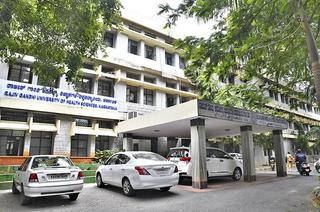
Government officials have acknowledged that integrating a 650-bed hospital into the medical college plan would require higher initial investment. However, they also concede that delayed expansion typically costs more in the long run. Land acquisition, infrastructure modification, and equipment procurement become more complex once operations begin. In this context, the MP’s demand has been framed as fiscally responsible as well as socially necessary. Sources indicate that the Health Department has been asked to reassess project estimates and feasibility reports accordingly.
Medical education regulators have also weighed in on the issue, pointing out that national norms increasingly emphasise patient load and clinical exposure for accreditation. A larger hospital would not only strengthen the academic standing of the proposed RGUHS campus but also attract better faculty and postgraduate programmes. This could, in turn, create a virtuous cycle of improved healthcare delivery and academic excellence. The MP argued that Ramanagara deserves an institution that can compete with established medical colleges rather than a scaled-down facility that struggles for relevance.
For local communities, the hospital represents more than infrastructure. It symbolises recognition of long-neglected healthcare needs. Community leaders have recalled how public assurances in the past often resulted in partial facilities that failed to meet expectations. The MP’s insistence on a specific bed count has therefore been interpreted as an attempt to lock in accountability at the planning stage. By articulating a clear demand, he has given citizens a measurable benchmark against which future progress can be assessed.
POLITICAL, ADMINISTRATIVE, AND PUBLIC IMPLICATIONS
Politically, the issue has cut across party lines, with leaders from different affiliations acknowledging the merit of the demand. While debates continue over funding sources and timelines, there is broad consensus that Ramanagara requires a major healthcare upgrade. The MP’s intervention has also placed pressure on the State government to clarify its vision for the RGUHS campus. Is it meant to be a flagship institution driving regional development, or a modest addition to the existing medical education landscape? The answer, many argue, will be reflected in decisions taken now.
Administratively, the proposal raises questions about coordination between departments. Establishing a 650-bed hospital involves the Health, Medical Education, Public Works, and Finance departments, among others. Past projects have shown that lack of coordination often leads to delays and cost overruns. The MP has reportedly urged the government to constitute a dedicated task force to oversee planning and execution, ensuring that the hospital component does not get diluted over time. Such a mechanism, he believes, is essential to translate intent into outcome.
Public reaction in Ramanagara has been largely positive, with residents expressing cautious optimism. Many recall earlier announcements that failed to materialise or resulted in facilities operating far below capacity. This time, however, the specificity of the demand has generated hope that the project may be executed with greater seriousness. Patients’ groups have highlighted how a large government hospital could also act as a counterbalance to expensive private healthcare, improving affordability and access for lower-income families.
Healthcare economists have pointed out that investing in a large teaching hospital can have multiplier effects. Beyond direct health benefits, it can generate employment, boost ancillary services, and stimulate local economies. For Ramanagara, which has been seeking sustainable development pathways, the hospital could become a key institutional anchor. The MP’s argument aligns with this broader development perspective, framing healthcare infrastructure as both a social service and an economic investment.
As discussions continue within government corridors, the demand for a 650-bed hospital has emerged as a defining aspect of the proposed RGUHS medical college project. Whether the government embraces this vision fully will determine the institution’s long-term impact. For now, the MP’s intervention has ensured that healthcare capacity remains central to the conversation, preventing the project from being reduced to a symbolic announcement. In doing so, he has given voice to a collective aspiration for dignified, accessible, and robust public healthcare in Ramanagara.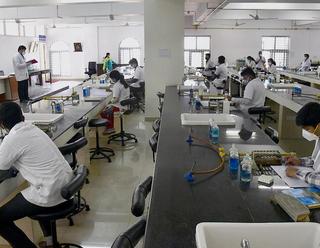
Ultimately, the debate underscores a simple but powerful truth. Medical colleges matter, but hospitals save lives. By insisting that the proposed campus integrate a large, well-equipped hospital from the start, the Bengaluru Rural MP has reframed the project as a public health mission rather than a mere educational expansion. For the people of Ramanagara, this insistence represents hope that policy decisions will finally align with their everyday realities and long-standing needs.
The issue has also prompted comparisons with similar medical college projects elsewhere in the State, where inadequate hospital capacity has limited long-term impact. In several districts, teaching hospitals started with lower bed strength and struggled to scale up due to funding constraints and administrative delays. Public health observers argue that Ramanagara has an opportunity to avoid repeating these mistakes by planning ambitiously from the outset. The MP’s emphasis on learning from past shortcomings has strengthened the case for approving the 650-bed hospital as an integral component rather than an optional future expansion.
Within the medical fraternity, there is growing support for the proposal, particularly among doctors working in district and taluk hospitals. Many have pointed out that a large teaching hospital could ease the workload on existing facilities by acting as a referral hub. This would allow smaller hospitals to focus on primary and secondary care while complex cases are handled at the RGUHS campus. Such a tiered system, they say, is essential for improving efficiency and patient outcomes across the district’s healthcare network.
Students aspiring to study medicine have also viewed the proposal positively. A well-equipped 650-bed hospital would provide richer clinical exposure, hands-on training, and research opportunities. Educationists note that students trained in robust public hospitals are more likely to develop a service-oriented outlook and may be inclined to work in government or rural settings after graduation. The MP highlighted this aspect, stating that infrastructure decisions today would shape the quality and social commitment of future medical professionals.
As the proposal moves through administrative scrutiny, attention is now focused on timelines and political will. Citizens and local representatives alike stress that announcements must be followed by clear milestones and transparent updates. The demand for a 650-bed hospital has raised expectations, but it has also created an opportunity for the government to demonstrate seriousness in healthcare planning. For Ramanagara, the coming months may determine whether this vision becomes a landmark achievement or another deferred promise.
Follow: Karnataka Government
Also read: Home | Channel 6 Network – Latest News, Breaking Updates: Politics, Business, Tech & More
