
Bheemanna Khandre’s life reads like a bridge between two Indias. One shaped by the fire of the freedom movement and another moulded by the complexities of contemporary democratic politics. Few leaders in Karnataka have lived through, participated in, and influenced such contrasting phases of history. From witnessing colonial rule to navigating coalition politics and governance in an independent State, Khandre’s journey reflects both the idealism and the compromises that have defined Indian public life across generations. His political career cannot be reduced to positions held or elections won alone. It is rooted in lived experience, social mobilisation, and an evolving understanding of power.
Khandre’s personal life was marked by simplicity, a trait often highlighted by those who worked closely with him. Despite holding positions of influence, he maintained a lifestyle rooted in restraint and accessibility. Visitors recount how meetings were conducted without elaborate protocol, reinforcing his belief that public representatives must remain approachable. This simplicity was not performative but deeply ingrained, shaped by years of struggle and collective living during the freedom movement. It strengthened his credibility among ordinary citizens, who saw in him a leader untouched by excess.
His relationship with constituents went beyond electoral cycles. Khandre was known to intervene in individual grievances, from land disputes to access to welfare schemes, often following up personally with officials. This hands-on approach reflected an older tradition of politics where representation involved sustained engagement rather than episodic outreach. For many families, his presence at moments of crisis created bonds of trust that endured across generations, turning political loyalty into something more personal and enduring.
In moments of political disagreement, Khandre displayed a capacity for restraint that contrasted sharply with the confrontational tone of modern politics. He believed that disagreement did not require hostility and that institutions thrived on debate conducted with mutual respect. Former colleagues recall that even during intense legislative sessions, he avoided personal attacks, focusing instead on policy substance. This approach earned him respect from opponents, reinforcing his image as a statesman rather than a partisan tactician.
Khandre’s legacy also lives on through the political journeys of those he mentored. Several leaders who rose through local bodies and party structures credit him with shaping their understanding of public service. He encouraged patience, ethical conduct, and a long-term view of politics, warning against shortcuts that might deliver quick success but erode credibility. In this sense, his influence extended beyond his own career, shaping political culture in subtle but lasting ways.
As Karnataka’s politics became increasingly shaped by media scrutiny and rapid public opinion shifts, Khandre remained cautious about spectacle-driven governance. He often remarked that visibility should not replace accountability, and that quiet administrative work mattered as much as public gestures. This perspective, though less glamorous, reflected a governance ethic rooted in responsibility rather than performance. It also underscored the widening gap between older and newer styles of political engagement.
In the broader sweep of Karnataka’s political history, Bheemanna Khandre stands as a connective figure. He links the moral urgency of the freedom movement with the pragmatic demands of democratic governance. His life reminds us that political relevance is not always measured by dominance or controversy, but by consistency, integrity, and service over time. As the State continues to evolve, his story remains a reference point for what it means to carry history forward without being trapped by it.
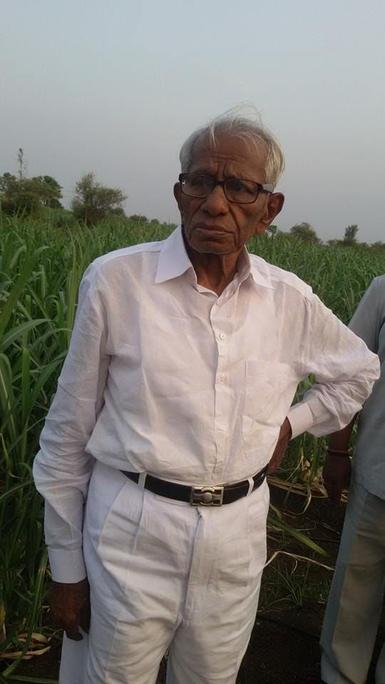
Born in a time when India was still under British rule, Bheemanna Khandre grew up in an atmosphere charged with political awareness and social awakening. The freedom movement was not a distant national event for him but a lived reality that shaped values, discipline, and purpose. Participation in the struggle was often informal, rooted in village-level mobilisation, underground activities, and collective resistance rather than grand speeches. These early experiences instilled in him a belief that politics was inseparable from social responsibility, a belief that would continue to guide his later years in public office.
As Karnataka transitioned from the era of princely states and colonial administration into linguistic reorganisation and democratic consolidation, Khandre emerged as a leader who understood both grassroots realities and institutional politics. His early engagement with public life was marked by close contact with rural communities, particularly farmers, labourers, and marginalised groups. Unlike leaders shaped purely by post-independence electoral politics, Khandre carried with him a moral authority derived from sacrifice and participation in the freedom struggle. This distinction gave his voice a certain weight in political discourse.
Over the decades, Khandre’s political evolution mirrored the transformation of Indian politics itself. From idealistic mass movements to structured party systems, from consensus-driven leadership to competitive electoral strategies, he adapted without losing his core identity. He became known as a leader who valued dialogue over confrontation, continuity over spectacle. In an era increasingly dominated by short-term political gains, his long view of history often set him apart.
FROM FREEDOM FIGHTER TO LEGISLATOR
Bheemanna Khandre’s formal entry into electoral politics came at a time when the Congress dominated Karnataka’s political landscape. For leaders like him, the party was not merely an organisation but an extension of the freedom movement’s legacy. His association with the Congress was rooted in ideological alignment rather than convenience. He believed in its commitment to social justice, secularism, and institutional democracy, even as the party itself evolved and faced internal contradictions.
As a legislator, Khandre built a reputation for being accessible and attentive to constituency concerns. His understanding of rural Karnataka was not academic but experiential. Issues such as irrigation, land rights, agricultural credit, and rural infrastructure featured prominently in his interventions. He was particularly vocal about the need to balance development with equity, warning against policies that prioritised urban growth at the expense of villages. This perspective resonated strongly in regions that felt marginalised by rapid economic change.
Khandre’s tenure in public office coincided with periods of political churn in Karnataka. The State witnessed shifts from single-party dominance to coalition governments, ideological realignments, and changing voter expectations. Through these transitions, he remained a stabilising presence, often acting as a bridge between senior leadership and younger politicians. His ability to negotiate, mediate, and maintain institutional memory proved valuable during times of internal party conflict and administrative uncertainty.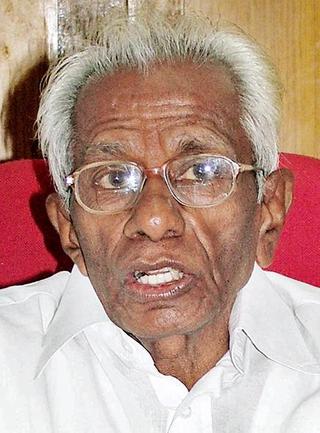
Beyond legislative work, Khandre played a role in shaping political culture at the local level. He encouraged participation, nurtured emerging leaders, and emphasised ethical conduct in public life. While he was not immune to the compromises inherent in politics, colleagues often described him as someone who placed limits on expediency. His political decisions were typically informed by long-term consequences rather than immediate gains, a quality increasingly rare in contemporary politics.
Importantly, Khandre’s identity as a freedom fighter continued to inform his political conduct. He viewed dissent as legitimate, institutions as sacred, and public office as a trust rather than a privilege. During debates on governance and civil liberties, he frequently invoked the sacrifices of the freedom movement to remind both supporters and critics of the responsibilities that came with independence. This historical consciousness gave depth to his interventions, grounding present-day politics in past struggles.
NAVIGATING MODERN POLITICS WITH OLD VALUES
As Karnataka entered the era of liberalisation and coalition politics, the challenges facing leaders like Khandre multiplied. Governance became more complex, public expectations rose, and political competition intensified. Yet, he remained committed to a style of politics that prioritised dialogue and incremental reform over polarisation. While this approach sometimes appeared out of step with the changing political climate, it earned him respect across party lines.
One of the defining aspects of Khandre’s later political life was his ability to coexist with newer forms of leadership. He did not resist generational change but sought to guide it. Younger politicians often turned to him for counsel, valuing his historical perspective and pragmatic wisdom. In a political environment increasingly shaped by media narratives and rapid messaging, Khandre’s measured style offered a contrast that many found reassuring.
His views on governance reflected a deep faith in institutions. Whether discussing the legislature, bureaucracy, or local self-government, he emphasised the importance of process and accountability. He was critical of shortcuts that undermined democratic norms, arguing that erosion of institutions would ultimately harm both the State and its citizens. These concerns gained renewed relevance as debates over federalism, administrative autonomy, and democratic integrity intensified in recent years.
Social justice remained central to Khandre’s political vision. He consistently highlighted the needs of marginalised communities, advocating policies that addressed structural inequality rather than symbolic inclusion. His understanding of caste, class, and regional disparities was shaped by decades of engagement rather than abstract theory. This grounded approach enabled him to articulate concerns in a manner that resonated with both policymakers and the public.
Even as he aged, Khandre continued to engage with contemporary political debates. He was not a relic of the past but a participant in the present, adapting his language and priorities without abandoning foundational principles. His presence in public life served as a reminder that politics need not be divorced from ethics, nor leadership from humility.
In reflecting on Bheemanna Khandre’s life, it becomes clear that his significance lies not in singular achievements but in continuity. He represents a generation that carried the ideals of the freedom movement into the everyday work of governance, navigating contradictions without surrendering core values. His journey illustrates how history lives on through individuals who adapt to change while remembering where they came from.
Khandre’s story is also a reminder of what is often lost in contemporary politics. Patience, institutional respect, and moral restraint rarely dominate headlines, yet they are essential to democratic endurance. By spanning eras and embodying both struggle and governance, Bheemanna Khandre offers a lens through which Karnataka’s political evolution can be understood.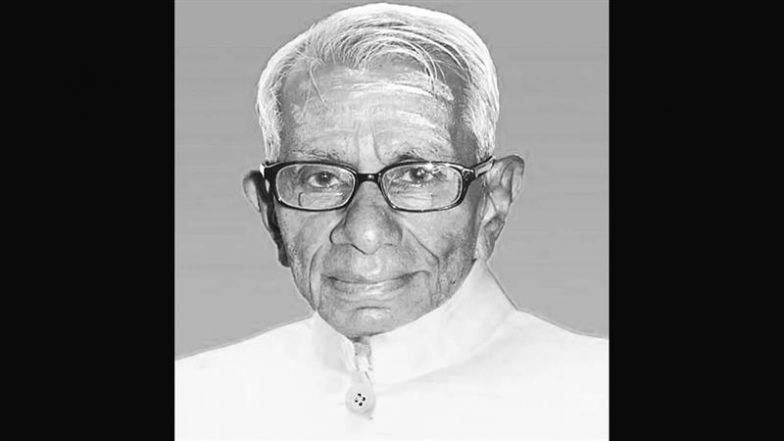
As newer leaders shape the future, the legacy of figures like Khandre remains instructive. It challenges the present generation to ask whether power is being exercised with the same sense of responsibility that once defined public life. In a fast-changing political landscape, his life stands as quiet testimony to the enduring relevance of values forged in the freedom movement and tested in the realities of democratic governance.
Follow: Karnataka Government
Also read: Home | Channel 6 Network – Latest News, Breaking Updates: Politics, Business, Tech & More
