
The State budget this year arrives at a moment of intense fiscal pressure, with the government facing the difficult task of sustaining welfare commitments while keeping the deficit under control. Over the past few years, expenditure obligations have expanded sharply, driven by social welfare schemes, salary revisions, and rising interest payments. At the same time, revenue growth has remained uneven due to economic uncertainties and structural limitations in tax collection. The Finance Department has acknowledged that maintaining fiscal discipline without cutting essential services will be one of the toughest challenges ahead. The budget, therefore, reflects a careful attempt to walk a tightrope between political promises and financial prudence.
One of the most debated aspects of the State budget is the narrowing fiscal headroom available for future contingencies. Natural disasters, health emergencies, or sudden economic shocks require immediate financial responses, but limited reserves restrict the government’s flexibility. Analysts note that excessive pre-commitment of funds reduces the ability to respond swiftly to unforeseen events. This vulnerability becomes more pronounced in a climate where extreme weather events and public health risks are increasingly frequent. Strengthening fiscal buffers, therefore, is emerging as an urgent priority alongside routine budgetary planning.
The effectiveness of subsidy delivery has also come under scrutiny in the context of rising fiscal stress. While subsidies aim to support vulnerable populations, inefficiencies in targeting can inflate costs without proportionate benefits. Experts argue that improved beneficiary identification and technology-driven monitoring can significantly reduce leakages. Rationalising subsidies does not necessarily imply withdrawal but smarter allocation. With fiscal pressure mounting, the State may be compelled to review whether existing subsidies are reaching intended groups and delivering outcomes that justify continued expenditure at current levels.
Public sector undertakings continue to exert pressure on the State’s finances, particularly loss-making enterprises that depend on budgetary support. Recurring bailouts divert resources from priority sectors such as education, healthcare, and infrastructure. Although reforms and restructuring efforts have been announced periodically, implementation has been slow. Financial experts stress that decisive action, including strategic disinvestment or professional management reforms, is essential to reduce long-term fiscal drag. Without addressing these structural issues, the budget risks repeatedly accommodating inefficiencies rather than correcting them.
The budget also reflects the tension between short-term political expectations and long-term economic planning. Populist measures can provide immediate relief and political goodwill but often lack built-in exit strategies. Over time, this creates rigid expenditure patterns that are difficult to adjust. Economists caution that sustained fiscal stress could limit the State’s ability to invest in productivity-enhancing sectors. A shift towards long-term planning, supported by realistic revenue assumptions, is essential to prevent fiscal fatigue and ensure intergenerational equity.
Another challenge lies in aligning district-level spending with State-level fiscal priorities. Delays in fund release, underutilisation of allocated resources, and weak project execution dilute the impact of budgetary allocations. Strengthening coordination between departments and improving local capacity for financial management could improve outcomes without increasing expenditure. Fiscal pressure, experts argue, should act as a catalyst for better governance practices rather than merely prompting spending cuts or increased borrowing.
Ultimately, the State budget underscores the need for a broader public conversation on fiscal responsibility. Transparent communication about constraints, trade-offs, and long-term consequences can help build public support for difficult decisions. Fiscal discipline is not merely an accounting exercise but a governance imperative that shapes development outcomes. As Karnataka navigates competing demands with limited resources, the choices made today will influence economic resilience, social equity, and institutional credibility for years to come.
Karnataka’s welfare-heavy spending pattern has significantly altered the composition of the budget. Flagship guarantee schemes aimed at income support, food security, transport subsidies, and energy relief account for a large share of recurring expenditure. While these programmes have provided immediate relief to vulnerable sections, economists point out that they reduce fiscal flexibility. Once introduced, such schemes are politically difficult to roll back, locking the government into long-term commitments. The challenge lies in ensuring that welfare spending translates into sustainable social outcomes rather than becoming a permanent fiscal burden that crowds out development expenditure.
Revenue mobilisation continues to be a key concern for the State. Although Goods and Services Tax collections have shown improvement compared to previous years, they remain sensitive to broader economic trends. Any slowdown in consumption or industrial activity has a direct impact on State revenues. Additionally, Karnataka’s dependence on central transfers exposes it to uncertainties arising from changes in tax devolution and grant allocation. Delays in compensation or lower-than-expected transfers can disrupt budget planning, forcing the State to rely more heavily on borrowing to meet expenditure commitments.
Borrowing has emerged as a double-edged sword in the State’s fiscal strategy. While loans help bridge the gap between income and expenditure, they also increase the debt stock and interest burden. A growing share of revenue receipts is now earmarked for servicing past debt, leaving less room for fresh investments. Financial experts warn that if borrowing continues at the current pace without corresponding revenue growth, it could weaken the State’s long-term fiscal health. The government, however, maintains that borrowing is being used responsibly to fund productive expenditure and support economic growth.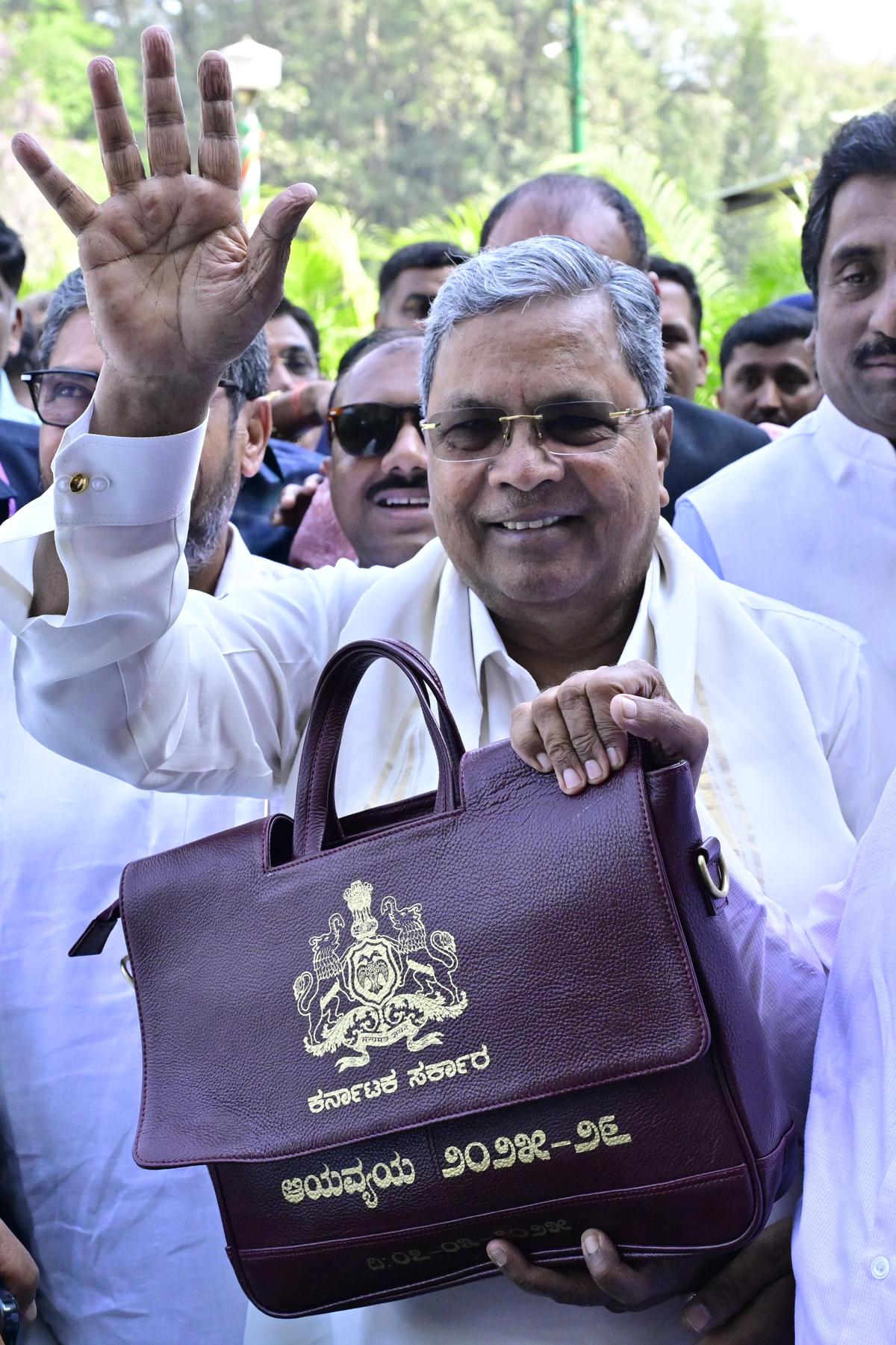
Capital expenditure, often seen as the engine of long-term development, faces pressure in this constrained fiscal environment. Investments in infrastructure such as roads, irrigation, urban transport, and public health facilities are essential for economic expansion and job creation. However, with a significant portion of resources tied up in committed expenditure, allocations for capital projects risk being squeezed. Policymakers argue that cutting back on infrastructure spending would be counterproductive, as it could slow growth and further strain revenues in the future.
Another area adding to fiscal stress is the rising cost of salaries and pensions. Government employees form a substantial portion of recurring expenditure, and periodic revisions in pay scales increase financial obligations. Pension liabilities, in particular, have grown steadily as the workforce ages and life expectancy improves. Although reforms such as contributory pension schemes aim to address future liabilities, their impact will be visible only in the long term. In the short term, the State must continue to allocate large sums to meet these obligations.
The budget also reflects the impact of external factors on State finances. Inflation has increased the cost of goods and services procured by the government, pushing up expenditure across departments. At the same time, interest rate fluctuations influence borrowing costs. Global economic uncertainties, climate-related disruptions, and supply chain challenges further complicate fiscal planning. These factors, largely beyond the State’s control, make revenue projections more uncertain and increase the risk of deviations from budget estimates.
Reforms, Risks, and the Road Ahead- Fiscal
To tackle fiscal pressure, the government has emphasised the need for structural reforms and improved efficiency in public spending. One key focus area is enhancing tax compliance and widening the tax base without increasing rates. Measures such as digitisation of tax administration, data-driven enforcement, and curbing evasion are expected to yield better results over time. However, these reforms require strong institutional capacity and coordination between departments, which can take time to deliver tangible gains.
Non-tax revenue presents another opportunity for easing fiscal stress. User charges for public services, dividends from State-owned enterprises, and monetisation of government assets can provide additional resources. Experts note that Karnataka has significant untapped potential in this area, particularly through better management of public sector undertakings and rational pricing of services. Political sensitivity, however, often limits the government’s ability to revise user charges, even when costs have risen sharply.
Fiscal consolidation also depends on improving the quality of expenditure. Outcome-based budgeting, where spending is linked to measurable results, is increasingly seen as essential. By prioritising programmes that deliver clear social and economic benefits, the government can ensure better value for money. Reducing leakages, duplication, and inefficiencies in welfare delivery could free up resources for development spending. The challenge lies in implementing robust monitoring mechanisms and ensuring accountability at all levels of administration.
The State’s urban centres, particularly Bengaluru, play a crucial role in revenue generation. However, rapid urbanisation has increased demands for infrastructure, public transport, housing, and sanitation, all of which require substantial investment. Balancing the fiscal needs of urban development with rural welfare priorities adds another layer of complexity to budget planning. Policymakers must ensure that growth engines are adequately funded while maintaining social equity across regions.
Political considerations inevitably shape budget decisions, especially in a competitive electoral environment. Welfare schemes often enjoy strong public support, making them difficult to rationalise or scale back. At the same time, fiscal responsibility laws impose limits on deficits and borrowing. Navigating this tension requires clear communication with the public about the trade-offs involved in budgeting. Transparency in fiscal decision-making can help build trust and support for difficult but necessary reforms.
The role of the Centre–State relationship is also critical in determining Karnataka’s fiscal space. Changes in tax sharing formulas, centrally sponsored schemes, and conditional grants directly affect State finances. Greater predictability and flexibility in transfers would enable better budget planning. State governments have repeatedly called for a more cooperative federal framework that recognises their expenditure responsibilities and revenue constraints.
Looking ahead, economic growth remains the most sustainable solution to fiscal pressure. A growing economy expands the tax base, increases employment, and generates higher revenues without raising rates. The budget’s success will therefore depend on its ability to stimulate investment, support industries, and create jobs. Strategic spending on education, skill development, innovation, and infrastructure can lay the foundation for long-term growth.
In conclusion, tackling fiscal pressure is undeniably a challenging task for the State government. The budget reflects an attempt to balance immediate social needs with long-term financial stability in a complex and uncertain environment. While tough choices lie ahead, the path forward will depend on prudent fiscal management, structural reforms, and sustained economic growth. How effectively these elements come together will determine whether the State can navigate its fiscal constraints without compromising development or social welfare.
Follow: Karnataka Government
Also read: Home | Channel 6 Network – Latest News, Breaking Updates: Politics, Business, Tech & More
