
Tamil Nadu resource centre inaugurated to support students and teachers across the state
Tamil Nadu resource development in school education took a significant step forward with the inauguration of a new state-level learning centre in Chennai. The facility, launched by School Education Minister Anbil Mahesh Poyyamozhi, has been set up at the Perasiriyar Anbazhagan Education Complex and is designed to support both students and teachers through hands-on and experience-based learning methods.
Built at a cost of ₹5 crore, the centre is expected to function throughout the year and will be accessible to teachers involved in classroom teaching as well as school students. The focus of the centre is not limited to academic improvement alone but extends to building practical skills that students can apply beyond textbooks.
Speaking at the inauguration, the minister said the Tamil Nadu resource centre would play an important role in helping students develop life skills alongside subject knowledge. He added that similar centres would gradually be established in District Institutes of Education and Training and, over time, at the school level to ensure wider reach.
The initiative reflects the state government’s effort to move learning beyond traditional classroom methods and to encourage active participation, observation, and experimentation among students.
Tamil Nadu resource centre focuses on modern teaching and experiential learning
The Tamil Nadu resource centre has been designed primarily to help teachers adopt new teaching strategies that align with changing learning needs. One of its key objectives is to expose educators to emerging technologies and innovative classroom practices that can make lessons more engaging and effective.
Teachers attending in-service training programmes at the centre will receive hands-on exposure to modern teaching tools and methods. The facility will also support research on new teaching approaches and encourage educators to share ideas that can improve learning outcomes in schools.
A strong emphasis has been placed on child-centred learning. Instead of relying only on lectures and rote learning, the centre promotes learning through observation, practice, and experimentation. This approach is expected to help students understand concepts more clearly and retain knowledge for longer periods.
The centre also serves as a space where teaching models and laboratory setups can be developed and tested before being introduced in schools. This allows teachers to refine their methods and adapt them to different classroom environments.
Tamil Nadu resource facility offers specialised labs and inclusive learning spaces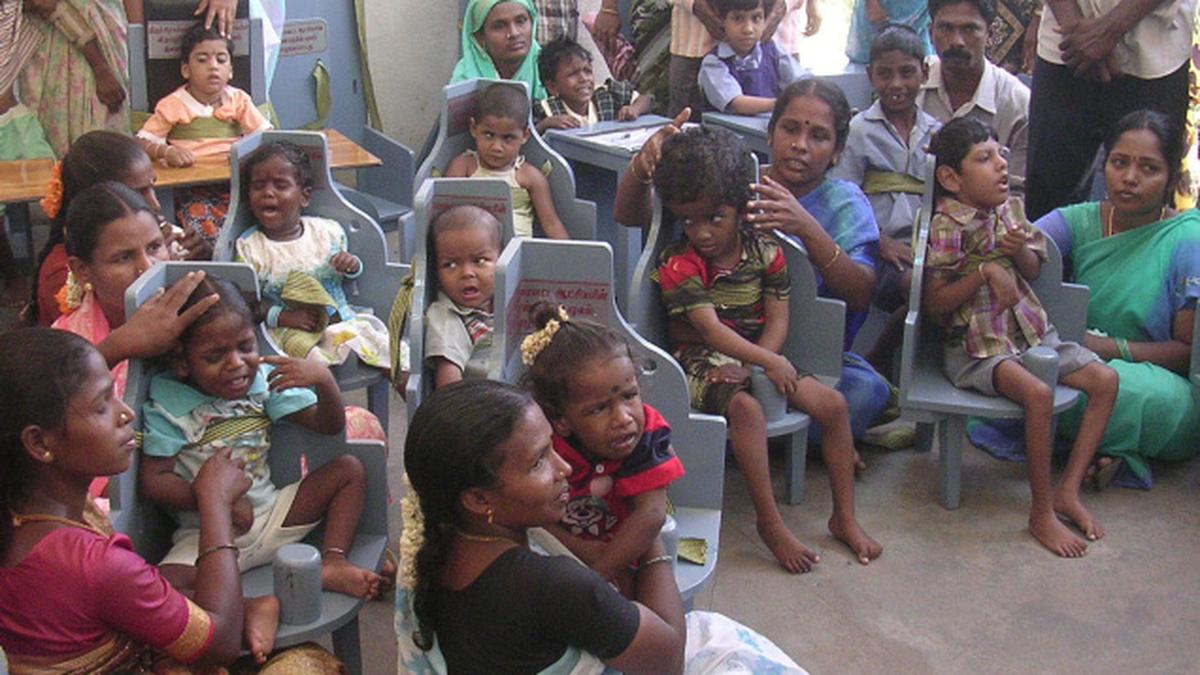
The Tamil Nadu resource centre includes several specialised facilities aimed at supporting diverse learning needs. Subject-specific laboratories for languages, science, and mathematics have been set up to help students and teachers engage deeply with core subjects.
A dedicated space has also been created for children with disabilities, ensuring that inclusive education remains a priority. This area is designed to support customised learning methods that address individual needs and promote equal learning opportunities.
In addition, the centre features a hall focused on computational thinking, where students can develop problem-solving and logical reasoning skills. Another hall allows students to carry out subject-based experiments, encouraging curiosity and independent thinking. Also Read: Consider SL man plea brings focus on decades-old citizenship struggle in 2026
Beyond physical infrastructure, the centre will host webinars, training workshops, expert lectures, and discussion sessions. These programmes are aimed at improving teaching quality and strengthening overall learning standards in government schools.
Education officials believe that regular interaction between teachers, experts, and students in such an environment will lead to better classroom practices and more confident learners.
Conclusion
The Tamil Nadu resource centre represents a practical step towards improving school education by combining academic learning with real-world skills. By supporting teachers and encouraging experiential learning, the initiative is expected to contribute to stronger teaching practices and more meaningful learning experiences for students across the state.
