
The Karnataka Legislature witnessed high drama as Opposition members staged a prolonged dharna inside the Assembly complex, demanding the immediate resignation of the State Excise Minister over alleged irregularities. The protest disrupted proceedings for several hours, forcing repeated adjournments and drawing sharp reactions from the treasury benches. Opposition leaders accused the Minister of moral and administrative failure, claiming that recent controversies had eroded public trust in the Excise Department. Slogans, placards, and coordinated floor strategy underscored the seriousness of their demand. The Speaker appealed for order, but tempers remained high as both sides refused to yield ground.
The issue gained momentum after allegations surfaced regarding lapses in regulatory oversight and suspected revenue leakages within the excise framework. Opposition parties argued that the Minister, being the head of the department, must accept responsibility regardless of direct involvement. They maintained that accountability in public office is essential to preserve institutional integrity. Treasury members countered that the accusations were politically motivated and timed to disrupt the legislative agenda. The confrontation reflected deeper political rivalries, with both sides attempting to shape public perception ahead of upcoming electoral cycles and budgetary discussions in the State.
Opposition legislators assembled near the well of the House early in the day, sitting on the floor in symbolic protest. Many held banners calling for transparency, while senior leaders addressed the media outside the Assembly. They asserted that their protest was not merely political theatre but a necessary stand for ethical governance. According to them, public confidence in excise administration has been shaken, particularly due to reports of procedural inconsistencies. They insisted that a fair probe could only occur if the Minister stepped aside temporarily, allowing investigators to function without perceived pressure.
Ruling party members rejected the demand outright, describing it as an attempt to derail developmental discussions. They accused the Opposition of dramatizing unverified claims to create headlines rather than contribute constructively. Several ministers rose to defend their colleague, stating that internal audits and departmental reviews were already underway. They emphasized that the government remains committed to transparency and due process. The Chief Minister, while appealing for calm, reiterated that any decision regarding resignation would depend on concrete evidence rather than political pressure, reinforcing the administration’s official stance during the turmoil.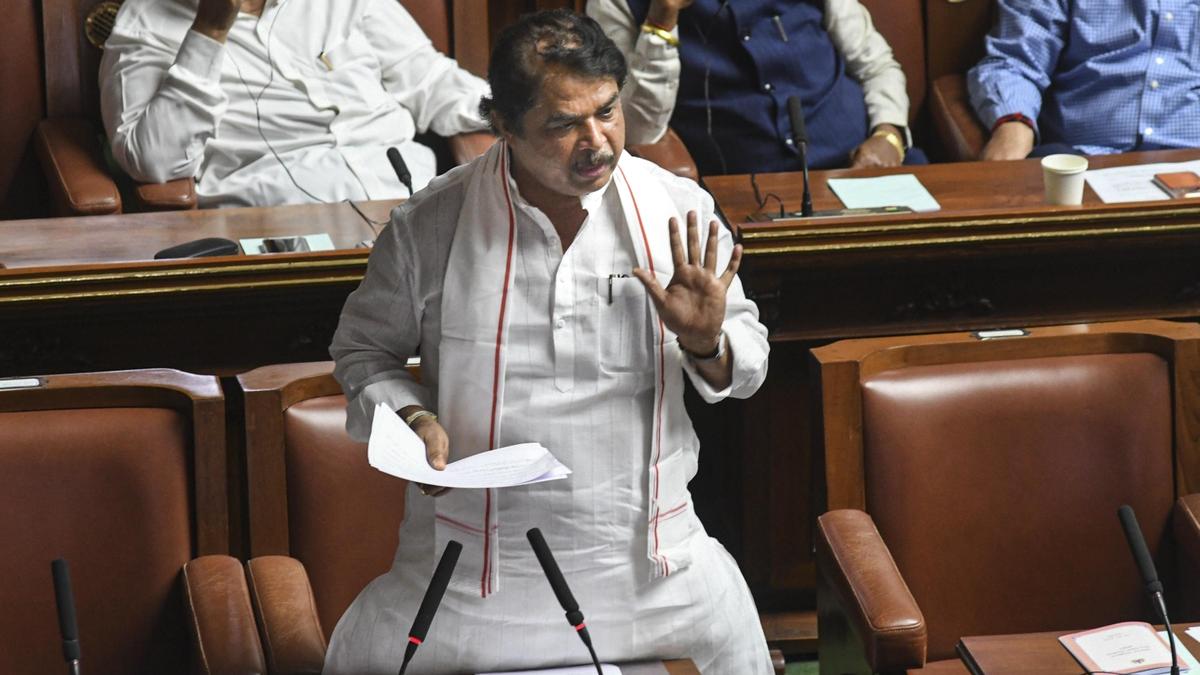
The Speaker’s repeated calls for discipline highlighted the strain on legislative functioning. Question Hour was severely affected, with little substantive business transacted. Observers noted that such disruptions, though not uncommon, signal heightened political polarization. Parliamentary affairs experts suggest that dharnas inside legislative premises have increasingly become a tactical tool for Opposition parties seeking immediate visibility. However, critics argue that frequent disruptions diminish the dignity of democratic institutions. Despite this, Opposition leaders defended their approach, saying conventional debate had failed to secure responses from the government, leaving protest as their only effective instrument.
Public reaction has been divided, reflecting broader political allegiances. Some citizens expressed support for the demand, arguing that ministers must uphold the highest ethical standards. Others criticized the disruption of legislative work, pointing out that governance suffers when debates give way to demonstrations. Civil society voices called for a balanced approach, urging both accountability and institutional decorum. Political analysts note that excise policy directly affects revenue generation and regulation, making the department particularly sensitive. Consequently, controversies surrounding it often attract heightened scrutiny and swift political mobilization across party lines.
ESCALATING ACCUSATIONS AND POLITICAL STRATEGY
As the day progressed, the dharna evolved into a strategic standoff. Opposition leaders coordinated speeches outside the House, framing the issue as part of a larger pattern of alleged administrative lapses. They sought to connect excise concerns with governance themes such as transparency, anti-corruption measures, and public accountability. By broadening the narrative, they aimed to build sustained pressure beyond the Assembly floor. Political observers believe this strategy is designed to maintain momentum in public discourse, ensuring the controversy remains prominent in news cycles and political debates.
Government representatives, meanwhile, attempted to shift focus back to legislative business. They argued that existing mechanisms, including vigilance reviews and financial audits, were sufficient to examine the matter. Senior ministers emphasized that resignation demands should not precede formal findings. They accused the Opposition of undermining due process by presuming guilt. The treasury benches also highlighted policy achievements of the excise department, including digital reforms and revenue optimization initiatives. This counter-narrative sought to portray the protest as disproportionate, thereby consolidating support among party workers and sympathizers.
The protest also revealed internal dynamics within Opposition ranks. Leaders from different parties shared the stage, signaling a rare moment of coordinated action. Such unity, analysts suggest, strengthens their negotiating position but may be difficult to sustain across diverse ideological interests. Still, the shared demand for resignation provided a unifying theme. Outside the Assembly, youth wings and affiliated organizations staged parallel demonstrations, amplifying visibility. This multi-layered mobilization indicated that the issue had moved beyond legislative disagreement into a broader political campaign seeking sustained public engagement.
Security arrangements around the Assembly were tightened as the dharna continued. Police personnel were deployed to manage crowds and ensure that protests remained peaceful. Officials maintained that while democratic expression is respected, public order must be preserved. Inside the House, repeated adjournments reflected the challenge of balancing protest with procedure. Legislative staff worked to maintain decorum amid rising noise levels. The day’s events underscored how quickly routine proceedings can shift into confrontation when political stakes rise, testing the resilience of parliamentary norms and administrative preparedness.
GOVERNANCE IMPACT AND THE ROAD AHEAD- KARNATAKA
Policy experts warn that prolonged disruptions may delay key legislative decisions, including financial approvals and departmental reviews. The excise sector, being a major contributor to state revenue, requires consistent oversight and policy clarity. Any uncertainty, they say, could affect administrative momentum. However, they also acknowledge that accountability debates are integral to democratic functioning. Striking a balance between scrutiny and stability remains a recurring challenge in parliamentary systems. The current episode exemplifies this tension, where demands for ethical responsibility intersect with the need for uninterrupted governance.
The Excise Minister, while refraining from detailed comment, conveyed through official channels that the department would cooperate fully with any inquiry. Supporters within the ruling party argue that stepping down without substantiated findings could set a precedent encouraging politically driven resignation demands. Opposition voices counter that moral responsibility often precedes legal conclusions in public life. This divergence reflects contrasting interpretations of accountability, shaping the broader political narrative and influencing how the issue resonates with the electorate in the coming weeks.
As the session concluded for the day, no resolution had been reached. Both sides signaled readiness to continue their respective strategies when the House reconvenes. The Opposition vowed to intensify its protest until the resignation demand is addressed, while the government remained firm in its refusal. The impasse suggests that negotiations, if any, may occur behind the scenes. Ultimately, the outcome will depend on investigative developments, political calculations, and public sentiment, all of which will shape the trajectory of this high-stakes confrontation.
Political commentators observe that such confrontations often serve dual purposes: immediate pressure within the legislature and long-term narrative building outside it. By sustaining the protest, the Opposition keeps the controversy alive in public discussion, ensuring it remains politically relevant beyond a single session. At the same time, the ruling party appears focused on projecting administrative continuity, signaling that governance will proceed despite disruptions. This divergence in approach reflects classic parliamentary strategy, where symbolism and perception play nearly as important a role as procedural debate, particularly when sensitive departments linked to major revenue streams are involved.
Legal experts note that resignation in such situations is not governed by fixed rules but by political convention and public pressure. In several past instances across states, ministers have stepped aside to facilitate impartial inquiries, while in others they have continued until formal charges emerged. The present case sits within that grey zone, where allegations, accountability, and political calculation intersect. Constitutional practice allows the executive discretion, but moral arguments often shape decisions. This ambiguity explains why both sides remain firm, each citing precedent selectively to support its stance while appealing to different interpretations of democratic responsibility.
Within administrative circles, attention has turned to ensuring that departmental operations remain unaffected. Senior bureaucrats are said to be focusing on routine enforcement, licensing, and revenue collection processes to prevent disruption. The excise sector’s role in funding welfare and development schemes makes continuity essential. Officials emphasize that field-level work continues regardless of political debate at higher levels. However, prolonged controversy can impact morale and decision-making speed, particularly if officers fear scrutiny or political backlash. Maintaining institutional confidence during such periods becomes a crucial but often overlooked aspect of governance stability.
The episode has also reignited discussion on the ethics framework governing public office. Civil society organizations have called for clearer guidelines on when ministers should step aside during probes. They argue that transparent norms could reduce political confrontation and provide predictable standards. Others caution that rigid rules may be misused for partisan targeting. The debate highlights the evolving nature of democratic accountability in India’s states, where media attention, judicial oversight, and public activism increasingly influence political outcomes. Karnataka’s current standoff thus fits into a broader national pattern of heightened scrutiny of executive conduct.
As attention shifts to upcoming Assembly sittings, both camps are preparing for another round of confrontation. Floor coordination meetings, media briefings, and outreach to supporters are expected to intensify. Whether compromise emerges or positions harden further will determine the legislative atmosphere in the days ahead. For citizens watching closely, the core question remains whether political actors can balance protest with productivity. The unfolding developments will test not only the strength of allegations and defenses, but also the capacity of the State’s democratic institutions to manage conflict while sustaining effective governance.
Follow: Karnataka Government
Also read: Home | Channel 6 Network – Latest News, Breaking Updates: Politics, Business, Tech & More
