
Controversy Erupts Over Suggestion to Remove ‘King Edward’ From KEM Hospital Name
A political controversy has erupted in Maharashtra after a state minister’s remarks proposing the removal of the reference to “King Edward” from the name of Mumbai’s iconic King Edward Memorial (KEM) Hospital ignited sharp criticism from the Shiv Sena (Uddhav Balasaheb Thackeray faction), commonly referred to as Shiv Sena UBT. The proposal, made during centenary celebrations of the hospital and the adjoining Seth Gordhandas Sunderdas Medical College, stirred debate over priorities in public healthcare and raised questions about the intersection of history, identity and contemporary governance.
Mangal Prabhat Lodha, Maharashtra’s Minister for Skill Development, Employment, Entrepreneurship and Innovation, had suggested that the Brihanmumbai Municipal Corporation (BMC) consider reviewing the hospital’s name on the basis that “King Edward” reflects colonial legacy without direct relevance to modern India. He argued that the identity of a prestigious public healthcare institution should be shaped by its work and contribution to society rather than historical symbols linked to British rule.
Minister’s Argument on Colonial Legacy and Institutional Identity
Speaking at the centenary event, Lodha highlighted that although India has celebrated decades of independence, remnants of colonial influence remain visible in names of some public institutions. He posited that dropping the term “King Edward” would align the hospital’s identity more closely with its service to the community and present-day Indian values. The minister also drew attention to the association with Seth Gordhandas Sunderdas Medical College, suggesting that identifying the hospital more strongly with the college’s name might be more appropriate.
Lodha also used the occasion to speak about broader themes such as improving patient care, integrating advanced communication systems, and facilitating access to state and central government health schemes through enhanced digital platforms. However, the focus of his remarks on the hospital’s name quickly captured public and political attention, sparking debate on whether symbolic changes should overshadow immediate healthcare challenges.
Shiv Sena UBT Voices Strong Opposition
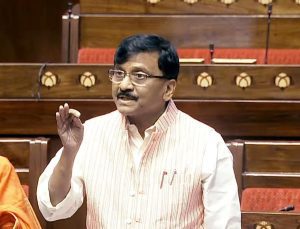
Expressing strong disapproval, Shiv Sena UBT leaders criticised the minister’s suggestion, asserting that renaming a century-old medical institution is a distraction from more pressing issues in the healthcare sector. Arvind Sawant, Member of Parliament representing the Shiv Sena (UBT), argued that instead of focusing on changing a historical name, the government should prioritise tangible improvements in medical infrastructure, availability of medicines, staff recruitment and overall patient services.
Sawant emphasised that institutions such as KEM Hospital are renowned for their legacy of service and should be defined by their contribution to public health rather than nomenclature. He urged the government to concentrate on fulfilling the needs of patients and supporting doctors, instead of engaging in debates over nomenclature that do little to address functional challenges faced by frontline healthcare workers and citizens.
Healthcare Priorities and Legacy Recognition
Critics of the minister’s proposal have also pointed out that KEM Hospital — which has served millions of patients over its 100-year history — carries a name with global recognition. Senior medical professionals have highlighted that the abbreviation “KEM” has become synonymous with quality public healthcare and that alumni and medical professionals worldwide identify strongly with this name. They argue that abruptly changing the name could dilute the institution’s identity and disconnect it from decades of medical practice and research.
Meanwhile, analyses of public health data show that KEM Hospital and Seth Gordhandas Sunderdas Medical College continue to face critical gaps in human resources and infrastructure. According to research from civic organisations, a significant proportion of sanctioned positions are currently vacant, highlighting systemic issues that many believe should be the primary focus of policymakers rather than debates about colonial legacies embedded in institutional names.
Broader Political Reactions and Ironies Highlighted
Beyond the UBT’s immediate rejection of the name change proposal, some political figures have turned the debate toward broader questions of consistency in policy and rhetoric. Shiv Sena UBT leader Sanjay Raut, for example, underscored the apparent contradiction between Lodha’s call to remove colonial names and his own association with real estate projects bearing foreign names. In public comments, Raut pointed to a residential project developed by the minister’s group that includes the name of the former United States President in its branding, questioning whether such foreign references should also be reconsidered if colonial legacy is the criterion for renaming.
This line of argument reflects the multifaceted nature of the controversy, where questions of historical symbolism intersect with contemporary debates about economic collaboration, global branding and cultural identity. It also demonstrates how a single proposal can catalyse wider discussions about political priorities, consistency in public messaging and the symbolic role of names in civic life.
Historical Significance of KEM Hospital and Considerations for Change
King Edward Memorial Hospital, founded in 1926, stands as one of Mumbai’s oldest and most prestigious public health institutions. Established during the British colonial era with a mandate to serve the healthcare needs of the working-class population, it has grown into a comprehensive medical facility and a key teaching hospital in partnership with the adjacent Seth Gordhandas Sunderdas Medical College.
Proponents of retaining the institution’s name argue that it represents not only a historic legacy but also a narrative of resilience and public service that transcends colonial origins. They maintain that the hospital’s contribution to medical education, research and community health is far more significant than any inherent symbolism in its original name. Opponents of the renaming proposal have warned that altering historic names may set a precedent that could overshadow the functional role of public services and divert attention from urgent governance needs.
Policy Implications and the Role of Civic Authorities
While the minister’s suggestion generated political heat, the final decision on whether to rename the hospital rests with the Brihanmumbai Municipal Corporation (BMC), which administers the civic hospital. Local authorities have acknowledged the debate and indicated that any formal proposal would need to follow statutory procedures, public consultations and review of historical documentation before implementation. This process, observers note, could take weeks or months, offering a platform for broader public discourse on heritage, identity and civic priorities.
The ongoing discussions also reflect a wider national conversation about how institutions established during the colonial era should be contextualised in modern India. Some argue that renaming is part of reclaiming indigenous identity and affirming cultural autonomy, while others stress that functional challenges and public welfare should take precedence over symbolic changes.
Public Health and Symbolic Debate: Balancing Priorities
As the centenary celebrations of KEM Hospital proceed, the controversy over its name has brought renewed attention to the institution’s achievements and challenges. Public health advocates continue to emphasise the need for improved medical infrastructure, recruitment of healthcare professionals and enhancement of patient services — areas that are often cited as critical for strengthening public health outcomes in urban centres like Mumbai.
At the same time, the debate has galvanised discussions about the role of historical symbols in shaping civic identity and how society honours its past while pursuing inclusive and forward-looking governance. Whether the name of a century-old hospital should change is ultimately a question that intertwines cultural memory with practical governance, prompting a deeper examination of how public institutions reflect collective values.
A Debate Beyond Names
The political row over the proposed removal of “King Edward” from KEM Hospital’s name highlights a broader tension between symbolic gestures and substantive public policy priorities. As Shiv Sena UBT and other stakeholders challenge the suggestion, the focus on healthcare delivery, historical legacy and public welfare will remain central to ongoing discussions. The outcome of this debate could shape not only the identity of a historic institution but also how civic authorities balance heritage considerations with the pressing needs of patients, practitioners and the community at large.
Read More: https://channel6network.com/maharashtra-bjp-leader-gets-sir-notice/
