
In a significant political development in Karnataka, the BJP and JD(S) have announced coordinated protests today, signaling a rare alignment of opposition voices on certain state issues. Leaders from both parties stated that the demonstrations aim to highlight governance lapses, administrative concerns, and specific policy decisions affecting citizens. The move has drawn attention across the political spectrum, with observers noting that such collaboration between ideologically distinct parties is unusual, underscoring the gravity of the issues being raised. Party cadres have mobilized in several districts, preparing to stage rallies, sit-ins, and public demonstrations to convey their message effectively.
Officials have indicated that the protests will focus on issues such as inflation, public welfare delivery, and development project implementation. Both parties are expected to raise grievances regarding perceived delays in government schemes, alleged neglect of rural infrastructure, and policy decisions seen as detrimental to common citizens. Leaders emphasized that the protest is planned to be peaceful and organized, with clear messaging intended to resonate with voters ahead of upcoming electoral cycles. Observers see this as an attempt to consolidate public sentiment and project a united front against perceived governance shortcomings.
The joint move has generated considerable media attention, with political analysts highlighting the potential impact on public perception. While BJP and JD(S) have historically maintained distinct ideological positions, their collaboration for this protest reflects strategic convergence on specific issues. Party spokespersons stated that the initiative is citizen-centric rather than politically opportunistic, aiming to hold the ruling dispensation accountable for administrative lapses. Analysts suggest that the protest could influence discourse in both urban and rural areas, drawing attention to local concerns while showcasing opposition unity.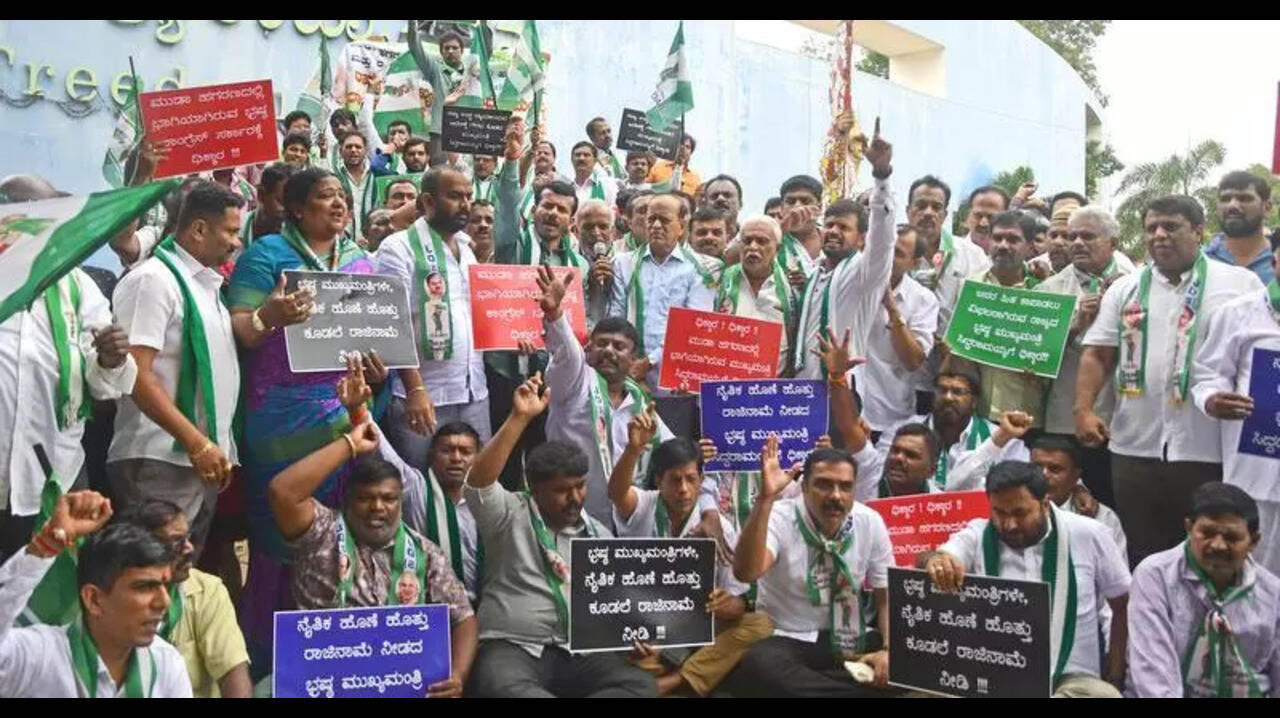
ISSUES AND STRATEGY OF THE PROTEST- BJP
The protest agenda reportedly includes demands for improved infrastructure, better delivery of social welfare schemes, and transparency in government operations. Both parties plan to stage coordinated rallies in multiple constituencies, leveraging local leaders and activists to mobilize supporters. Demonstrators are expected to submit memoranda to authorities outlining specific grievances, including delays in project execution and inadequate attention to public grievances. Leaders emphasized that the protest is designed to be disciplined, avoiding disruptions while ensuring visibility of citizen concerns.
Political observers note that the collaboration between BJP and JD(S) in this protest highlights a broader strategy of leveraging public demonstrations to influence governance. By combining forces, the parties aim to amplify their voice and increase pressure on the state administration. Analysts point out that such protests also serve to signal to voters that opposition parties can come together on critical issues, potentially shaping narratives ahead of elections. The joint protest underscores the role of collective civic engagement in demanding accountability from governing authorities.
Party leaders stressed the importance of peaceful demonstration, urging supporters to follow guidelines, respect law enforcement directives, and avoid confrontations. Police and administrative officials have prepared to manage crowd movement, ensure safety, and facilitate smooth conduct of the rallies. Observers noted that the coordination between political parties and authorities is crucial to maintaining order while allowing citizens to express dissent. The planned protest reflects the democratic right to voice grievances, with both parties emphasizing responsible participation as a cornerstone of effective political advocacy.
The announcement of the protest has also prompted reactions from ruling party representatives, who have responded by highlighting government achievements and challenging the opposition’s claims. Political commentators note that such exchanges often intensify public debate, drawing attention to policy outcomes, governance effectiveness, and accountability mechanisms. Analysts suggest that while protests highlight citizen concerns, they also serve as a stage for political messaging, shaping voter perception and influencing public discourse in the run-up to future elections.
Civic observers have highlighted that protests like these contribute to a culture of accountability. By staging organized demonstrations, political parties can draw attention to specific issues and compel administrative action. Local residents and activists have expressed hope that the protests will result in concrete improvements in public service delivery, infrastructure development, and responsiveness to grievances. Community engagement through peaceful political action is seen as a means of ensuring that government policies remain aligned with citizens’ needs.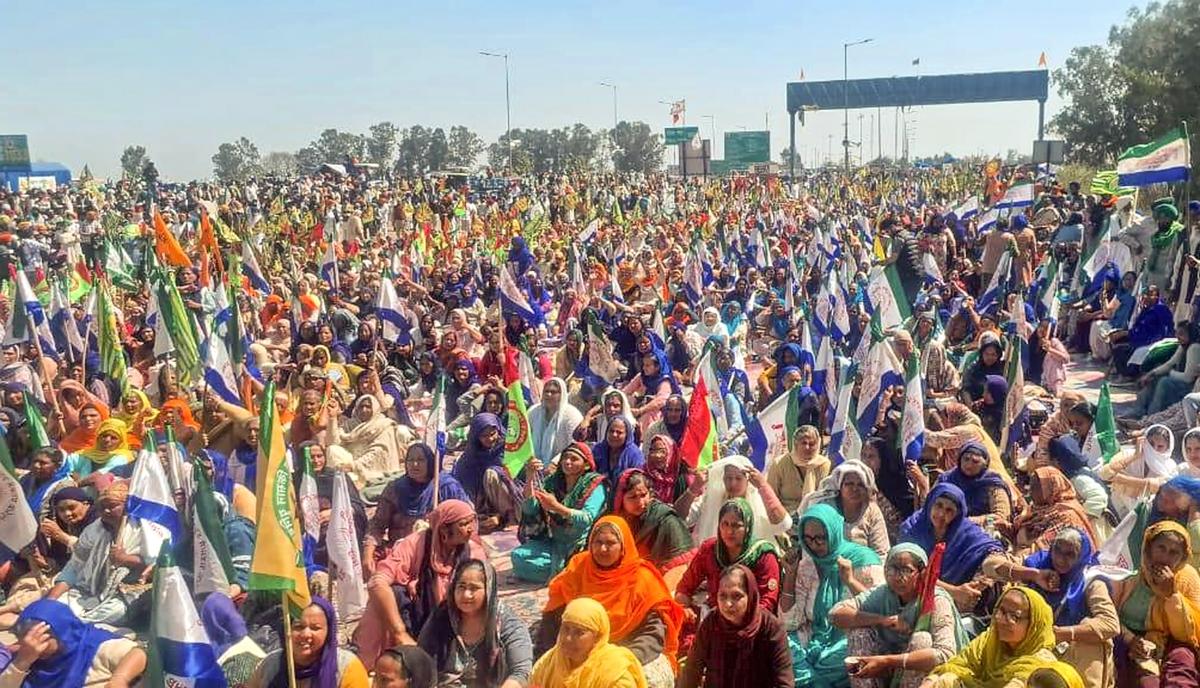
The joint protest also reflects an evolving political landscape in Karnataka, where issue-based collaboration among parties can temporarily bridge ideological divides. Analysts note that while ideological differences remain significant, strategic alliances for citizen-centric agendas can enhance political influence and public visibility. The protest, therefore, represents both a tactical maneuver and an effort to address genuine public concerns, demonstrating how politics and governance intersect in shaping state-level discourse.
Youth and student wings of both parties are expected to play an active role in mobilizing support, spreading awareness, and documenting the protests through digital platforms. Organizers have emphasized responsible engagement, including adherence to public safety norms and non-violent advocacy. The participation of young activists underscores the role of emerging political voices in amplifying concerns and engaging communities in civic matters. Such involvement also reflects broader trends in youth participation in political processes, particularly around accountability and governance issues.
Economic and social analysts observing the protest highlighted the potential implications for policy-making. By focusing on grievances that affect large sections of the population, the demonstration could prompt administrative review of schemes, infrastructure projects, and welfare delivery mechanisms. Authorities may engage in dialogue with opposition representatives to address concerns, ensuring that citizen needs are considered. The protest, therefore, serves not only as a political statement but also as a catalyst for potential policy response and governance improvement.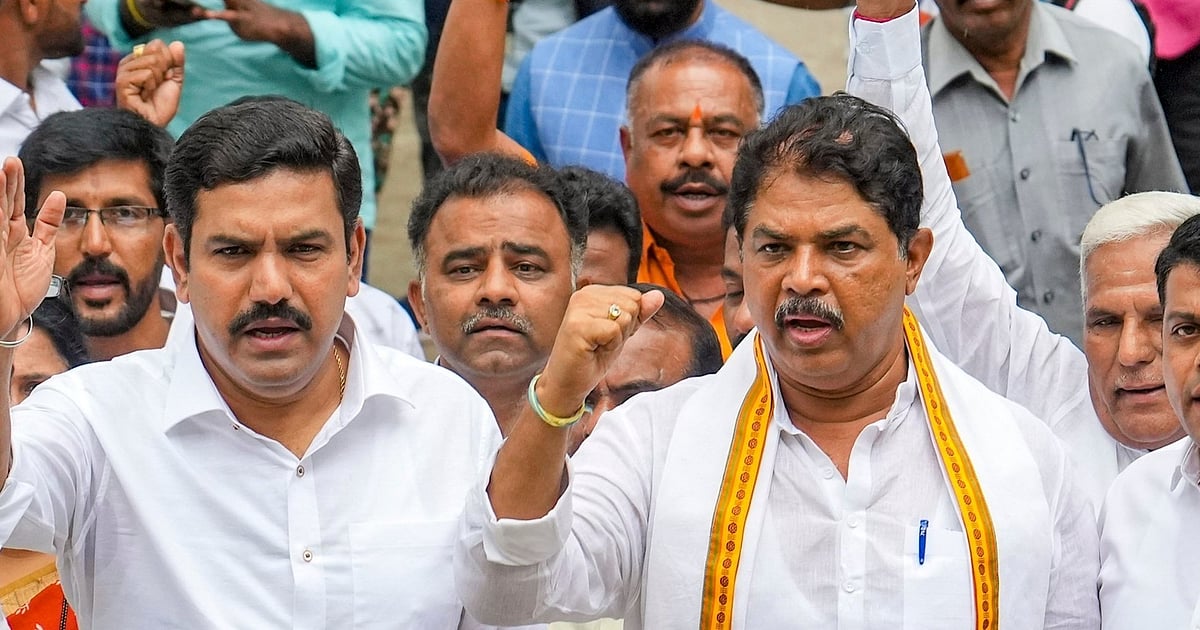
As the day of the protest unfolds, all eyes are on the coordination between BJP and JD(S) and the public’s response. Observers anticipate significant attendance across urban and rural constituencies, reflecting widespread concern over the issues being raised. The event is expected to reinforce the importance of civic engagement, accountability, and public advocacy in shaping governance. Leaders from both parties have reiterated that the protest aims to highlight citizen grievances responsibly, ensuring that the voices of affected communities are heard and addressed by authorities.
The planned BJP-JD(S) protest has also drawn attention to the methods of mobilization employed by the parties. Both organizations have been using social media platforms, local community meetings, and traditional outreach methods to inform supporters about the protest schedule and objectives. Flyers, WhatsApp groups, and local press briefings have been used extensively to ensure widespread awareness. Analysts note that such multi-channel communication strategies increase participation and create a sense of collective purpose among party cadres, enhancing the visibility and impact of the protest.
Authorities have confirmed that security arrangements are being strengthened to manage large gatherings effectively. Police officials are coordinating with local administration to deploy personnel at strategic locations, monitor crowd density, and ensure compliance with safety regulations. Traffic diversions, temporary barricades, and emergency response teams have been organized to mitigate any disruptions. Officials have emphasized that maintaining law and order while facilitating citizens’ right to protest is a priority, reflecting the balance between public safety and democratic freedoms.
The collaboration between BJP and JD(S) for this protest has sparked discussion among political analysts regarding the significance of issue-based alliances. Experts point out that while ideological differences exist, the convergence on governance-related grievances indicates a pragmatic approach to politics. Such collaborations are seen as attempts to consolidate public support and enhance bargaining power with the ruling administration. Observers note that this kind of tactical alignment can also influence voter perceptions, particularly in constituencies where dissatisfaction with local governance is high.
The protest’s agenda reportedly includes raising awareness about specific policy shortcomings, including delays in public welfare projects, rural infrastructure issues, and administrative inefficiencies. Both parties aim to present evidence, gather citizen testimonials, and highlight gaps in service delivery. By organizing a coordinated demonstration, BJP and JD(S) intend to pressure government authorities to expedite project completion, ensure transparency, and improve responsiveness. Analysts suggest that well-organized protests focusing on concrete issues can lead to tangible policy reviews and administrative interventions.
Political commentators have emphasized the symbolic importance of the protest. The unity of BJP and JD(S) in voicing common grievances sends a strong message to the public regarding accountability and governance. It also signals to other political stakeholders that collaboration is possible when citizen-centric issues are prioritized. Observers note that such demonstrations can strengthen democratic engagement by showcasing collective advocacy and the role of opposition parties in checking government action.
Local residents and civic groups have expressed mixed reactions to the planned protests. While some have welcomed the focus on governance and citizen concerns, others worry about potential traffic disruptions and inconvenience caused by large gatherings. Community leaders have called for peaceful participation and emphasized the importance of maintaining public order. Authorities have also requested cooperation from citizens to ensure that essential services and daily activities are not adversely affected.
The protest is expected to involve structured programs including speeches, rallies, and submission of memoranda to government officials. Party leaders are planning to engage directly with affected communities, highlighting their grievances and demonstrating solidarity. Organizers emphasized that the protest is designed to remain disciplined, with a clear focus on communicating actionable concerns rather than indulging in confrontational politics. Analysts suggest that disciplined demonstrations are more likely to receive positive media coverage and elicit responsive action from authorities.
Social media engagement around the protest has been significant, with hashtags, live updates, and short videos circulating widely. Observers note that digital amplification helps opposition parties reach younger demographics and urban voters, complementing on-ground mobilization. It also provides a real-time account of the protest, allowing citizens who are unable to attend physically to stay informed. Experts say that effective integration of digital and traditional outreach can enhance the overall impact and visibility of political demonstrations.
The involvement of youth and student wings in the protest is expected to energize the movement. Young participants are playing a key role in organizing logistics, coordinating volunteers, and documenting events. Analysts highlight that youth engagement in political action often introduces innovation, energy, and wider participation. Their involvement not only ensures effective execution but also strengthens democratic culture by fostering awareness and active citizenship among emerging generations.
As the day progresses, observers will closely watch the turnout, organizational efficiency, and public response to the BJP-JD(S) protest. The event is being seen as a measure of public sentiment regarding governance issues and administrative efficiency. Leaders have reiterated that the protest aims to highlight citizen grievances responsibly, promote dialogue with authorities, and encourage accountability. Analysts conclude that such coordinated demonstrations reflect the evolving dynamics of state politics, where citizen-focused agendas can temporarily bridge ideological divides to demand responsive governance.
Follow: Karnataka Government
Also read: Home | Channel 6 Network – Latest News, Breaking Updates: Politics, Business, Tech & More
