
Bengaluru: In a political development drawing sharp attention, senior minister Suresh Kumar has questioned the propriety of a recent protest organized by the Congress party. Speaking to the media, Kumar criticized the timing, method, and intent of the demonstration, alleging that it was politically motivated rather than focused on genuine public grievances. He suggested that the protest disrupted public life and created unnecessary tensions in the city, raising concerns about the ethical standards of political mobilization. The minister also emphasized that protests must align with democratic principles and respect law and order, especially when involving urban centers.
Kumar’s remarks come amid heightened political activity in the state, with opposition parties increasingly staging demonstrations over governance issues. He claimed that the Congress protest appeared more designed to generate media attention and influence public perception than to address administrative problems. According to the minister, such actions risk diverting attention from real civic challenges and can erode trust between citizens and governance institutions. Analysts noted that Kumar’s criticism reflects broader tensions between ruling and opposition parties over political accountability and the use of public protests as a tool for messaging.
The minister also highlighted the legal and procedural concerns associated with mass demonstrations. He questioned whether the necessary permissions had been obtained and whether public safety measures were adequately considered. Authorities often require prior notice and compliance with civic regulations to ensure that protests do not disrupt essential services or compromise safety. Kumar argued that adherence to these rules is crucial for maintaining civic harmony and that political parties should model responsible behavior when organizing public gatherings.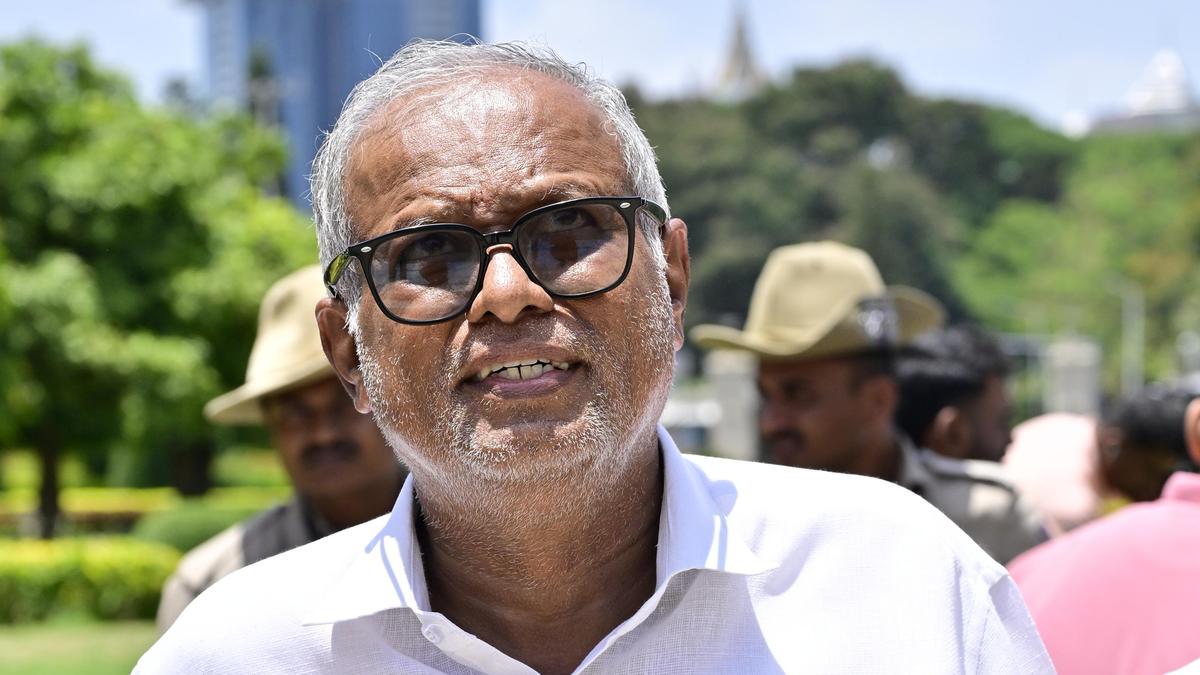
POLITICAL TENSIONS AND PUBLIC RESPONSE- SURESH
The Congress party, for its part, defended the protest as a legitimate expression of citizen grievances. Party leaders stated that the demonstration aimed to highlight issues affecting ordinary citizens and to hold the administration accountable. They emphasized that peaceful protests are a cornerstone of democratic engagement and are essential for drawing attention to systemic problems. Political analysts observed that the disagreement between the minister and opposition leaders underscores the polarized environment in Karnataka’s current political landscape.
Public response to Kumar’s comments has been mixed. Supporters of the ruling party applauded his emphasis on propriety and adherence to law and order, arguing that protests should not inconvenience citizens or disrupt urban functioning. Meanwhile, Congress supporters maintained that protesting is an essential democratic right, especially when citizens’ issues remain unaddressed. The debate reflects ongoing tensions between civic administration, political accountability, and the methods through which parties mobilize support.
Kumar also drew attention to the economic and social impact of large-scale protests in urban areas. He argued that uncoordinated demonstrations can disrupt transportation, commerce, and daily life, affecting residents and businesses alike. Authorities often have to deploy additional police personnel, manage traffic diversions, and ensure emergency services remain uninterrupted. The minister suggested that political parties bear responsibility for ensuring that demonstrations are organized in a manner that minimizes disruption while still allowing citizens to express dissent.
The minister’s critique also highlighted concerns over political rhetoric and symbolism in public demonstrations. He questioned whether the protest messaging accurately reflected citizens’ priorities or primarily served partisan interests. Analysts noted that such statements by ruling party leaders can shape public perception and set the tone for how protests are reported in the media. Kumar’s comments are likely to fuel further debate on the balance between political activism, citizen rights, and governance responsibilities.
Local civic officials also weighed in on the issue, noting that prior coordination with authorities is essential for managing protests effectively. They emphasized that adherence to civic guidelines ensures safety, prevents clashes, and allows law enforcement to focus resources efficiently. Observers noted that while protests are a legitimate democratic tool, compliance with procedural requirements is critical for maintaining public confidence and minimizing unintended consequences.
The confrontation between Suresh Kumar and the Congress party over the protest reflects a broader national trend in which demonstrations are increasingly scrutinized for legality, timing, and public impact. Analysts suggest that the debate is emblematic of the tension between political messaging and civic responsibility, highlighting the challenges of balancing citizen rights with administrative order. The minister’s remarks underline the ruling party’s focus on propriety, law, and maintaining public trust.
Political observers also noted that the dispute could influence voter sentiment, particularly among urban constituencies directly affected by protests. Citizens’ experiences with traffic disruptions, public inconvenience, and heightened security presence often shape their perception of political parties’ effectiveness and concern for public welfare. Kumar’s comments are seen as an attempt to position the ruling party as a defender of civic order while challenging the opposition’s approach to public engagement.
As the debate continues, all eyes are on how both parties frame the narrative around the protest and the ensuing political discourse. Analysts suggest that the exchange between Suresh Kumar and the Congress party highlights the complex interplay of democratic rights, political strategy, and administrative responsibility. The controversy is likely to keep public attention focused on questions of accountability, propriety, and the appropriate methods for raising citizen concerns in Karnataka.
Authorities confirmed that they are monitoring the situation closely to ensure that civic order is maintained while allowing citizens to exercise their democratic rights. Police and municipal officials have been instructed to coordinate with political parties and organizers to prevent disruptions, maintain safety, and facilitate peaceful expression. Observers noted that effective management of such events is essential to uphold both public confidence and democratic norms, balancing freedom of expression with civic responsibility.
Kumar’s statements have sparked discussion among political analysts about the ethics and effectiveness of protests as a tool for political messaging. Experts suggest that while protests are a fundamental democratic right, their credibility is influenced by timing, transparency, and alignment with citizen concerns. They noted that criticisms like Kumar’s often aim to highlight perceived misuse of public platforms for partisan gain, emphasizing that responsible demonstration requires balancing advocacy with civic order.
The debate has also highlighted the role of media in framing political protests. Observers pointed out that coverage often emphasizes confrontation and spectacle, sometimes overshadowing the substantive issues being raised. Kumar’s comments are likely intended to redirect public focus toward governance responsibilities and the methods of protest organization, reinforcing the importance of accountability not only in policy but also in political conduct. Analysts note that media narratives around protests can significantly influence public perception, shaping the political landscape ahead of elections.
Civic officials emphasized that proper planning and coordination are critical for minimizing disruptions during demonstrations. Ensuring clear communication between organizers and authorities allows for the allocation of police personnel, traffic management, and emergency services. Officials noted that demonstrations that ignore such procedures can inadvertently compromise safety, frustrate residents, and strain municipal resources. Kumar’s critique aligns with these concerns, highlighting the need for political parties to act responsibly when mobilizing large crowds.
The Congress party, however, defended the protest as a legitimate avenue for expressing citizen grievances. Leaders stated that peaceful demonstrations are necessary to draw attention to issues that might otherwise be ignored, especially when administrative responses are slow or inadequate. They argued that the protest was organized with necessary precautions and aimed to prioritize public participation while raising awareness on policy and governance challenges. This defense underscores the ongoing tension between ruling and opposition parties over the acceptable methods of civic engagement.
Public reactions to Kumar’s critique have been divided. Supporters of the ruling party praised the emphasis on propriety and lawfulness, arguing that protests must respect civic life and urban order. Conversely, opposition supporters maintained that criticizing the protest’s legitimacy undermines citizens’ right to dissent and express dissatisfaction with governance. Social media debates have reflected these divisions, highlighting broader societal discussions about the balance between democratic expression and civic responsibility.
Analysts noted that the timing of the criticism is politically significant. Kumar’s statements come at a time of heightened opposition activity in the state, suggesting a strategic attempt to frame the narrative around accountability and propriety. By focusing on the methods and ethics of the protest rather than the issues themselves, the ruling party aims to shape public perception, emphasizing governance stability and responsible political conduct. Observers suggest that such positioning could influence voter sentiment, particularly in urban centers directly affected by demonstrations.
Legal experts weighed in on the matter, noting that protests are protected under constitutional rights but must comply with regulatory frameworks. Prior notice, route permissions, and coordination with municipal authorities are necessary to prevent legal complications. Kumar’s critique reinforces the importance of these procedures and serves as a reminder that political activism carries both rights and responsibilities. Experts suggested that adherence to legal norms ensures the legitimacy of the protest while protecting public safety.
Political commentators also highlighted the symbolic aspect of Kumar’s remarks. By questioning the propriety of the protest, he is framing the narrative around accountability, civic duty, and ethical conduct in political engagement. Observers noted that such messaging resonates with constituents concerned about urban order, administrative efficiency, and the responsible exercise of political influence. The remarks may also serve as a deterrent against future demonstrations that could disrupt civic operations or be perceived as politically opportunistic.
Community leaders emphasized the need for dialogue between political parties, civic officials, and residents. Constructive engagement can address grievances without compromising public safety. Kumar’s comments, while critical, may encourage political actors to adopt more structured approaches to protest organization, ensuring that citizen voices are heard without unnecessary disruption. Experts noted that fostering a culture of responsible civic engagement strengthens democracy by balancing expression with order.
As the situation evolves, attention remains on both the conduct of the Congress protest and the public response to Kumar’s critique. Analysts predict continued debate over political ethics, governance accountability, and civic responsibility. Authorities are expected to monitor developments closely, ensuring that demonstrations remain peaceful while safeguarding public services. The unfolding discourse reflects the broader challenges of balancing democratic rights with orderly administration, highlighting the complexities inherent in political engagement in Karnataka.
Also read: Home | Channel 6 Network – Latest News, Breaking Updates: Politics, Business, Tech & More
