
Bank employees in Shivamogga staged a coordinated protest demanding the implementation of a five-day work week across the banking sector, drawing attention to long-standing concerns about work pressure and employee well-being. The demonstration saw participation from staff of various public and private sector banks who gathered during non-working hours to voice their demands. Protesters carried placards and raised slogans emphasizing the need for parity with other government-linked sectors that already follow a five-day schedule. Union representatives stated that the movement is not merely about reduced working days but about ensuring a sustainable work-life balance in an increasingly demanding financial environment.
Employee representatives have indicated that similar demonstrations are being planned in other districts to build wider awareness about the issue. They stressed that coordinated action across regions is necessary to ensure the demand receives serious attention at policy-making levels. Union members believe that a unified voice from banking staff nationwide could accelerate decision-making. However, they reiterated that protests would remain peaceful and within legal frameworks. The aim, they said, is not confrontation but constructive engagement. By highlighting shared concerns across branches and institutions, employees hope to demonstrate that the demand reflects systemic challenges rather than isolated grievances.
Observers note that the discussion around a five-day work week is also linked to the broader transformation of the banking industry. With increased automation, online transactions, and digital customer service platforms, the nature of branch-level work is evolving. Some experts argue that operational models can be redesigned to maintain service availability even with reduced physical working days. Rotational staffing or extended digital support systems could offer alternatives. The Shivamogga protest has therefore sparked conversations not only about labour welfare but also about modernizing institutional structures to match technological progress.
Mental health professionals have also weighed in, pointing out that high-pressure financial roles often carry hidden stress burdens. Continuous responsibility for handling money, regulatory compliance, and customer grievances can lead to anxiety and fatigue over time. Experts suggest that predictable rest periods play an important role in maintaining cognitive sharpness and emotional resilience. Employees participating in the protest echoed these views, stating that regular two-day weekends would help them return to work with better focus. They argue that improved well-being directly contributes to more patient and attentive customer interactions.
The protest has drawn attention on social platforms and within professional forums, where discussions about workplace reforms in traditional sectors are gaining momentum. Younger employees in particular view balanced schedules as a standard expectation rather than a special privilege. This generational shift in attitudes toward work-life balance is influencing organizational policies worldwide. In the banking sector, adapting to these expectations may be essential for attracting and retaining skilled professionals. The Shivamogga demonstration thus reflects changing workforce values alongside immediate operational concerns.
As negotiations continue at higher levels, both unions and authorities appear aware that the issue requires a carefully calibrated solution. Any change in working patterns would likely involve adjustments in staffing, technology use, and service planning. Employees have expressed readiness to cooperate in exploring models that safeguard customer access while addressing welfare needs. The coming months may see further consultations and pilot approaches. Regardless of the outcome, the protest has reinforced the importance of dialogue in shaping policies that balance institutional efficiency with the human realities of the workforce.
Organizers of the protest said the banking workforce has experienced a significant rise in responsibilities over the past decade, particularly with the expansion of digital banking, government schemes, and financial inclusion drives. Employees argued that while technology has improved service delivery, it has also added layers of compliance, reporting, and customer expectations. According to union members, staff often extend their work beyond official hours to meet targets and complete documentation. They believe a five-day week would help reduce stress levels and improve overall efficiency without compromising customer service standards.
Employee associations emphasized that similar demands have been raised at the national level, with several rounds of discussions reportedly held between unions and banking authorities. However, the issue remains unresolved, leading to periodic demonstrations across different regions. In Shivamogga, union leaders addressed the gathering, stating that the protest aimed to remind policymakers of the urgency of the matter. They clarified that essential services were not disrupted and that the demonstration was conducted peacefully. The employees expressed hope that authorities would take a positive view of their request and initiate meaningful dialogue.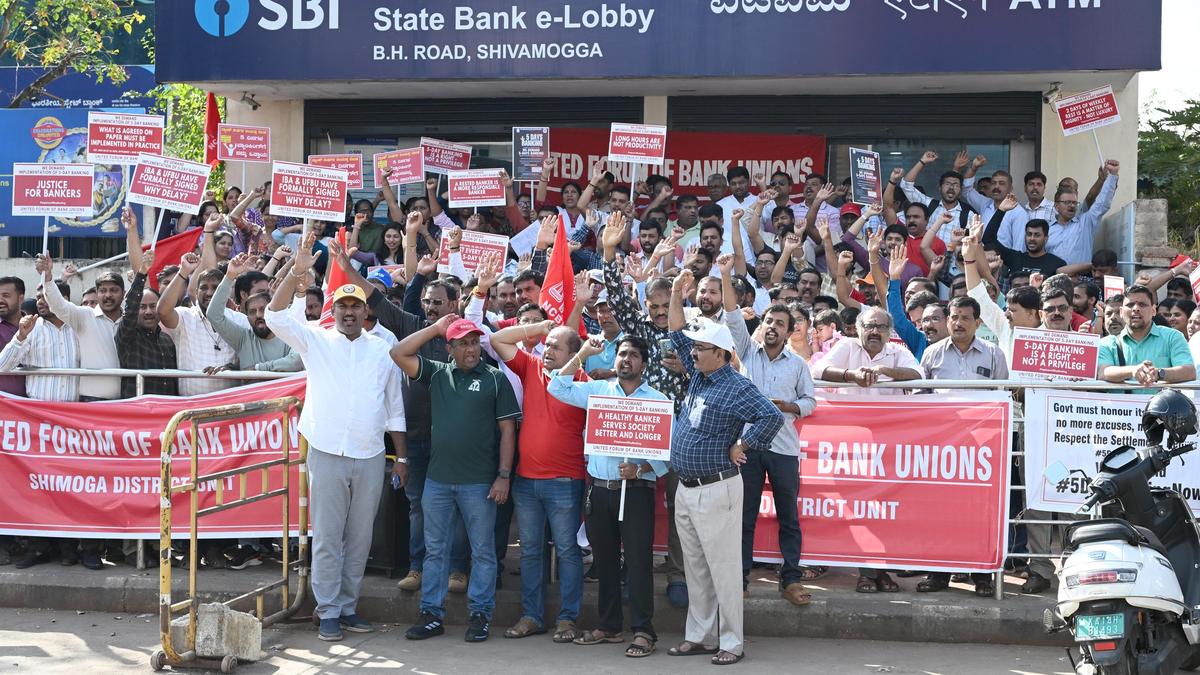
Many participants highlighted the psychological strain associated with banking jobs, especially in customer-facing roles. They pointed out that staff must handle financial disputes, loan recovery pressures, and service expectations from diverse groups of customers. The emotional labour involved, they said, often goes unrecognized. A shorter work week, they argued, would allow employees time to rest and manage personal responsibilities, ultimately leading to improved morale. Workers also stressed that a healthy workforce is essential for maintaining trust and reliability in the banking system, which plays a central role in economic stability.
Union representatives also linked their demand to productivity considerations. They cited examples from sectors where reduced workdays have not led to a decline in output but instead enhanced focus and efficiency. According to them, fatigue and burnout can lower service quality and increase the risk of errors. By allowing employees more time for recovery, institutions may benefit from sharper performance during working days. The protest leaders maintained that the demand is practical and aligned with modern workplace practices, especially as digital tools continue to streamline many routine banking functions.
WORKLOAD PRESSURES AND EMPLOYEE WELFARE CONCERNS
The banking sector has undergone rapid transformation, with staff now expected to manage traditional operations alongside digital platforms, cybersecurity protocols, and regulatory compliance. Employees in Shivamogga noted that this expansion of duties has not always been matched with proportional staffing increases. As a result, existing personnel often shoulder heavier workloads. Protesters said the demand for a five-day week reflects the need to recalibrate working conditions in line with evolving job roles. They believe that without structural changes, prolonged stress could affect both employee health and service quality in the long term.
In addition to workload, employees pointed to the frequency of training sessions, audits, and performance reviews as factors contributing to extended work hours. While acknowledging the importance of these processes, they argued that the cumulative effect leaves little room for rest. Many staff members reportedly use weekends to catch up on personal tasks, leaving minimal time for recreation or family interaction. Protesters emphasized that improved work-life balance is not a luxury but a necessity for maintaining mental and physical health in high-responsibility professions like banking.
Women employees participating in the protest highlighted specific challenges related to balancing professional and domestic responsibilities. They stated that irregular hours and weekend duties can create difficulties in managing childcare and household commitments. A standardized five-day schedule, they said, would provide predictability and reduce stress. Union leaders called for gender-sensitive considerations in workplace policies, noting that a supportive environment contributes to higher retention and job satisfaction. They argued that modern employment frameworks must adapt to diverse workforce needs rather than relying on outdated norms.
Some employees also drew attention to the impact of public expectations, particularly during peak periods such as financial year-end or major government scheme rollouts. During these times, staff often work under tight deadlines, handling large volumes of transactions and documentation. Protesters said such phases demand intense concentration and can lead to exhaustion if not followed by adequate rest. They stressed that a five-day week would create a consistent structure that allows employees to recover after demanding cycles, reducing the risk of burnout and errors.
Labour experts observing the situation noted that the debate reflects broader shifts in workplace culture, where employee well-being is increasingly recognized as central to organizational success. They suggested that financial institutions may need to explore flexible staffing models and technology integration to balance operational demands with staff welfare. According to them, the protest in Shivamogga is part of a larger conversation about redefining productivity in knowledge-intensive sectors. Ensuring humane working conditions, they said, can strengthen institutional resilience and service standards over time.
RESPONSE, DIALOGUE, AND FUTURE OUTLOOK- BANK
Bank management representatives have acknowledged the concerns raised by employees but indicated that any decision on working days would require coordination at higher administrative levels. They pointed out that customer convenience and regulatory requirements must also be considered. Officials noted that digital banking channels have already reduced dependence on physical branches for many services. However, they maintained that policy changes must be carefully evaluated to ensure uninterrupted access to essential financial operations for the public.
Government authorities monitoring the situation stated that they respect employees’ right to express their demands peacefully. At the same time, they emphasized the importance of maintaining financial service continuity. Discussions between unions and policymakers are expected to continue, with the possibility of phased approaches or alternative arrangements being explored. Observers believe that constructive dialogue will be key to finding a balanced solution that addresses employee welfare without affecting customer access. The Shivamogga protest may contribute to shaping future deliberations at broader levels.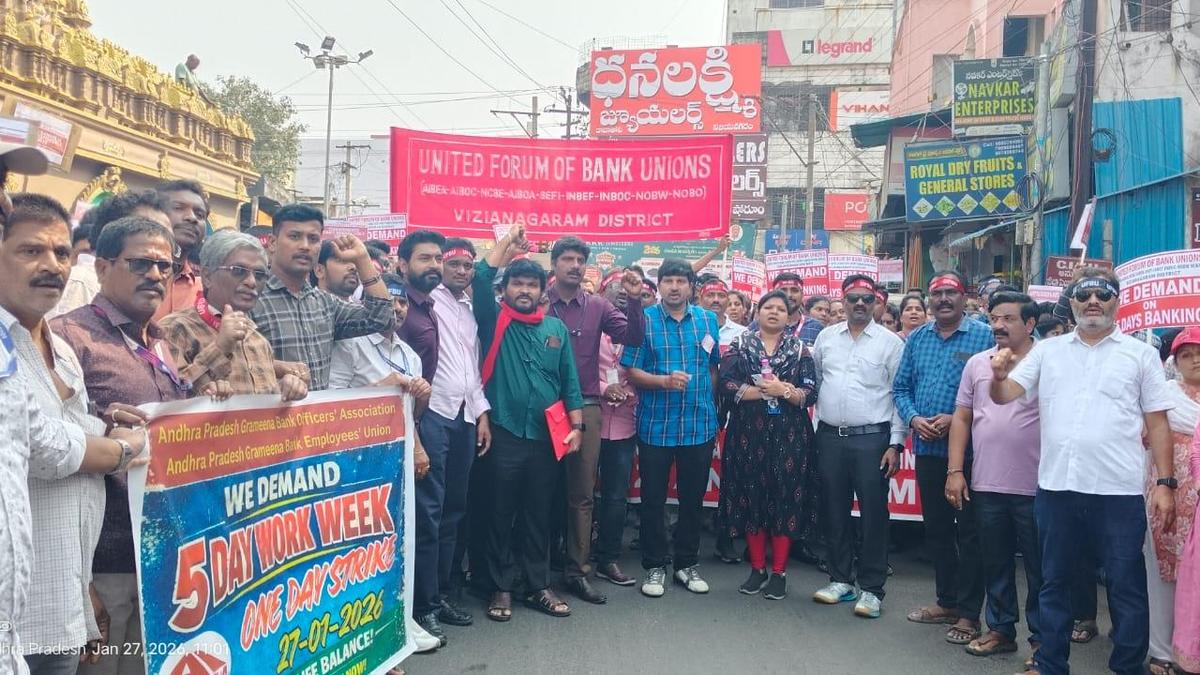
Customers visiting banks during the protest period reported normal operations, as demonstrations were scheduled to avoid disruption. Some customers expressed sympathy for employees, acknowledging the pressures associated with banking jobs. Others emphasized the need for reliable service availability, particularly in rural and semi-urban areas where digital literacy may be limited. The situation highlights the challenge of aligning workforce expectations with public service obligations. Both sides appear to recognize the need for compromise that preserves efficiency while acknowledging human factors.
Union leaders concluded the protest by reaffirming their commitment to peaceful advocacy and dialogue. They expressed confidence that sustained engagement with authorities would eventually yield positive results. Employees dispersed after submitting memorandums outlining their demands and concerns. Organizers stated that further actions would depend on the response from higher authorities. The demonstration underscored the growing prominence of employee welfare discussions in sectors traditionally seen as stable and structured, reflecting evolving expectations around work conditions.
As the debate over a five-day work week continues, the Shivamogga protest stands as a reminder that institutional strength depends not only on financial performance but also on the well-being of the people who sustain daily operations. Employees hope their voices will contribute to a broader reassessment of work structures in the banking industry. Observers note that achieving a balanced solution could set an important precedent. The outcome may influence how workplaces adapt to changing social, technological, and human resource realities in the years ahead.
Follow: Karnataka Government
Also read: Home | Channel 6 Network – Latest News, Breaking Updates: Politics, Business, Tech & More
