
Concerns over the quality of midday meals served in government schools echoed strongly in the Karnataka Legislature, as Opposition members questioned how suppliers quoting below-market prices could maintain nutritional standards. Legislators argued that the unusually low quotations raised red flags about ingredient quality, food safety practices, and long-term impacts on children’s health. The midday meal scheme, a crucial welfare initiative aimed at improving student nutrition and attendance, feeds lakhs of children daily. Any compromise in quality, members warned, could undermine not only physical well-being but also trust in a program designed to support vulnerable sections of society.
Food safety experts have suggested that third-party audits could add another layer of credibility to the system. Independent assessments of kitchens, storage facilities, and supply chains may help verify compliance beyond routine departmental checks. Such evaluations could include surprise visits and standardized scoring methods. Public disclosure of audit summaries, they say, would improve transparency and deter negligence. By creating a system where performance is periodically reviewed by neutral agencies, authorities may strengthen accountability while reassuring parents and educators about the integrity of meals served to children.
Economists tracking welfare expenditure point out that nutrition schemes often yield long-term economic returns. Healthier children tend to show better educational outcomes, higher productivity, and reduced healthcare burdens in adulthood. From this perspective, ensuring meal quality is not merely a cost issue but a developmental investment. If procurement policies undermine nutritional value, the state could face hidden social costs later. This argument has fueled calls for a broader cost-benefit analysis when determining budget allocations for school nutrition programs.
Civil society groups working in child welfare have also entered the discussion, urging community participation in oversight. They recommend forming local monitoring committees including parents, teachers, and health workers. Such grassroots involvement can provide real-time feedback and quickly flag irregularities. Involving communities may also create a sense of shared responsibility, ensuring that the scheme is not seen as a distant administrative exercise but as a collaborative social effort supporting children’s growth and education.
Logistics specialists note that fluctuations in food supply chains can affect pricing and availability of ingredients. Seasonal variations, transport costs, and storage infrastructure all influence procurement feasibility. Strengthening decentralized sourcing from local farmer groups could stabilize supplies while supporting rural economies. Some legislators suggested that linking the midday meal program with local agricultural cooperatives may improve both freshness and cost management, reducing dependence on distant suppliers and long transport routes.
The debate has also prompted attention to training and working conditions of kitchen staff. Cooks and helpers play a vital role in maintaining hygiene and consistency. Regular skill development programs, fair remuneration, and safe working environments can improve morale and performance. Lawmakers argued that quality outcomes depend not only on procurement policies but also on the people preparing meals daily. Investing in human resources, therefore, is seen as integral to strengthening the scheme’s effectiveness.
As the issue remains under legislative scrutiny, the broader message emerging is that welfare delivery requires continuous evaluation. Schemes serving large populations must evolve in response to economic conditions, community feedback, and health standards. The present concerns, while critical, may lead to constructive reforms. By combining transparent procurement, strong monitoring, community participation, and realistic budgeting, the state can reinforce confidence in a program that remains central to child nutrition and educational equity.

Opposition leaders highlighted that food inflation has affected essential commodities such as pulses, cooking oil, vegetables, and grains. In this context, bids that appear significantly lower than prevailing market rates have triggered suspicions about cost-cutting measures. They questioned whether suppliers might reduce portion sizes, substitute ingredients, or compromise hygiene to meet financial constraints. Some legislators cited feedback from parents and local representatives alleging inconsistency in taste and quality in certain districts. Though these reports vary, the issue has gained urgency because the scheme directly affects school-going children from economically weaker families.
Government representatives responded by stating that tender processes follow established norms and include technical evaluation criteria beyond price alone. Officials clarified that suppliers are required to adhere to nutritional guidelines and are subject to inspections. They stressed that contracts include clauses allowing action against any violations of standards. However, Opposition members insisted that price feasibility must be examined carefully, arguing that unrealistic quotations could indicate systemic issues in procurement or monitoring.
The midday meal scheme serves as a social equalizer, encouraging school attendance and addressing malnutrition. Legislators across parties acknowledged its importance but differed sharply on implementation concerns. Some Opposition members suggested that the state review cost structures periodically, ensuring they align with market realities. They argued that maintaining quality may require flexible budgeting, particularly in times of rising input costs. Without such adjustments, they warned, suppliers might struggle to deliver meals that meet prescribed nutritional value.
Teachers’ associations have also weighed in, emphasizing the need for consistent food quality to maintain student interest and well-being. Educators observed that meals play a significant role in keeping children attentive during classes. If taste or quality declines, children may skip meals, affecting concentration and energy levels. These practical classroom observations have strengthened calls for a closer look at procurement mechanisms and on-ground monitoring.
Procurement Questions and Monitoring Challenges
The debate has drawn attention to how large-scale welfare procurement operates. Tenders often prioritize cost efficiency to stretch public funds, but experts caution that lowest-price selection without rigorous feasibility checks can pose risks. Nutritionists point out that preparing balanced meals for children requires a stable supply of quality ingredients. If suppliers operate on extremely thin margins, maintaining nutritional diversity becomes difficult. The Opposition has therefore called for greater transparency in tender evaluation, including disclosure of how price bids are assessed against nutritional requirements.
Monitoring mechanisms were another focal point in the discussion. While the government maintains that inspections occur regularly, legislators asked whether these checks are frequent and independent enough. They suggested involving local school committees, parent groups, and health officials in oversight processes. Decentralized monitoring, they argued, could detect problems early and ensure accountability. In addition, calls were made for periodic laboratory testing of food samples to verify nutritional content and safety standards.
Administrative officials acknowledged that the scale of the scheme presents logistical challenges. With thousands of schools involved, uniform quality control requires coordination among multiple departments. They indicated that digital reporting systems and surprise inspections are being strengthened. Training programs for cooks and staff are also being emphasized to ensure hygiene and standardized preparation methods. Nonetheless, lawmakers urged that structural safeguards be reinforced to prevent lapses.
Concerns over the quality of midday meals served in government schools echoed strongly in the Karnataka Legislature, as Opposition members questioned how suppliers quoting below-market prices could maintain nutritional standards. Legislators argued that the unusually low quotations raised red flags about ingredient quality, food safety practices, and long-term impacts on children’s health. The midday meal scheme, a crucial welfare initiative aimed at improving student nutrition and attendance, feeds lakhs of children daily. Any compromise in quality, members warned, could undermine not only physical well-being but also trust in a program designed to support vulnerable sections of society.
Health professionals observing the debate stressed the long-term implications of compromised nutrition. School-age children require adequate protein, micronutrients, and calories for physical and cognitive development. Even minor deficiencies, if sustained, can affect learning outcomes and growth. This perspective has elevated the discussion beyond procurement technicalities to broader public health considerations.
Balancing Cost Efficiency with Child Welfare
The controversy has reignited a fundamental policy dilemma: how to balance fiscal prudence with welfare quality. Supporters of tight budgeting argue that public funds must be used efficiently to cover a large beneficiary base. However, critics contend that excessive cost-cutting in nutrition programs can be counterproductive, leading to health issues that impose higher social costs later. Legislators suggested that periodic cost revisions based on inflation indices could help maintain balance.
Parents in some regions expressed mixed views. While many appreciate the scheme’s role in supporting household food security, they emphasized that quality must remain non-negotiable. Community feedback mechanisms, including grievance channels, were proposed as ways to ensure voices from the ground inform policy adjustments. Transparent communication from authorities regarding standards and inspection outcomes could also build public confidence.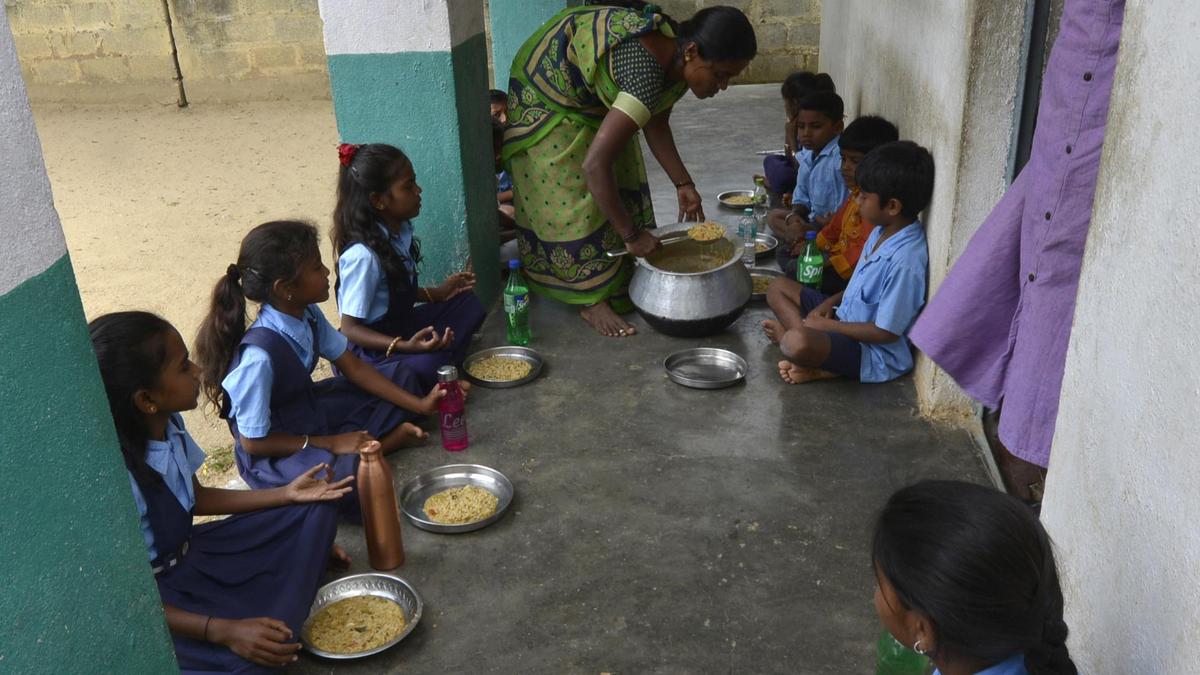
Policy analysts noted that midday meal programs nationwide have evolved to include fortified foods and diversified menus. Maintaining such enhancements requires consistent investment. They suggested exploring partnerships with nutrition experts to design cost-effective yet balanced meal plans. Strengthening supply chains, reducing wastage, and bulk procurement strategies could help manage costs without lowering standards.
The issue has also highlighted the role of data in decision-making. Real-time monitoring of food delivery, consumption patterns, and health indicators could provide insights into scheme performance. Integrating such data with school health records might help identify early warning signs of nutritional gaps. Legislators urged that technology-driven oversight complement traditional inspections.
As the debate continues, both sides agree that the scheme’s core objective must remain central: supporting children’s health and education. The Legislature’s discussion has underscored that transparency, realistic budgeting, and robust monitoring are essential to sustain public trust. Authorities are expected to review concerns raised and consider measures to strengthen quality assurance mechanisms.
Ultimately, the midday meal program represents more than a welfare initiative; it is an investment in the state’s future generation. Ensuring that meals are nutritious, safe, and consistently delivered is not only an administrative responsibility but also a social commitment. The current scrutiny, while contentious, may serve as an opportunity to refine systems and reaffirm the priority of child welfare in public policy.
Follow: Karnataka Government
Also read: Home | Channel 6 Network – Latest News, Breaking Updates: Politics, Business, Tech & More
