
At 92 Tarpa Maestro Bhiklya Ladakya Dhinda Receives Padma Shri Honour
At 92 Tarpa maestro Bhiklya Ladakya Dhinda has become a symbol of cultural preservation after receiving the Padma Shri, one of India’s highest civilian honours. His recognition comes after decades of devotion to the tarpa, a traditional wind instrument deeply rooted in the tribal communities of western India. For most of his life, Dhinda played for his people, not for applause or awards, making his late national recognition both moving and meaningful.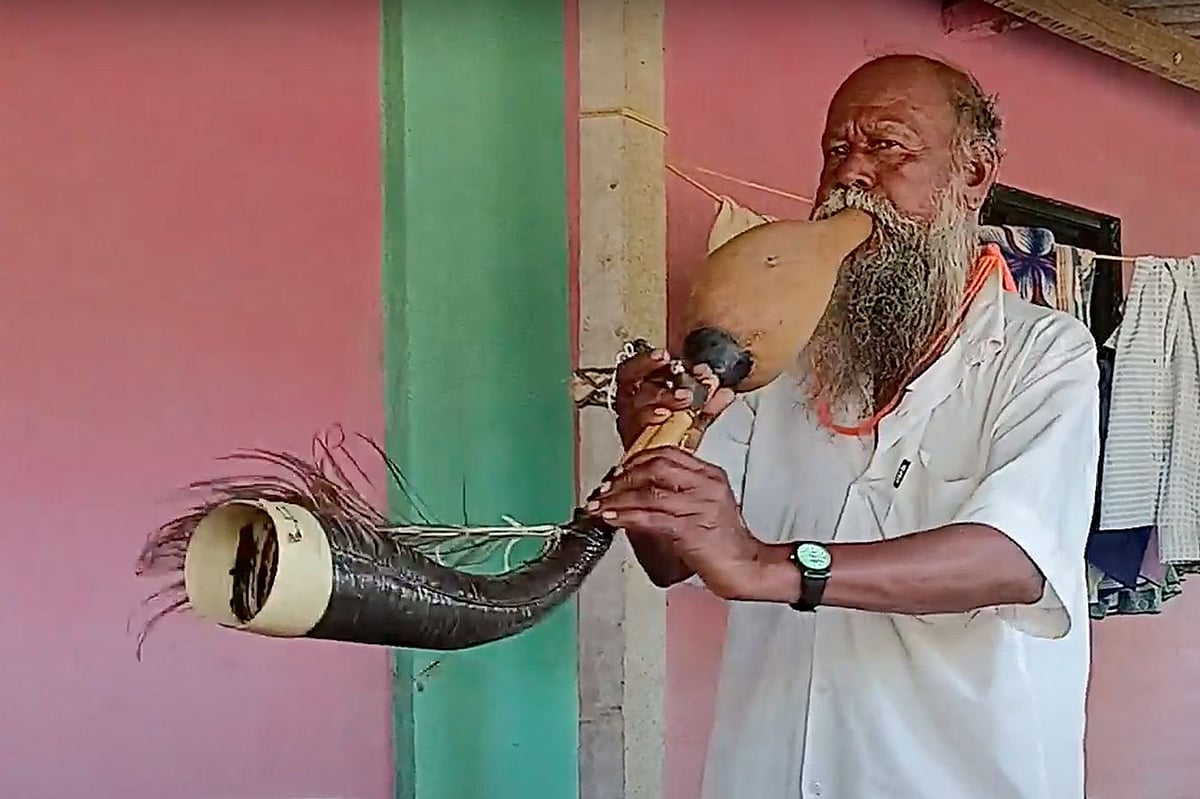
The tarpa, crafted from bamboo and gourd, is central to rituals, harvest celebrations, and community gatherings among tribal groups in parts of Maharashtra and Gujarat. While modern music slowly pushed such instruments to the margins, Dhinda remained committed to keeping the sound alive. His Padma Shri award has now brought long-overdue attention to an art form that survived mainly through oral tradition and community memory.
At 92 Tarpa Maestro and a Life Rooted in Tradition
At 92 Tarpa maestro Bhiklya Ladakya Dhinda’s life reflects simplicity and discipline. Born into a tribal family, he learned the tarpa not through formal training but by observing elders and practicing for years. The instrument was never a source of income alone; it was a way of life. Dhinda played during festivals, weddings, and village events, ensuring that each generation heard the sounds their ancestors cherished.
Despite limited exposure outside his region, Dhinda never abandoned his craft. He continued performing even as younger generations migrated to cities and traditional practices slowly faded. His music remained closely tied to nature and community rhythms, not commercial stages. This unwavering commitment is what cultural scholars and folk art supporters now highlight as his greatest contribution.
Over the years, Dhinda also took on the role of a teacher. He shared his knowledge with younger members of his community, emphasizing not just technique but respect for tradition. Many believe that without his quiet efforts, the tarpa might have lost its presence entirely in certain areas.
At 92 Tarpa Maestro Recognition and Cultural Revival
At 92 Tarpa maestro Dhinda’s Padma Shri honour has sparked renewed interest in tribal music and instruments. Cultural organizations and state authorities have acknowledged that such recognition helps preserve art forms that rarely find space in mainstream platforms. The award has encouraged documentation of tarpa music and discussions about integrating folk traditions into cultural festivals and educational programs.
For Dhinda, the recognition is not about personal achievement alone. Those close to him say he views the honour as belonging to his community and ancestors who kept the tradition alive long before him. His story has become an example of how cultural heritage often survives quietly, away from headlines, until moments like these bring it into focus.
The Padma Shri has also opened conversations about supporting aging folk artists who have spent their lives preserving intangible heritage. Many experts argue that such recognition should come earlier, along with sustained support systems, to ensure artists can pass on their knowledge with dignity.
At 92 Tarpa Maestro and a Legacy Beyond Awards
At 92 Tarpa maestro Bhiklya Ladakya Dhinda’s legacy goes beyond the Padma Shri medal. His journey reminds the nation that cultural richness is not limited to concert halls or digital platforms. It lives in villages, forests, and communities where art is woven into daily life.
View this post on Instagram
His story has inspired renewed respect for tribal musicians who continue to practice their art despite limited resources and recognition. Younger artists now see Dhinda as proof that dedication, even when unnoticed for decades, holds value. Also Read: Actress Shin Eun Soo Official Romance Gains Attention Across Korean Entertainment
As India continues to celebrate its diverse heritage, Dhinda’s recognition stands as a reminder that preserving culture requires patience, respect, and attention to voices often unheard.
Conclusion
At 92 Tarpa maestro Bhiklya Ladakya Dhinda’s Padma Shri honour is not just a personal milestone but a recognition of an entire tradition. His life of quiet commitment has brought the tarpa into the national spotlight, reminding the country of the deep cultural roots that still thrive beyond mainstream view.
