
Sunetra Pawar Sworn In as Deputy Chief Minister of Maharashtra
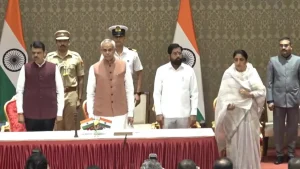
Sunetra Pawar was sworn in as the Deputy Chief Minister of Maharashtra on January 31, 2026, marking a milestone in the state’s political history as the first woman to hold this high constitutional office. The oath of office was administered by Governor Acharya Devvrat at an official ceremony held at Lok Bhavan in Mumbai, attended by Chief Minister Devendra Fadnavis, Deputy Chief Minister Eknath Shinde and senior leaders of the ruling coalition. Supporters and legislators raised slogans in memory of her late husband, Ajit Pawar, underscoring the emotional and symbolic significance of the event.
Sunetra’s appointment comes just days after the tragic death of Ajit Pawar, who served as Deputy Chief Minister before dying in a plane crash on January 28, 2026. Her elevation to the post reflects both political continuity within her faction of the Nationalist Congress Party (NCP) and a historic breakthrough for women’s representation in Maharashtra’s executive leadership.
Historic First for Women in Maharashtra Politics
Sunetra Pawar’s appointment as Deputy Chief Minister is historic, as no woman has previously held this position in Maharashtra. The state has long been a significant arena of political power in India, and her rise signals a new chapter in gender representation at the highest levels of governance. Observers note that her appointment is likely to inspire broader discussions on women’s leadership roles within regional political parties and the state administration.
She has been assigned key portfolios, including excise, sports and minorities affairs, which place her in charge of departments that intersect with social welfare, community development and regulatory oversight. Her stewardship of these departments will be watched closely as she balances administrative duties with the broader expectations tied to her historic position.
Political Background and Rise to Leadership
Sunetra Pawar, 62, has had a gradual but notable journey into politics, shaped by her extensive social work and connection to one of Maharashtra’s most influential political families. Born in 1963 in what is now Dharashiv district, she grew up in a politically aware household; her father was a local leader and her brother held political office, which helped cultivate her understanding of public affairs. However, she largely stayed away from active politics for much of her life, dedicating herself to grassroots social initiatives, including sanitation drives and environmental work in the Baramati region.
Her public profile began to shift in 2023 when she entered electoral politics by contesting the Baramati Lok Sabha seat — a constituency deeply associated with the Pawar family legacy — although she lost to her sister-in-law Supriya Sule. Subsequently, she was nominated to the Rajya Sabha, where she served as a Member of Parliament and participated in parliamentary debates and committees. This elevated political engagement helped prepare her for leadership roles within the NCP and ultimately a constitutional office within the state government.
NCP Leadership and Legislature Party Election
Sunetra Pawar’s ascension to the deputy chief ministership was preceded by her unanimous election as the leader of the NCP legislature party in Maharashtra. A meeting of NCP legislators was held shortly after Ajit Pawar’s death, during which senior party members proposed and seconded her name to lead the legislative wing. This internal decision solidified her candidacy for the state’s deputy chief minister position and demonstrated the party’s intent to maintain unity and continuity during a period of transition.
Her elevation underscores both her growing standing within the party and the strategic decisions made by NCP leaders to stabilize the political framework following the sudden loss of a key leader. The legislature party’s confidence in her leadership was reflected in the unanimous support she received from her colleagues during the leadership vote.
Public Reaction and Political Significance
The appointment of Sunetra Pawar has generated varied reactions across Maharashtra’s political spectrum and civil society. Supporters have hailed the move as a fitting tribute to Ajit Pawar’s legacy and a nod to Sunetra’s own contributions in social welfare and community development. Many have celebrated the break with tradition, noting that her leadership may encourage greater participation of women in high political office within the state.
At the oath-taking ceremony, emotional slogans such as “Ajit Dada amar rahe” (Long live Ajit Pawar) echoed through the venue, reflecting the sentiment of supporters who see her appointment as both a continuation of her husband’s vision and a new beginning for the NCP’s role in the coalition government.
Political analysts say her elevation also highlights the dynamics of coalition politics in Maharashtra, where the Mahayuti alliance — led by the BJP and supported by allied partners including the NCP faction — must balance internal leadership changes with governance responsibilities. Observers suggest that her role may influence future electoral strategies and power distribution within the state’s political framework.
Social Work and Grassroots Credentials
Sunetra Pawar’s public persona has been shaped as much by her social activism as by her familial connections. Long before her elevation to a constitutional post, she was recognised for her work on sanitation, sustainable development and women’s empowerment. In Baramati’s Katewadi village, she spearheaded a cleanliness campaign that transformed the area into a model village with solar street lighting, biogas units and early adoption of organic farming practices. Local residents credit her initiatives with improving public health and community well-being.
Her involvement in the Baramati Hi-Tech Textile Park has also been noteworthy; the project employs over 15,000 workers, most of them women, in weaving and textile processing units, reflecting her focus on women’s economic participation and rural employment. Additionally, Sunetra founded the Environmental Forum of India, which promotes sustainable agriculture and eco-friendly village models, further reinforcing her activist roots.
These grassroots credentials contribute to her political narrative as someone whose public service extends beyond party affiliations and electoral politics, grounding her leadership in community engagement and development.
Challenges and Expectations Ahead
While Sunetra Pawar’s appointment is historic, it also places her at the center of complex governance challenges. Maharashtra faces pressing issues such as agrarian distress, infrastructure development, urban-rural inequality and socio-economic disparities across regions. As Deputy Chief Minister, she will be expected to contribute meaningfully to policy solutions while navigating internal coalition dynamics and public expectations.
Some political observers have noted that her relative lack of conventional political experience could be an initial hurdle, but they also argue that her social work background and institutional support within the NCP may help her adapt to the demands of executive leadership. Her performance in managing the departments assigned to her — including excise, sports and minorities affairs — will likely shape public perceptions of her administrative capabilities.
Moreover, balancing the expectations of her late husband’s supporters, party loyalists and a broader electorate will require strategic acumen and political sensitivity, especially as Maharashtra prepares for future civic and state-level elections.
Women in Leadership and Broader Implications
Sunetra Pawar’s ascension as the first woman Deputy Chief Minister of Maharashtra is significant in the broader context of women’s representation in Indian politics. Despite being one of India’s most populous and politically influential states, Maharashtra has rarely seen women occupy top executive offices. Her appointment therefore represents a symbolic and practical shift toward greater inclusivity in political leadership roles.
Advocates for gender equality in politics have welcomed this development, believing it could encourage more women to seek leadership positions within parties and elected bodies. While representation is only one aspect of gender equity, high-profile appointments like Sunetra’s can have ripple effects on political culture and aspirations of women across the state.
Personal Legacy and Public Identity
Sunetra Pawar’s personal journey from social activist and agriculturist to the Deputy Chief Minister of Maharashtra illustrates an unusual yet impactful trajectory in public life. Although her political career is comparatively recent, her work outside electoral politics helped build a foundation of credibility and public service that complements her new role in governance.
Her elevation follows years of civic engagement and positions of leadership in community organisations, indicating that her influence extends beyond formal political office into spheres of social development and empowerment. As she assumes one of the highest constitutional offices in the state, her ability to integrate her activist roots with governance responsibilities will shape both her legacy and her effectiveness as a leader.
Read More: https://channel6network.com/maharashtra-launches-kusum-drive/
Sunetra Pawar’s appointment as the first woman Deputy Chief Minister of Maharashtra is a historic moment with far-reaching political, social and cultural implications. It represents a blend of continuity after tragedy, recognition of grassroots work, and a shift toward greater gender representation in state leadership. As she takes on the challenges of governance, building on her legacy and navigating the expectations placed upon her will define her tenure and influence the evolving narrative of Maharashtra’s political landscape.
