
The political atmosphere in Karnataka witnessed renewed tension after senior BJP leader R. Ashok questioned the silence of Deputy Chief Minister D.K. Shivakumar regarding the ambitious “Brand Bengaluru” initiative and his reported absence from the Assembly proceedings. The remarks, made during a legislative discussion, have intensified debate over governance priorities, accountability, and transparency in the state administration. Opposition members argued that a project of such scale, aimed at reshaping Bengaluru’s global identity and infrastructure narrative, requires consistent leadership presence and clear communication. The issue has since evolved into a broader political exchange between the ruling Congress and the Opposition.
R. Ashok stated that Bengaluru, being Karnataka’s capital and economic hub, deserves focused leadership, particularly when long-term urban transformation projects are under discussion. He alleged that the Deputy Chief Minister’s absence from the House during key deliberations sent the wrong message about the government’s seriousness toward the initiative. According to Opposition members, Brand Bengaluru is not merely a branding exercise but a policy-driven program involving urban infrastructure, mobility, environment, and civic management. They argued that legislative engagement is essential for democratic oversight and effective implementation of such a comprehensive urban vision.
Urban policy experts note that Bengaluru’s rapid expansion over the past decade has made governance more complex, requiring constant coordination between elected representatives and administrative agencies. When high-visibility initiatives such as Brand Bengaluru come under discussion, the public often equates leadership presence with commitment. Specialists say that while administrative work behind the scenes is crucial, visible participation in democratic forums reinforces legitimacy. They argue that structured communication strategies, including periodic Assembly briefings and public status reports, can bridge perception gaps and ensure that developmental narratives remain grounded in measurable progress rather than political interpretation alone.
Business associations in Bengaluru have also been watching the developments closely, as infrastructure planning directly affects investment decisions. Industry representatives emphasize that clarity about urban mobility, land use, and civic services plays a major role in shaping the city’s economic future. They suggest that political disagreements should not slow down administrative processes tied to infrastructure upgrades. At the same time, they believe transparent legislative discussion strengthens investor confidence, since it demonstrates institutional checks and continuity. Stable governance signals, they say, are essential for Bengaluru’s positioning as a global technology and innovation hub in a competitive international landscape.
Former bureaucrats point out that major city-level programs often involve multiple funding streams, including state allocations, central schemes, and public–private partnerships. Legislative scrutiny can help track these financial flows and ensure that funds are used efficiently. They add that open debate also helps identify implementation bottlenecks early. According to governance experts, disagreements within the Assembly should ideally lead to stronger monitoring frameworks rather than political deadlock. When questions raised by the Opposition receive data-backed responses, it builds a culture of evidence-based policymaking and reduces the scope for speculation or misinformation in public discourse.
Social commentators observe that the discussion reflects the growing expectations citizens have from urban leadership. Residents increasingly demand real-time updates, responsive governance, and visible accountability. In the age of social media and 24-hour news cycles, ministerial actions are closely scrutinized. Experts believe that consistent public engagement, including town hall meetings and digital communication, can complement legislative participation. Such outreach not only clarifies government actions but also creates feedback loops that improve policy design. For large-scale urban missions, sustained dialogue between citizens and leaders is becoming as important as technical planning itself.
Environmental planners underline that any city branding initiative must integrate sustainability as a core principle. Bengaluru faces challenges such as shrinking lakes, air pollution, and pressure on green cover. They argue that legislative forums provide opportunities to debate environmental safeguards and long-term ecological planning. Addressing these concerns publicly demonstrates that development and sustainability are not competing goals but interconnected priorities. Transparent policy discussion, they say, reassures communities that urban growth will not come at the expense of environmental stability and future resilience.
Political analysts suggest that such controversies, while sharp in tone, often lead to clearer articulation of project goals. When the Opposition presses for answers, governments may respond with more detailed roadmaps and timelines. This process can enhance policy clarity for the public. Observers believe that if the current debate results in structured progress reports on Brand Bengaluru, it could strengthen institutional accountability. Democratic friction, they note, can be productive when it leads to more robust systems of oversight and performance evaluation rather than prolonged confrontation.
As the Assembly session progresses, attention is likely to remain on how both sides navigate the issue. Citizens, civic groups, and stakeholders will be watching for concrete updates on urban development plans rather than political exchanges alone. Experts conclude that maintaining focus on service delivery, infrastructure outcomes, and inclusive planning can help move the conversation forward. In the long term, the success of Brand Bengaluru will depend not just on political narratives but on measurable improvements in urban life, supported by transparent governance and sustained leadership engagement.
Leaders from the ruling party responded by dismissing the allegations, stating that administrative responsibilities often require ministers to be engaged outside the Assembly on official duties. They emphasized that the Deputy Chief Minister has been actively involved in planning and review meetings related to urban development. Congress members argued that reducing governance to physical presence in the House overlooks the broader scope of executive responsibilities. However, the Opposition maintained that transparency and direct answers within the legislature are fundamental to democratic accountability, especially when large public resources and policy directions are involved.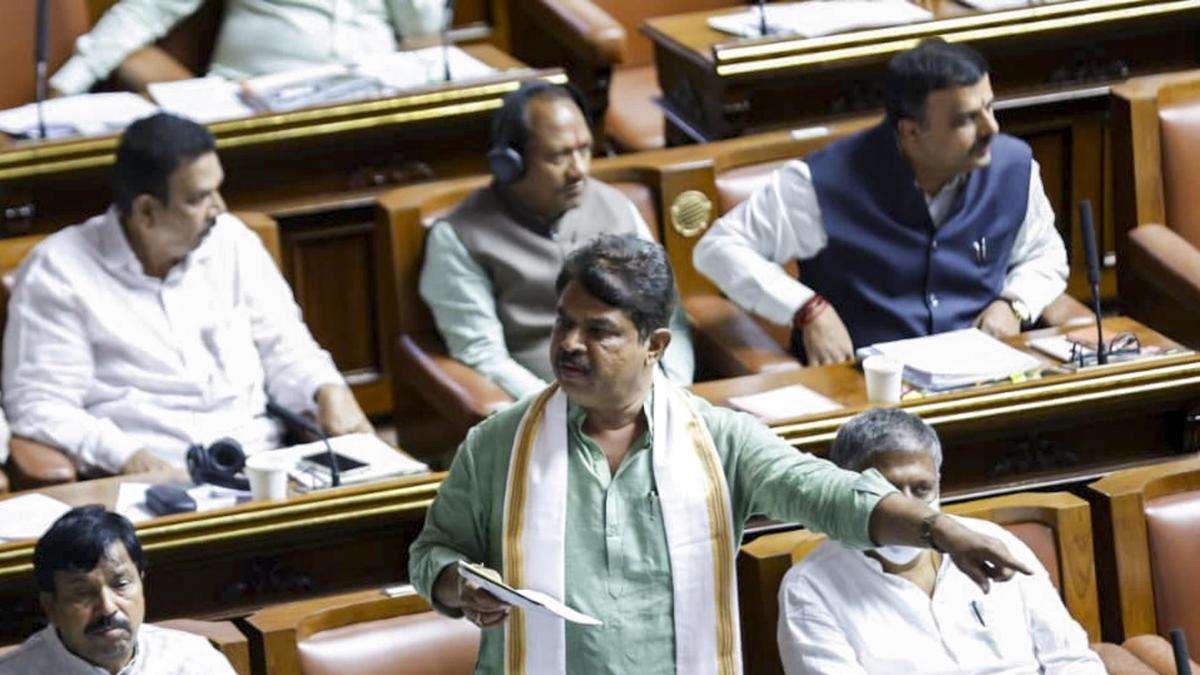
Political observers note that the controversy reflects deeper tensions between the ruling party and the Opposition over Bengaluru’s development trajectory. The city faces challenges including traffic congestion, infrastructure strain, water management issues, and rapid population growth. Brand Bengaluru has been projected as a unifying framework to address these issues, improve global competitiveness, and enhance civic quality of life. Analysts suggest that disagreements over leadership presence and communication reflect competing political narratives rather than a rejection of the project itself.
Civic activists have pointed out that urban development initiatives require consistent dialogue between policymakers and legislators. They argue that Assembly discussions provide a platform for addressing citizen concerns, ensuring that projects reflect ground realities. The absence of key ministers during debates, they say, can create perceptions of disconnect, even if administrative work is ongoing elsewhere. Experts stress that maintaining public trust depends not only on execution but also on visible accountability and responsiveness within democratic institutions.
URBAN VISION UNDER POLITICAL SPOTLIGHT
Brand Bengaluru has been described as a multi-dimensional initiative aimed at improving infrastructure, sustainability, and governance mechanisms in the city. Urban planners say such programs often involve coordination across departments including transport, housing, environment, and technology. Legislative scrutiny, they argue, can strengthen implementation by incorporating diverse viewpoints and ensuring policy coherence. Opposition leaders claim that their questions are intended to secure clarity on timelines, funding, and accountability structures, rather than obstruct development.
Supporters of the government counter that urban transformation is a complex and continuous process that cannot always be neatly aligned with legislative schedules. They emphasize that administrative reviews, stakeholder consultations, and field inspections are equally important. Congress representatives highlighted that Bengaluru’s challenges require hands-on engagement beyond Assembly debates. Nevertheless, political analysts say that perception plays a critical role, and visible participation in legislative discussions can reinforce confidence among citizens and investors alike.
The issue has also drawn attention to the broader question of ministerial responsibility in parliamentary democracies. Constitutional experts explain that while ministers have diverse executive duties, accountability to the legislature remains a cornerstone of governance. Regular participation in debates allows elected representatives to question, critique, and contribute to policy direction. The current controversy underscores the delicate balance between administrative efficiency and legislative engagement, especially in high-profile initiatives that shape public discourse.
Citizens’ groups in Bengaluru have expressed mixed reactions. Some view the debate as a political distraction from pressing civic issues, while others see it as an important discussion on governance standards. Activists argue that beyond political exchanges, the focus should remain on outcomes such as improved roads, public transport, waste management, and water security. They suggest that clear communication from authorities can reduce misunderstandings and keep attention on tangible development goals.
GOVERNANCE, ACCOUNTABILITY, AND PUBLIC PERCEPTION
The controversy has highlighted how political communication influences public perception of governance. Experts note that even routine absences can become symbolic in charged political environments. Transparent explanations and proactive engagement can mitigate speculation and maintain trust. Political scientists observe that urban governance projects often become focal points for political positioning, as cities represent economic strength and administrative competence.
Opposition leaders have called for detailed presentations on the progress of Brand Bengaluru, including financial allocations and measurable outcomes. They argue that structured updates within the Assembly can promote bipartisan support and ensure continuity beyond electoral cycles. Government representatives have indicated that reports and reviews are being prepared, and that the project’s objectives remain firmly on track. They stress that development initiatives should transcend partisan divides.
Media analysts say that such debates reflect the vibrancy of democratic processes, where scrutiny and response shape policy narratives. While political rhetoric may intensify, the underlying issues often revolve around governance practices. Observers suggest that constructive dialogue, rather than confrontation, can lead to stronger oversight and better project outcomes.
Urban development specialists emphasize that Bengaluru’s transformation requires long-term planning, institutional coordination, and citizen participation. Political stability and clear leadership communication are key factors influencing investor confidence and public cooperation. Ensuring that legislative and executive roles complement each other can strengthen both accountability and efficiency.
As discussions continue, the focus remains on whether the political exchange will translate into clearer communication and stronger oversight of the Brand Bengaluru initiative. Analysts believe that maintaining transparency, providing regular updates, and engaging with all stakeholders can turn controversy into an opportunity for improved governance practices.
Ultimately, the episode illustrates how leadership presence, communication, and perception intersect in democratic systems. While disagreements are inherent in politics, shared commitment to urban development goals can guide constructive engagement. The debate over Brand Bengaluru serves as a reminder that accountability and visibility remain central to public trust in governance, particularly when ambitious projects seek to shape the future of a major city like Bengaluru.
Follow: Karnataka Government
Also read: Home | Channel 6 Network – Latest News, Breaking Updates: Politics, Business, Tech & More
