
The future of Indian agriculture will depend heavily on the adoption of next generation technologies capable of addressing complex and evolving challenges, according to agricultural scientist Himanshu Pathak. Speaking at a recent interaction with researchers and policymakers, he emphasized that climate variability, shrinking landholdings, and rising input costs are reshaping the realities faced by farmers. Traditional approaches alone, he noted, may no longer be sufficient to ensure food security for a growing population. Instead, science-driven solutions integrating digital tools, biotechnology, and sustainable practices are emerging as critical pathways toward resilience, productivity, and long-term ecological balance.
He pointed out that Indian agriculture stands at a crossroads where environmental pressures and economic demands intersect. Increasing temperatures, erratic rainfall, and frequent extreme weather events are directly affecting crop yields across regions. Farmers must now cope not only with production risks but also market uncertainties. Pathak stressed that technological innovation must be accessible and affordable, particularly for small and marginal farmers who form the backbone of India’s food system. Bridging the gap between laboratory research and field application, he said, is essential to translate scientific breakthroughs into tangible benefits on the ground.
Digital agriculture featured prominently in his vision for the sector’s future. Precision farming tools, satellite imaging, and sensor-based monitoring systems allow farmers to make informed decisions about irrigation, fertilization, and pest control. These technologies reduce resource wastage while improving yields. Pathak noted that data-driven agriculture can help tailor solutions to local soil and weather conditions, moving away from one-size-fits-all practices. However, he cautioned that digital literacy and reliable connectivity must expand in rural areas to ensure that technological advancements do not deepen inequalities between regions or farming communities.
Biotechnology and improved crop varieties were also highlighted as crucial components of the agricultural transformation. Climate-resilient seeds capable of withstanding drought, floods, and salinity can stabilize production under adverse conditions. Pathak observed that advances in genomics and breeding techniques are accelerating the development of such varieties. These innovations, he argued, must go hand in hand with robust regulatory systems and transparent communication to build public trust. Ensuring that farmers understand both the benefits and limitations of new technologies remains a key responsibility of agricultural institutions.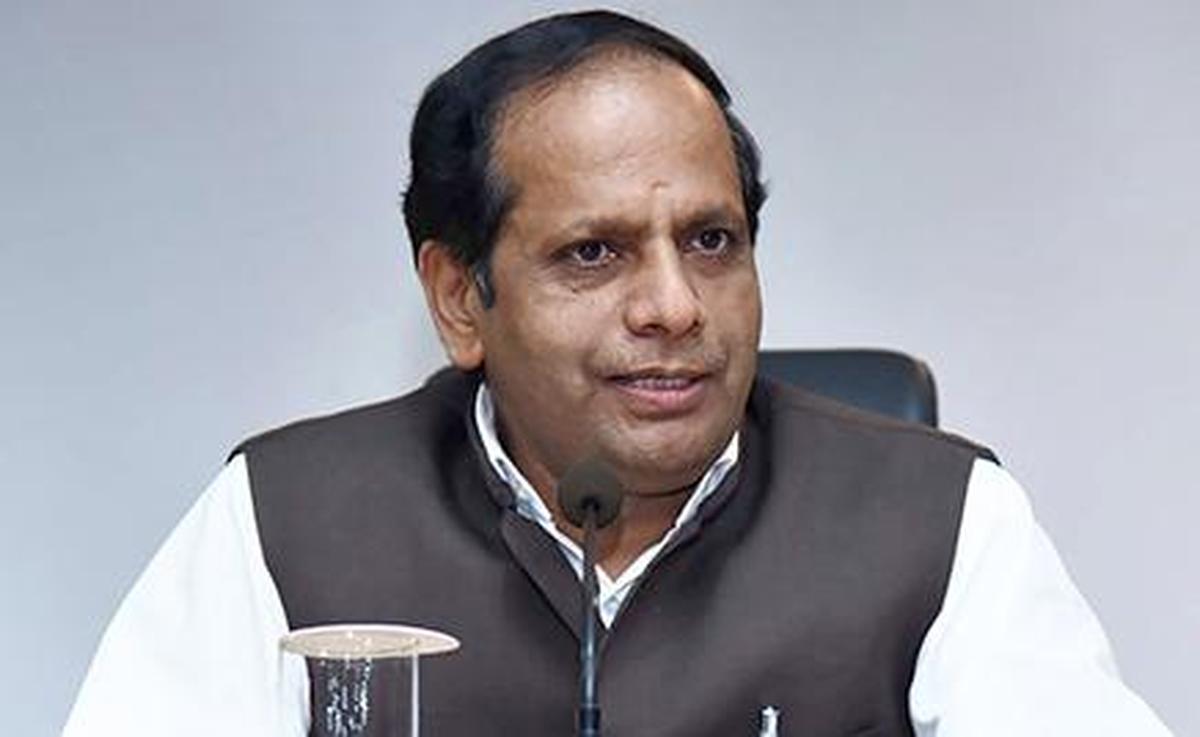
Sustainable resource management formed another pillar of his remarks. With groundwater levels declining in many states and soil health deteriorating due to overuse of chemicals, Pathak called for integrated nutrient and water management strategies. Technologies such as micro-irrigation, soil testing kits, and biofertilizers can help optimize inputs while protecting natural resources. He stressed that sustainability is not merely an environmental concern but also an economic one, as efficient use of resources lowers production costs. Long-term agricultural growth, he said, depends on preserving the ecological foundations upon which farming relies.
He further emphasized the importance of mechanization tailored to small farm sizes. While large machinery has transformed agriculture in some countries, Indian farms often require compact, affordable equipment. Innovations in farm machinery design, including battery-operated tools and multi-purpose implements, can reduce labor burdens and improve efficiency. Pathak noted that labor shortages during peak seasons make mechanization increasingly relevant. By combining engineering advances with local manufacturing, the agricultural sector can generate rural employment while enhancing farm productivity and timeliness of operations.
TECHNOLOGY, CLIMATE RESILIENCE, AND FARMER ADAPTATION
Climate change adaptation was described as one of the most urgent priorities for agricultural research. Pathak stated that early warning systems, weather-based advisories, and crop insurance models powered by technology can reduce vulnerability. Real-time data allows farmers to adjust sowing dates, irrigation schedules, and crop choices in response to changing conditions. He stressed that adaptation strategies must be location-specific, recognizing the diversity of India’s agro-climatic zones. Scientific institutions, extension workers, and local communities must collaborate closely to ensure that information reaches farmers in a timely and usable manner.
He also spoke about the growing role of artificial intelligence and machine learning in agriculture. These tools can analyze vast datasets to predict pest outbreaks, recommend crop management practices, and estimate yield outcomes. Pathak observed that AI-driven platforms could support decision-making at both farm and policy levels. For instance, aggregated data can guide government planning for storage, distribution, and price stabilization. Yet, he emphasized ethical considerations, including data privacy and equitable access, to prevent technological benefits from being concentrated among a few large players.
Post-harvest technologies were identified as equally vital in addressing agricultural challenges. Significant losses occur between harvest and market due to inadequate storage, transportation, and processing facilities. Pathak highlighted innovations in cold chain logistics, packaging, and food processing that can extend shelf life and improve value addition. By reducing waste, these technologies enhance farmer incomes and food availability. He stressed that strengthening post-harvest infrastructure is essential for linking production gains with market opportunities, ensuring that technological progress translates into economic improvement.
Institutional support systems must evolve alongside technological change, Pathak noted. Agricultural extension services need modernization to effectively disseminate new knowledge. Digital platforms, mobile applications, and community-based training programs can supplement traditional methods. He stressed that capacity building among farmers is as important as technology development itself. Without adequate training, even the most advanced tools may remain underutilized. Strengthening farmer-producer organizations and cooperatives can also facilitate collective access to technologies, credit, and markets.
Financial innovation was another area he addressed. Access to credit often determines whether farmers can adopt new technologies. Pathak suggested that fintech solutions, including digital payment systems and data-based credit assessments, can improve financial inclusion. Insurance products designed using weather and yield data can offer more accurate risk coverage. He argued that integrating technology into financial services can create an enabling environment where farmers feel secure in investing in improved practices. Public-private partnerships may play a role in scaling such solutions across regions.
Education and youth engagement were described as critical for sustaining agricultural transformation. Pathak observed that many young people are leaving farming due to perceptions of low profitability. Introducing technology-driven models can make agriculture more attractive and entrepreneurial. Start-ups focusing on agri-tech solutions, he said, are already bringing fresh ideas into the sector. Encouraging innovation ecosystems in rural areas can create employment while modernizing farming practices. Skill development programs must equip youth with both technical knowledge and business acumen.
INNOVATION ECOSYSTEMS AND POLICY SUPPORT FOR A SUSTAINABLE FUTURE
Policy frameworks must keep pace with rapid technological change, Pathak emphasized. Regulations governing biotechnology, data use, and digital platforms should balance innovation with safeguards. Clear policies encourage investment and research while protecting farmer interests. He stressed that coordination between central and state governments is vital for coherent implementation. Incentives for sustainable practices, research funding, and infrastructure development can accelerate the adoption of next generation technologies. Effective policy design, he said, ensures that scientific progress translates into inclusive agricultural growth.
He also underlined the importance of international collaboration. Agricultural challenges such as climate change and pest invasions often cross national boundaries. Sharing research, best practices, and technological innovations can strengthen global food security. Pathak noted that India’s experience in diverse agro-ecological conditions positions it as both a contributor and beneficiary in global knowledge networks. Collaborative research initiatives can accelerate the development of resilient crops and efficient farming systems adaptable to multiple environments.
Community participation remains essential despite technological advancements. Pathak stressed that farmers’ traditional knowledge and local experiences should inform innovation processes. Participatory research models, where farmers test and adapt technologies, can enhance acceptance and effectiveness. He emphasized that technology must serve people, not replace their agency. Empowering communities through inclusive approaches ensures that agricultural modernization remains socially equitable and culturally sensitive.
He concluded by reiterating that the future of agriculture lies in harmonizing productivity with sustainability. Next generation technologies offer powerful tools, but their success depends on integration, accessibility, and responsible use. By combining scientific innovation, supportive policies, and farmer empowerment, India can build a resilient agricultural system capable of feeding its population while protecting natural resources. Pathak’s message underscored optimism grounded in science, calling for collective action to transform challenges into opportunities for a more secure and sustainable agricultural future.
He further observed that climate-smart agriculture will increasingly define research priorities in the coming years. Practices such as crop diversification, conservation agriculture, and agroforestry are being supported by technological tools that monitor outcomes and guide interventions. Pathak noted that integrating trees, crops, and livestock through scientific planning improves soil fertility, enhances carbon sequestration, and provides farmers with multiple income streams. These models reduce dependence on a single crop and create ecological buffers against climate shocks. Technology, in this context, acts as an enabler that refines traditional sustainability concepts with precise measurements and improved planning tools.
Water-use efficiency, he added, is likely to become one of the most decisive factors in agricultural planning. With several regions already experiencing water stress, advanced irrigation scheduling systems and drought monitoring technologies are proving invaluable. Remote sensing can identify moisture deficits at early stages, allowing timely corrective action. Pathak stressed that future policies must promote water budgeting at village and watershed levels. Combining scientific assessments with community participation can ensure equitable distribution. Efficient water management supported by technology not only safeguards crops but also protects long-term drinking water security in rural regions.
He also highlighted the growing importance of climate-informed cropping systems. By analyzing long-term weather patterns and predictive models, scientists can recommend shifts in crop calendars and varieties suited to emerging conditions. Pathak explained that such anticipatory planning minimizes losses caused by delayed monsoons or unexpected heat waves. Farmers equipped with reliable forecasts can plan investments more confidently. He emphasized that localized advisories delivered through digital platforms make scientific insights immediately actionable. This fusion of meteorology and agronomy, he said, represents a powerful frontier in strengthening agricultural resilience.
Another emerging focus area is soil carbon management, which links productivity with environmental goals. Pathak stated that measuring and enhancing soil organic carbon improves fertility, moisture retention, and crop performance. Technologies enabling rapid soil health assessment are supporting targeted interventions. He noted that global climate commitments may increasingly recognize the role of agricultural soils in carbon sequestration. Farmers adopting regenerative practices could benefit from incentive mechanisms in the future. Thus, technological tools not only guide agronomic decisions but also open pathways for farmers to participate in broader environmental initiatives.
Pathak ended his extended remarks by emphasizing collaboration as the cornerstone of success. Scientists, policymakers, industry players, and farmers must operate within an integrated innovation ecosystem. No single technology or institution can address the complexity of agricultural challenges alone. Continuous feedback between field experiences and research laboratories will refine solutions over time. He expressed confidence that with coordinated efforts, next generation technologies can make Indian agriculture more resilient, profitable, and environmentally sound, ensuring that future generations inherit a farming system capable of sustaining both people and the planet.
Follow: Karnataka Government
Also read: Home | Channel 6 Network – Latest News, Breaking Updates: Politics, Business, Tech & More
