
First Tiger Census in Madurai Highlights Expanding Wildlife Presence
First tiger census in Madurai marks an important milestone in wildlife monitoring in Tamil Nadu, as forest officials complete Phase I of the All India Tiger Estimation in the Madurai Forest Division. This survey is the first of its kind in this division, which lies outside the well-known tiger reserves, signalling a broader effort to understand tiger movement beyond protected forest boundaries.
First tiger census in Madurai is part of a nationwide exercise carried out by the Tamil Nadu Forest Department along with the National Tiger Conservation Authority. The initiative aims to assess not just tiger numbers, but also habitat quality, prey availability, and conservation outcomes in regions where tigers are increasingly being sighted outside traditional reserves.
Unlike earlier surveys that focused mainly on designated tiger reserves, this census includes forest areas that were previously not part of large-scale tiger monitoring programmes. Officials say this shift reflects changing wildlife patterns, where tigers move into non-protected forests due to habitat fragmentation, water scarcity, and expanding human activity.
First Tiger Census in Madurai Conducted Outside Tiger Reserves
The Madurai Forest Division falls outside the Srivilliputhur Megamalai Tiger Reserve, making this survey especially significant. The census is being conducted under the Tigers Outside Tiger Reserves project, which focuses on understanding tiger presence in landscapes shared with human settlements.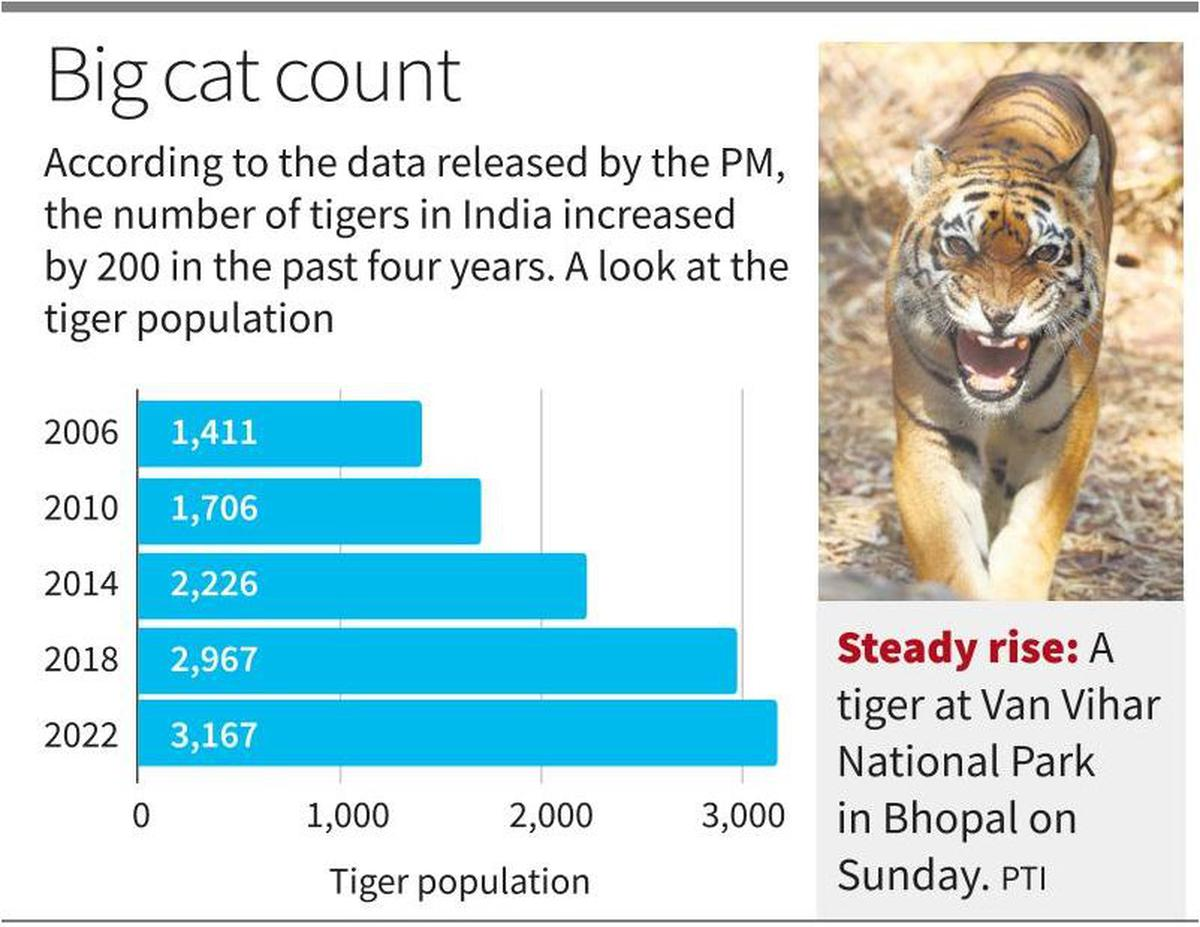
Forest officials believe that documenting tiger movement in such regions is crucial for reducing human-animal conflict. When tigers travel beyond protected zones, encounters with people, livestock loss, and safety concerns tend to increase. By gathering data early, authorities hope to plan preventive measures instead of reacting to incidents after they occur.
The Phase I survey involved fieldwork across 11 selected forest beats in the Usilampatti and Sholavandan ranges. These areas were chosen based on ecological indicators and previous wildlife movement reports. Forest staff conducted ground-level surveys, carefully documenting signs of tiger presence without disturbing the habitat.
First Tiger Census in Madurai Uses Ground Evidence and Digital Mapping
During the survey, forest personnel recorded indirect evidence such as pug marks, scat, fur samples, and scratch marks left by tigers. Signs of other wildlife species including Indian gaur, sloth bear, jungle cat, wild dog, and deer were also documented to understand the overall health of the ecosystem.
All observations were recorded using the MSTrIPES Ecological App, a digital tool that allows real-time data collection and mapping. This method improves accuracy and helps officials track animal movement patterns across large landscapes.
The information collected in Phase I will serve as the foundation for the remaining stages of the census. Phase II will focus on mapping forest landscapes using satellite data and geographic information systems. Phase III will include camera trapping to identify individual tigers, while Phase IV will involve long-term monitoring at the reserve level.
Officials stated that the full four-phase survey is expected to be completed by July 2026. The final findings will help authorities understand whether Madurai’s forest areas are emerging as permanent habitats or temporary corridors for tigers moving between larger reserves.
First Tiger Census in Madurai Strengthens Conservation Planning
Forest officials supervising the exercise noted that early data suggests increased wildlife activity in parts of the Madurai Forest Division. While no final conclusions have been drawn yet, the presence of prey species and forest cover indicates potential for supporting large carnivores.
The census also helps forest departments plan better land use policies, improve forest connectivity, and guide local communities on coexistence strategies. By identifying movement routes, officials can strengthen patrolling, prevent illegal activities, and reduce accidental encounters. Also Read: Justin Bieber New Back Tattoo Draws Attention for Its Personal Meaning in 2026
Conservation experts say such surveys are essential as wildlife landscapes change rapidly due to climate pressure and human expansion. Monitoring areas outside reserves ensures that conservation planning remains realistic and inclusive of changing animal behaviour.
Conclusion
First tiger census in Madurai represents a shift in wildlife conservation strategy, recognising that tigers no longer remain confined to protected reserves alone. By expanding monitoring to new forest divisions, authorities aim to balance conservation needs with human safety and long-term ecological stability.
