
The installation of 25 Intelligent Traffic Management System cameras along the Mysuru–Bengaluru highway marks a significant step in Karnataka’s ongoing efforts to improve road safety and enforce traffic discipline on one of the State’s busiest corridors. Authorities say the system is designed to automatically detect violations such as over-speeding, lane indiscipline, and failure to wear seat belts, while also assisting in monitoring traffic flow. The move comes amid growing concern over frequent accidents and congestion on the highway, which serves thousands of daily commuters, tourists, and commercial vehicles traveling between two major urban centres.
Officials from the transport and police departments stated that the cameras are strategically positioned at high-risk stretches, toll plazas, and junctions where traffic violations are most common. These locations were identified after analysing accident data and vehicle movement patterns over the past few years. The system functions round the clock, capturing high-resolution images and videos that can be used as evidence for issuing electronic challans. Authorities believe the visibility of surveillance infrastructure itself will act as a deterrent, encouraging drivers to adhere more strictly to speed limits and traffic regulations.
The Mysuru–Bengaluru highway has undergone significant upgrades in recent years, including widening and improved road engineering, but safety concerns have persisted. Increased vehicle speeds on smoother road surfaces have often led to severe crashes, especially during weekends and holiday seasons when traffic volumes surge. Police officials note that human enforcement alone is insufficient to monitor such a long stretch continuously. The introduction of automated systems is therefore seen as a necessary evolution, combining technology with traditional policing to create a more reliable and consistent enforcement environment.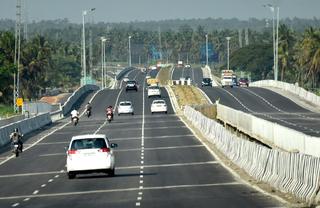
The ITMS cameras are integrated with a central control room that processes real-time data. Using advanced analytics, the system can identify vehicle registration numbers through automated number plate recognition technology. Once a violation is confirmed, a digital notice is generated and sent to the registered vehicle owner. Authorities say this method reduces disputes and enhances transparency, as photographic evidence accompanies each penalty notice. The system also keeps a record of repeat offenders, allowing stricter action against habitual violators who pose a higher risk to public safety.
Commuters who regularly use the highway have expressed mixed reactions. Many welcome the move, saying stricter enforcement is necessary to curb reckless driving, particularly by heavy vehicles and high-speed cars. Others have raised concerns about the accuracy of automated detection and the possibility of wrongful fines. In response, officials have assured that every recorded violation undergoes verification before penalties are issued. They also highlighted the availability of grievance redressal mechanisms where motorists can contest fines if they believe an error has occurred.
Beyond enforcement, the ITMS infrastructure is expected to assist in traffic management during emergencies. In the event of accidents, breakdowns, or unusual congestion, live feeds can help authorities deploy response teams more quickly. This capability is especially important on long highway stretches where delays in assistance can worsen the impact of incidents. Real-time monitoring also enables better coordination between traffic police, highway patrol units, and medical emergency services, potentially reducing response times and improving survival rates in serious accidents.
TECHNOLOGY DRIVEN ENFORCEMENT GAINS MOMENTUM
Experts in road safety say the deployment of intelligent camera systems aligns with a broader national push toward technology-driven traffic management. Similar initiatives in other parts of the country have reportedly led to measurable reductions in speeding and red-light violations. By minimising direct interaction between motorists and enforcement personnel, such systems also reduce opportunities for disputes and ensure that penalties are applied uniformly. This consistency is seen as crucial for building a culture of compliance, where rules are followed not out of fear alone but as a norm.
The cameras on the Mysuru–Bengaluru highway are capable of detecting multiple types of violations simultaneously. Apart from speed monitoring, they can identify vehicles using mobile phones while driving, riding without helmets, and improper lane changes. Authorities note that these behaviours contribute significantly to accidents, yet are often difficult to catch through manual checks. Automated surveillance provides a wider and more continuous watch, capturing violations that might otherwise go unnoticed. This comprehensive approach is intended to address not just major offences but also everyday risky habits.
Data collected through the ITMS will also be used for long-term planning. Traffic density patterns, peak hour flows, and vehicle type distribution can help planners identify where additional infrastructure or regulation may be needed. For instance, persistent congestion at certain points might indicate the need for better signage, additional lanes, or improved merging zones. In this way, the system serves both enforcement and developmental functions, turning raw traffic movement into actionable insights that can shape future upgrades on the corridor.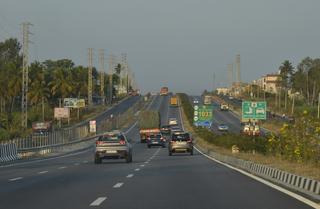
However, the growing use of surveillance technology has also sparked discussions about privacy and data security. Civil society observers stress the importance of clear policies governing how long images and vehicle data are stored, and who has access to them. Officials have stated that the data is used strictly for traffic management and law enforcement purposes, and is stored under secure protocols. They emphasised that the goal is public safety, not intrusive monitoring, and that safeguards are in place to prevent misuse of information gathered through the system.
Transport department representatives argue that technological interventions must go hand in hand with public awareness. Signboards have been installed along the highway informing drivers about the presence of ITMS cameras and reminding them of speed limits. Awareness campaigns through media and social platforms are also planned to educate motorists about common violations and the consequences. Officials believe that when drivers understand that monitoring is continuous and automated, they are more likely to maintain safe speeds and follow rules consistently, even in the absence of visible police presence.
ROAD SAFETY AT THE HEART OF THE INITIATIVE
Road safety advocates have long highlighted the Mysuru–Bengaluru highway as a critical area for intervention. The mix of private cars, buses, trucks, and two-wheelers creates complex traffic conditions, especially near urban entry points. Sudden lane changes, over-speeding, and fatigue among long-distance drivers have been identified as recurring risk factors. The new camera network is expected to help address these challenges by ensuring that violations are recorded and acted upon promptly, reinforcing the message that unsafe driving carries real and immediate consequences.
Officials also pointed out that the ITMS can support investigations after accidents. Footage from nearby cameras can help reconstruct events, identify vehicles involved, and clarify circumstances leading to a crash. This can be valuable for both legal proceedings and safety analysis. Understanding patterns in accident causes enables authorities to design targeted interventions, such as improved lighting, better road markings, or additional warning systems at specific locations. Thus, the system’s value extends beyond punishment to learning and prevention.
Commercial vehicle operators have been advised to sensitise their drivers about the new monitoring measures. Logistics companies, bus services, and transport associations play a key role in shaping driver behaviour, as their vehicles cover long distances daily. Authorities have held meetings with industry representatives to explain the system and encourage compliance. Many operators acknowledge that disciplined driving not only avoids fines but also reduces fuel consumption, vehicle wear, and accident-related losses, making safety a matter of economic sense as well.
For daily commuters, especially those traveling between Mysuru and Bengaluru for work, the promise of a safer highway offers reassurance. Several commuters noted that while journey times might increase slightly if everyone adheres strictly to speed limits, the trade-off is worthwhile if it reduces the risk of severe accidents. Families traveling with children or elderly members also expressed relief at the enhanced monitoring. The emotional dimension of road safety, the desire to reach destinations without incident, underpins public support for such measures.
As the system becomes fully operational, authorities plan periodic reviews to assess its impact. Statistics on accident rates, types of violations, and compliance trends will be analysed to determine effectiveness. Adjustments in camera placement or enforcement focus may follow based on findings. Officials stress that the initiative is not a one-time installation but part of an evolving strategy to make highways safer through evidence-based decision-making. Continued cooperation from motorists, they say, will be crucial in realising the full benefits of the technology.
Ultimately, the deployment of 25 ITMS cameras on the Mysuru–Bengaluru highway represents more than a technological upgrade; it signals a shift toward a more accountable road culture. By combining surveillance, data analysis, and public outreach, authorities aim to create an environment where safe driving becomes the default behaviour. While challenges related to adaptation and perception remain, the overarching goal is clear: fewer accidents, smoother traffic flow, and greater confidence among those who travel this vital route every day.
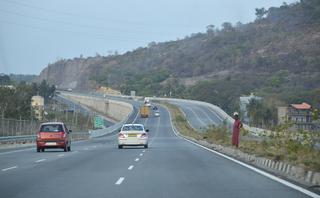
In the coming months, authorities are also expected to explore linking the highway’s ITMS network with broader State-level traffic databases, creating a more unified enforcement system. Such integration could help track inter-district vehicle movement patterns and identify repeat violators across regions, not just on a single corridor. Officials believe this would strengthen accountability and encourage consistent adherence to traffic norms, regardless of location. The Mysuru–Bengaluru stretch could serve as a model for similar deployments on other major highways, especially those witnessing rapid growth in traffic volume and accident rates due to urban expansion and economic activity.
Ultimately, the success of the initiative will depend not only on technology but on behavioural change among road users. Authorities emphasise that cameras are tools to guide safer conduct rather than merely instruments for collecting fines. If drivers respond by maintaining disciplined speeds, wearing safety gear, and respecting lane rules, the highway could see a meaningful decline in serious accidents over time. The broader hope is that sustained enforcement, combined with awareness and infrastructure improvements, will foster a culture where safety is viewed as a shared responsibility, benefiting every person who uses the road.
Follow: Karnataka Government
Also read: Home | Channel 6 Network – Latest News, Breaking Updates: Politics, Business, Tech & More
