
The establishment of the Intel Unnati Lab at SDM Institute for Management Development (SDMIMD) in Mysuru marks a significant step in strengthening industry–academia collaboration in Karnataka. The initiative is aimed at equipping students with practical technological exposure alongside management education, reflecting a growing emphasis on interdisciplinary learning. By bringing advanced computing resources and innovation-focused training into an academic setting, the lab seeks to bridge the gap between theoretical knowledge and real-world application. Education leaders describe the development as part of a broader movement to prepare students for evolving industry expectations.
The lab is also expected to encourage problem-solving linked to real societal and business challenges. Case-based projects that mirror industry scenarios can help students understand how theoretical frameworks operate in dynamic environments. By working on applied assignments, learners may develop confidence in tackling ambiguity and complex decision-making situations. Such exposure prepares them for roles where analytical clarity and practical judgment are equally important.
Collaboration across student batches and academic programmes may further enrich learning. Senior students with prior experience in projects can mentor juniors, creating a cycle of peer learning. This layered engagement helps build continuity in innovation initiatives on campus. Over time, accumulated project outcomes and insights may form a knowledge base that benefits future cohorts, strengthening institutional memory.
The presence of a structured innovation space can also influence placement outcomes. Recruiters often value candidates who demonstrate practical exposure to tools and collaborative projects. Participation in lab-based initiatives may help students articulate experiences that reflect readiness for technology-enabled workplaces. Institutions view this as an advantage in an increasingly competitive employment landscape.
Engagement with external experts through guest lectures and mentorship sessions is another potential dimension. Industry professionals can provide perspectives on emerging trends, workplace expectations, and innovation management. Such interactions help students contextualise their learning within broader professional environments. Exposure to diverse viewpoints can stimulate curiosity and encourage continuous learning habits.
Sustainability and ethical considerations in technology use may also become part of the lab’s discourse. As digital tools expand influence, understanding responsible innovation becomes crucial. Discussions on data privacy, ethical decision-making, and sustainable practices can complement technical training. Integrating these themes prepares students to approach technology with awareness of social impact.
Institutional leaders believe that initiatives like the Unnati Lab can strengthen Mysuru’s position as an educational and innovation centre. Expanding advanced learning infrastructure beyond metropolitan areas contributes to regional capacity building. Students from varied backgrounds gain access to resources that support aspiration and growth, helping reduce disparities in opportunity.
Over time, the success of the lab may be measured not only by academic outcomes but also by the ventures, research projects, or collaborations it inspires. Innovation ecosystems evolve gradually, shaped by consistent engagement and shared vision. By fostering curiosity, collaboration, and practical competence, the lab represents a step toward nurturing graduates who can navigate the intersection of technology and management with confidence and responsibility.
The Unnati Lab concept focuses on enabling hands-on learning in areas such as emerging technologies, data-driven decision-making, and digital transformation. At SDMIMD, the facility is expected to support students in understanding how technology intersects with business strategy. Faculty members note that management education increasingly requires familiarity with analytics, automation, and innovation processes. The lab provides a platform where students can experiment, collaborate, and develop problem-solving approaches that mirror professional environments.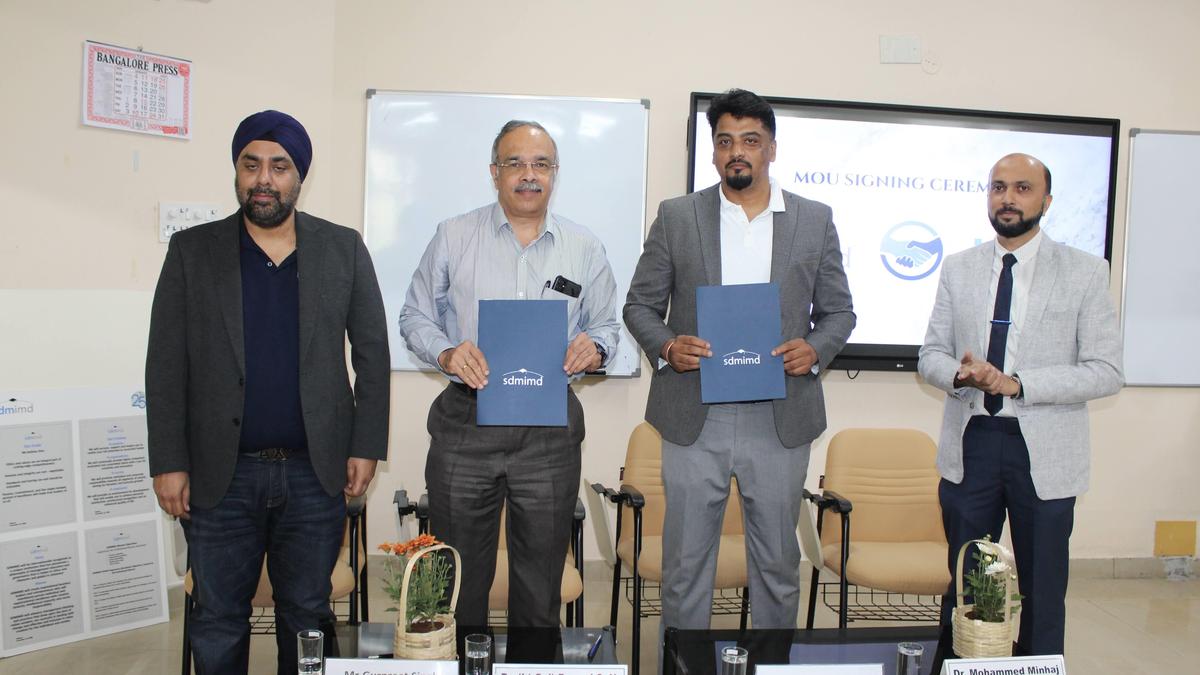
Institutional representatives highlight that the partnership with Intel aligns with the institute’s objective of fostering future-ready graduates. The lab is designed to encourage project-based learning, where students engage with practical challenges rather than solely classroom simulations. Exposure to technological tools and structured mentorship may help learners gain confidence in applying concepts to real business contexts. Such initiatives are seen as vital in an era where digital literacy complements traditional managerial skills.
The presence of a corporate-supported innovation space also enhances the learning ecosystem within the campus. Students from various specialisations can interact in a shared environment, promoting cross-disciplinary exchange. Administrators believe this collaborative model can nurture creativity and entrepreneurial thinking. As industries increasingly value adaptability and innovation, educational institutions are adapting their methods to ensure students graduate with both knowledge and practical competence.
The Mysuru location adds regional significance to the initiative. Karnataka has long been associated with technology-driven growth, and expanding such opportunities beyond metropolitan centres supports more balanced development. Establishing advanced labs in cities like Mysuru broadens access for students who might otherwise need to relocate to larger urban hubs for similar exposure. This decentralisation of resources contributes to strengthening educational infrastructure across regions.
Industry–Academia Collaboration and Skill Development
The Intel Unnati Lab initiative underscores the importance of collaboration between educational institutions and technology companies. Such partnerships help align curricula with industry needs, ensuring that academic training keeps pace with technological change. Industry participation often brings updated tools, insights into market trends, and exposure to practical challenges. For students, this translates into learning experiences that are more closely connected to workplace realities.
Skill development remains a central objective of the lab. Modern organisations seek professionals who can interpret data, understand digital platforms, and contribute to innovation strategies. The lab environment allows students to build these competencies through guided projects and experiments. Faculty members note that experiential learning improves retention and fosters critical thinking. Rather than memorising concepts, students engage directly with applications, strengthening their analytical and decision-making abilities.
Workshops, hackathons, and collaborative sessions are expected to form part of the lab’s activities. These events encourage teamwork and expose students to diverse perspectives. Interaction with industry mentors can provide insights into professional expectations and emerging career paths. Such exposure often helps students identify interests and strengths, guiding their future choices. Institutions see these engagements as stepping stones toward employability and career readiness.
The launch of the Intel Unnati Lab at SDMIMD Mysuru thus represents more than a new facility; it symbolises a shift toward integrated, practice-oriented education. By combining corporate expertise with academic learning, the initiative aims to prepare students for a technology-driven future. As similar collaborations expand, the model may influence how institutions across regions design learning ecosystems that connect knowledge, innovation, and industry engagement in meaningful ways.
The initiative also supports faculty development. Educators gain opportunities to update their knowledge and integrate technological components into teaching methods. This mutual learning environment benefits both instructors and students. By staying informed about industry practices, faculty can design coursework that remains relevant and engaging. Continuous interaction with corporate partners may also open avenues for joint research or consultancy projects.
Beyond technical skills, the lab environment can nurture soft skills such as communication, leadership, and adaptability. Working on projects often requires presenting ideas, coordinating with peers, and responding to feedback. These experiences mirror workplace dynamics, preparing students for professional interactions. Institutions increasingly recognise that employability depends not only on technical competence but also on interpersonal effectiveness.
Innovation Culture and Future Outlook
The establishment of the lab contributes to building a culture of innovation within the campus. When students have access to resources that support experimentation, they are more likely to explore creative solutions. Innovation spaces often act as incubators for ideas that can evolve into start-ups or research initiatives. By encouraging exploration, the lab aligns with broader efforts to promote entrepreneurship among young professionals.
Administrators emphasise that innovation is not limited to technology fields alone. Management students can apply digital tools to areas such as marketing, operations, finance, and strategy. Understanding how technological change affects business models is increasingly important. The lab environment allows learners to examine these intersections practically, strengthening their strategic perspective. This holistic approach reflects the evolving nature of business education.
The initiative may also attract collaborations with other institutions and organisations. Shared projects, competitions, or knowledge exchanges could expand the lab’s impact beyond a single campus. Such networks enhance learning opportunities and expose students to wider professional communities. Regional institutions may benefit from shared expertise and resources, contributing to collective growth in the education sector.
From a long-term perspective, facilities like the Unnati Lab signal how education systems are adapting to digital transformation. Integrating technology into management education reflects recognition that future leaders must understand both business principles and technological drivers. As industries continue to evolve, graduates with this blended expertise may be better positioned to navigate change. Educational planners view such labs as investments in human capital development.
Students have responded positively to the introduction of innovation-oriented infrastructure. Many see it as an opportunity to gain practical exposure that strengthens resumes and career prospects. Access to advanced tools within the campus reduces barriers to experimentation and learning. For aspiring entrepreneurs, such spaces offer a supportive environment to test ideas and refine concepts.
The launch of the Intel Unnati Lab at SDMIMD Mysuru thus represents more than a new facility; it symbolises a shift toward integrated, practice-oriented education. By combining corporate expertise with academic learning, the initiative aims to prepare students for a technology-driven future. As similar collaborations expand, the model may influence how institutions across regions design learning ecosystems that connect knowledge, innovation, and industry engagement in meaningful ways.
Follow: Karnataka Government
Also read: Home | Channel 6 Network – Latest News, Breaking Updates: Politics, Business, Tech & More
