
Visvesvaraya Technological University has made prototype-based projects mandatory for engineering students, a move aimed at strengthening practical learning and aligning technical education with industry and societal needs. The decision marks a significant shift in how engineering outcomes are evaluated, placing hands-on problem-solving and innovation at the core of the curriculum. University officials say the mandate is intended to move students beyond theoretical knowledge and encourage them to translate ideas into working models.
Under the new directive, students across affiliated engineering colleges will be required to design and develop prototypes as part of their academic projects. These prototypes may address real-world engineering problems, industry challenges, or community needs, depending on the discipline and project focus. VTU authorities believe this approach will help bridge the long-standing gap between classroom learning and practical application.
The move follows repeated feedback from industry representatives who have highlighted skill gaps among engineering graduates. Employers have often pointed out that while students possess theoretical understanding, they lack exposure to design thinking, execution, and testing. By making prototypes compulsory, the university hopes to equip students with competencies that are directly relevant to professional environments.
Academicians within VTU have described the decision as timely, given the rapid pace of technological change. Engineering solutions today require interdisciplinary thinking, adaptability, and innovation, qualities that are difficult to assess through written examinations alone. Prototype projects, they argue, offer a more holistic measure of a student’s capabilities.
Students’ reactions have been mixed. While many have welcomed the opportunity to work on tangible projects, others have expressed concerns about increased workload, access to resources, and evaluation criteria. VTU officials have acknowledged these concerns and stated that guidelines will be issued to ensure uniform implementation across colleges.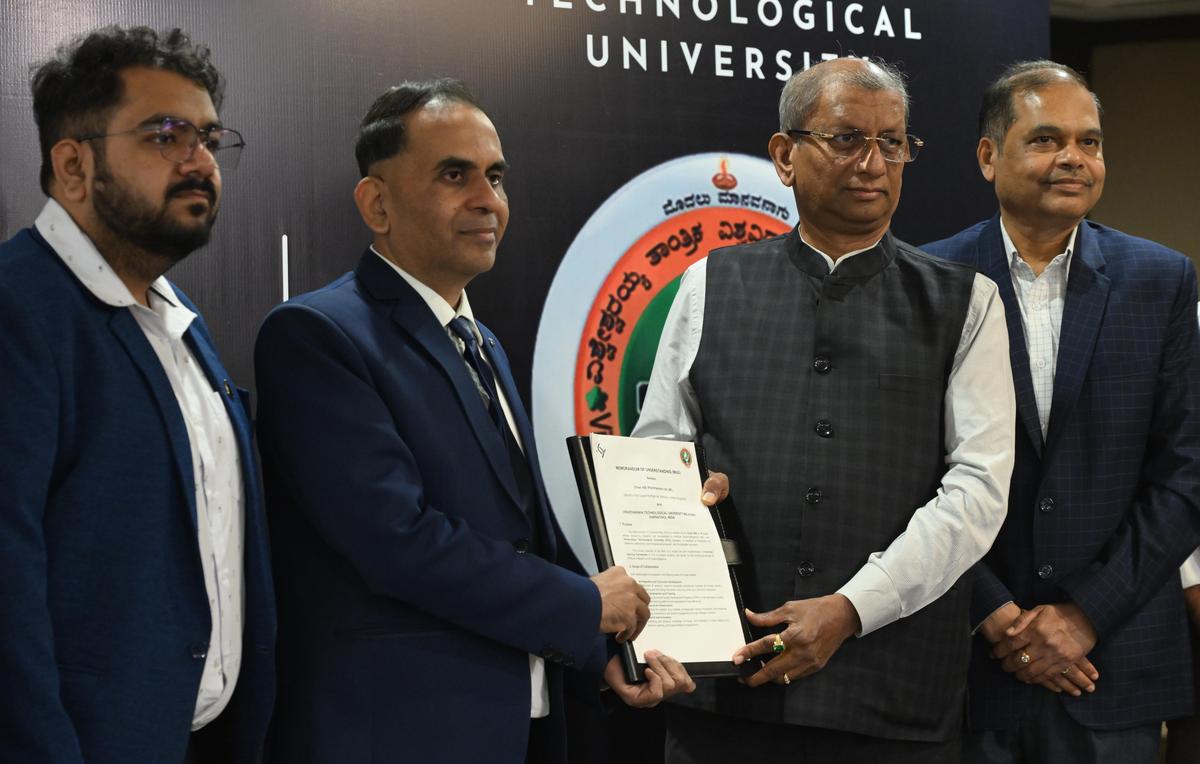
The mandate is also expected to encourage collaboration among students. Prototype development often requires teamwork, combining skills from design, coding, fabrication, and testing. By institutionalising such projects, the university aims to foster collaborative learning and peer-to-peer problem-solving.
The decision places VTU among a growing number of institutions rethinking engineering education in response to evolving demands. Whether the mandate leads to meaningful innovation or becomes another compliance requirement will depend on how it is implemented on the ground.
The policy is also expected to influence how engineering students choose their project topics. Instead of opting for safe, repetitive themes, students may now be encouraged to identify problems that can be physically demonstrated through models or working systems. This could gradually reduce the culture of recycled project reports and promote originality across campuses affiliated to VTU.
University officials have hinted that interdisciplinary prototype projects may be encouraged in the future. With many modern engineering problems cutting across mechanical, electronics, computer science, and civil domains, collaborative prototypes could help students understand how different branches intersect in real-world applications. Such exposure is seen as vital in preparing students for complex industry environments.
Another dimension of the mandate is its potential impact on research orientation at the undergraduate level. Early exposure to building and testing prototypes can cultivate interest in applied research, leading some students to pursue higher studies or innovation-driven careers. Faculty members believe this could strengthen the overall research culture within engineering colleges.
The move may also influence accreditation and ranking outcomes for colleges. Institutions that successfully implement meaningful prototype projects could demonstrate stronger learning outcomes, which are increasingly valued by accreditation bodies. This may push colleges to invest more in labs, mentorship programmes, and innovation ecosystems to remain competitive.
Parents, meanwhile, have expressed cautious optimism. While many see the value of practical exposure in improving employability, there are concerns about additional financial burden for materials and components. VTU has indicated that low-cost and simulation-based prototypes may be permitted in certain cases to keep projects accessible.
As the policy comes into effect, the university’s ability to monitor and support its implementation will be closely watched. Regular reviews, feedback from students and faculty, and flexibility in the initial phases could determine whether the mandate evolves into a transformative academic reform or faces resistance on the ground.
Reimagining Engineering Education Through Practice
VTU officials said the prototype requirement will be integrated into existing project components rather than added as an extra burden. Final-year projects, mini-projects, and lab-based assessments are expected to incorporate prototype development as a core element. This integration, they argue, will ensure continuity and relevance throughout the academic journey.
Colleges have been advised to strengthen laboratory infrastructure and encourage the use of innovation centres, incubation hubs, and maker spaces. In institutions where such facilities are limited, partnerships with nearby research centres or industries are being explored. VTU has indicated that flexibility will be allowed, especially in the initial phase, to accommodate varying levels of preparedness among colleges.
Faculty members play a crucial role in the success of the initiative. Teachers will be expected to mentor students not just academically, but also in design processes, feasibility analysis, and testing methods. This may require faculty upskilling, and VTU is reportedly planning training programmes and workshops to support this transition.
The evaluation of prototype projects is another key aspect under discussion. University sources say assessment will focus on innovation, problem relevance, design process, and functionality rather than just final output. This approach is intended to reward learning and effort, even if prototypes do not achieve complete success.
Experts in technical education view the move as a step toward outcome-based education. By assessing what students can actually build and demonstrate, universities can better gauge readiness for real-world engineering roles. Prototype projects also expose students to failure and iteration, essential components of engineering practice that are often absent in traditional curricula.
However, challenges remain. Ensuring equitable access to materials, tools, and guidance across hundreds of affiliated colleges is a complex task. Without adequate support, there is a risk that prototype projects could become superficial or copied, undermining their educational value.
Industry Linkages, Innovation, and Long-Term Impact
Industry stakeholders have largely welcomed VTU’s decision, seeing it as a move that aligns academic training with workplace expectations. Companies often seek graduates who can think independently, troubleshoot, and adapt quickly. Experience with prototype development, they say, can shorten the learning curve when students enter professional roles.
The mandate is also expected to stimulate innovation and entrepreneurship among students. Working on prototypes can spark ideas for start-ups, patents, or social innovations, especially when projects address local or societal problems. VTU officials believe this could strengthen the university’s role in Karnataka’s broader innovation ecosystem.
At the same time, industry-academia collaboration is likely to gain momentum. Colleges may seek industry inputs to identify relevant problem statements, access expertise, or validate prototypes. Such interactions can enrich student learning while ensuring that projects remain grounded in real-world needs.
Students from rural or resource-constrained backgrounds stand to benefit if implementation is inclusive. Hands-on projects can democratise learning by valuing creativity and problem-solving over rote performance. However, this will require conscious efforts to support colleges with fewer resources, through shared facilities or targeted funding.
From a governance perspective, the mandate signals VTU’s intent to modernise its educational framework. As one of the largest technical universities in the country, its policies influence thousands of students and institutions. Successful implementation could set a precedent for other universities to follow.
Critics caution that mandatory requirements alone do not guarantee quality. Without clear guidelines, mentoring, and monitoring, prototype projects could become routine exercises rather than meaningful learning experiences. VTU’s challenge will be to maintain academic rigour while encouraging experimentation.
Looking ahead, the impact of the decision will become clearer over successive batches of graduates. If students emerge with stronger practical skills, confidence, and innovative thinking, the mandate will be seen as a turning point in engineering education. If not, it may prompt further reforms and refinement.
Ultimately, VTU’s move to make prototype projects mandatory reflects a broader recognition that engineering education must evolve with the times. By emphasising doing alongside knowing, the university is attempting to nurture engineers who can not only understand problems, but also build solutions. In a rapidly changing technological landscape, that shift could make all the difference.

The policy is also expected to influence how engineering students choose their project topics. Instead of opting for safe, repetitive themes, students may now be encouraged to identify problems that can be physically demonstrated through models or working systems. This could gradually reduce the culture of recycled project reports and promote originality across campuses affiliated to VTU.
University officials have hinted that interdisciplinary prototype projects may be encouraged in the future. With many modern engineering problems cutting across mechanical, electronics, computer science, and civil domains, collaborative prototypes could help students understand how different branches intersect in real-world applications. Such exposure is seen as vital in preparing students for complex industry environments.
Another dimension of the mandate is its potential impact on research orientation at the undergraduate level. Early exposure to building and testing prototypes can cultivate interest in applied research, leading some students to pursue higher studies or innovation-driven careers. Faculty members believe this could strengthen the overall research culture within engineering colleges.
The move may also influence accreditation and ranking outcomes for colleges. Institutions that successfully implement meaningful prototype projects could demonstrate stronger learning outcomes, which are increasingly valued by accreditation bodies. This may push colleges to invest more in labs, mentorship programmes, and innovation ecosystems to remain competitive.
Parents, meanwhile, have expressed cautious optimism. While many see the value of practical exposure in improving employability, there are concerns about additional financial burden for materials and components. VTU has indicated that low-cost and simulation-based prototypes may be permitted in certain cases to keep projects accessible.
As the policy comes into effect, the university’s ability to monitor and support its implementation will be closely watched. Regular reviews, feedback from students and faculty, and flexibility in the initial phases could determine whether the mandate evolves into a transformative academic reform or faces resistance on the ground.
Follow: Karnataka Government
Also read: Home | Channel 6 Network – Latest News, Breaking Updates: Politics, Business, Tech & More
