
Veteran journalist K.V. Srinivasan, a respected name in Karnataka’s media landscape and beyond, passed away, leaving behind a legacy defined by integrity, rigour, and an unwavering commitment to public interest journalism. His demise has been widely mourned by journalists, editors, policymakers, and readers who followed his work over several decades. Srinivasan was not merely a chronicler of events but a thinker who believed journalism was a public trust, demanding accountability, balance, and moral clarity at all times.
Colleagues recall Srinivasan as a journalist who combined deep subject knowledge with an instinctive understanding of people and institutions. Over the years, his reportage and commentary shaped public discourse on governance, politics, culture, and social change. At a time when journalism is undergoing rapid transformation, many see his passing as the end of an era rooted in patience, verification, and ethical responsibility.
Born into a time when journalism relied on persistence rather than speed, Srinivasan built his career through on-ground reporting and close observation of power structures. He was known for cultivating sources carefully, verifying facts rigorously, and writing with precision rather than flourish. His work reflected a belief that credibility was earned slowly and lost quickly, a principle he upheld throughout his professional life.
The news of his passing prompted an outpouring of tributes across newsrooms and social spaces. Journalists who worked with him described him as a mentor who encouraged young reporters to ask uncomfortable questions and resist shortcuts. Readers remembered him for articles that explained complex issues without condescension, making governance and policy accessible to the public.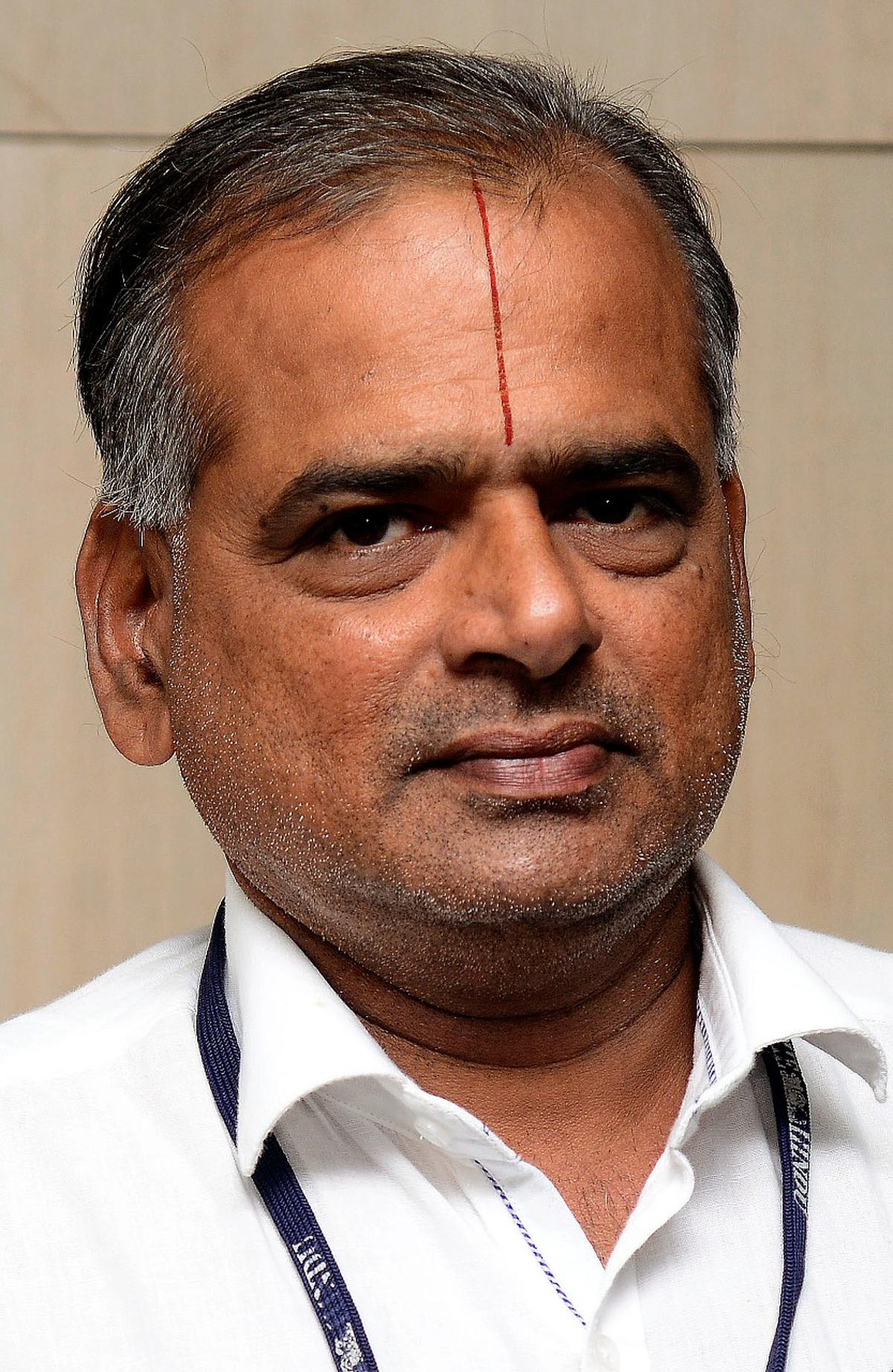
Srinivasan’s career spanned crucial decades in Karnataka and Indian politics, allowing him to witness and document significant transitions. From shifts in political culture to evolving media practices, he remained a steady voice, adapting to change without compromising on values. His death has left a void that many believe will be difficult to fill.
Many journalists have recalled how Srinivasan viewed deadlines not as excuses for haste but as tests of discipline. He often reminded younger reporters that being first mattered far less than being right, a philosophy that earned him quiet respect in an increasingly competitive media environment. His insistence on cross-checking facts, even under pressure, became a defining aspect of his professional identity.
Srinivasan was also known for his nuanced understanding of Karnataka’s socio-political fabric. His reporting reflected an awareness of regional histories, linguistic sensitivities, and grassroots realities, allowing him to contextualise events beyond surface-level developments. This grounding enabled readers to see policies and political shifts as part of larger social processes rather than isolated incidents.
Peers note that he had a rare ability to listen. Whether interacting with sources, colleagues, or critics, Srinivasan believed that attentive listening was essential to good journalism. This trait not only strengthened his reporting but also helped defuse tensions in contentious situations, reinforcing the idea that journalism thrives on dialogue rather than confrontation.
In later years, even as media technologies evolved rapidly, Srinivasan remained curious rather than dismissive. While he expressed concern about the speed-driven nature of digital news, he encouraged young journalists to master new tools without abandoning ethical foundations. His openness to learning underscored his belief that values, not platforms, define journalism.
The void left by his passing is being felt most acutely in newsrooms where institutional memory is thinning. Senior journalists say that figures like Srinivasan served as moral anchors, offering perspective during moments of editorial uncertainty. Their absence, they warn, makes deliberate efforts at mentorship and ethical reflection even more crucial.
Tributes have also highlighted his role in preserving the dignity of the profession. At a time when journalists often face hostility and mistrust, Srinivasan’s career stands as evidence that credibility is built through consistency and fairness. His life offers reassurance that principled journalism, though demanding, continues to command respect.
As colleagues and readers reflect on his legacy, there is a growing recognition that Srinivasan’s greatest contribution may lie in the example he set rather than any single story he wrote. His career serves as a quiet reminder that journalism, at its best, is an act of public service. In that sense, K.V. Srinivasan’s influence will endure long after the immediate tributes fade.
A Career Shaped by Principles, Public Service and Quiet Authority
K.V. Srinivasan’s journalistic journey was marked by consistency rather than spectacle. He believed that journalism’s primary role was to serve citizens by holding power to account while giving voice to the marginalised. His writing reflected a careful balance between critique and fairness, ensuring that opinions were firmly anchored in verified facts.
Those who worked alongside him say he was deeply committed to the craft of reporting. Srinivasan was known to spend long hours understanding policy documents, legislative debates, and administrative procedures before distilling them into clear narratives. This attention to detail made his work reliable and influential among decision-makers and readers alike.
He also played a significant role in shaping newsroom culture. As a senior journalist, he valued editorial independence and encouraged open discussions on ethical dilemmas. Younger colleagues recall that he was approachable yet exacting, offering guidance without imposing his views. His emphasis on accuracy and context became a benchmark for many reporters who later rose to leadership positions.
Beyond daily reporting, Srinivasan was deeply interested in the broader role of media in a democracy. He often spoke about the dangers of sensationalism and the erosion of trust caused by unverified information. For him, journalism was not about chasing headlines but about building an informed public capable of making reasoned choices.
Veteran journalist K.V. Srinivasan, a respected name in Karnataka’s media landscape and beyond, passed away, leaving behind a legacy defined by integrity, rigour, and an unwavering commitment to public interest journalism. His demise has been widely mourned by journalists, editors, policymakers, and readers who followed his work over several decades. Srinivasan was not merely a chronicler of events but a thinker who believed journalism was a public trust, demanding accountability, balance, and moral clarity at all times.
Srinivasan’s influence extended beyond the newsroom into academic and public forums. He frequently engaged with students and aspiring journalists, sharing insights from his long career. These interactions reflected his belief that the future of journalism depended on nurturing ethical instincts alongside technical skills.
In an industry often driven by competition and ego, Srinivasan stood out for his humility. He preferred letting his work speak for itself and avoided the limelight. This quiet authority earned him respect across ideological lines, making him a trusted figure even among those who disagreed with his analysis.
Tributes, Legacy and the Enduring Relevance of His Work
The passing of K.V. Srinivasan has sparked reflection on the changing nature of journalism. Editors and media veterans have noted that his career exemplified a model increasingly under strain in the digital age. His commitment to depth over speed and verification over virality is being widely cited as a lesson for contemporary media.
Political leaders and public figures also acknowledged his contribution, describing him as a journalist who questioned power without hostility and criticised policies without personalising debate. Such balance, many said, helped sustain constructive engagement between the media and institutions.
For readers, Srinivasan’s legacy lies in trust. His byline signalled reliability, assuring audiences that the information presented had been thoroughly checked. In an era of information overload, this trust became one of his most significant contributions to public life.
Journalism educators have highlighted Srinivasan’s work as a reference point for teaching ethical reporting. His articles are often cited as examples of how complex political and administrative issues can be explained with clarity and restraint. This pedagogical value ensures that his influence will continue even after his passing.
His death has also prompted conversations within newsrooms about mentorship and institutional memory. Many journalists noted that figures like Srinivasan served as bridges between generations, carrying forward lessons from the past while adapting to new realities. Losing such voices, they argue, makes it all the more important to document and pass on newsroom wisdom.
As the media fraternity mourns, there is also a sense of responsibility to uphold the standards he embodied. Several colleagues have said that the most fitting tribute to Srinivasan would be to recommit to ethical journalism, resisting pressures that undermine credibility and public trust.
K.V. Srinivasan is survived by family members who supported his demanding career and shared his belief in the value of honest journalism. Friends recall that despite long hours and professional pressures, he remained grounded, drawing strength from close relationships and personal integrity.
His passing marks the end of a distinguished chapter in Karnataka’s journalistic history. Yet, his work continues to resonate, offering guidance in a time of uncertainty for the media profession. As journalism navigates new challenges, the principles Srinivasan stood for remain as relevant as ever.
In remembering K.V. Srinivasan, the media fraternity is reminded that journalism’s true power lies not in influence or reach but in credibility and conscience. His life and career stand as a testament to what sustained commitment to these values can achieve. While his voice may be silent, the standards he set will continue to echo in newsrooms and in the public sphere for years to come.
Follow: Karnataka Government
Also read: Home | Channel 6 Network – Latest News, Breaking Updates: Politics, Business, Tech & More
