
The long-pending and politically sensitive demand for the bifurcation of Belagavi district has once again come into focus, with Karnataka Minister Satish Jarkiholi stating that the final decision rests with the Chief Minister CM. His remarks have revived debate across the district, where opinions on bifurcation remain deeply divided along administrative, cultural, and political lines. While supporters argue that splitting the vast district would improve governance and service delivery, opponents fear it could disrupt regional harmony and create fresh administrative challenges.
Belagavi, one of Karnataka’s largest districts in terms of geographical spread and population, has for years been at the centre of discussions around administrative reorganisation. The district’s size, diversity, and strategic importance have often been cited as reasons for considering bifurcation. Jarkiholi’s statement signals that the issue, though dormant at times, continues to be under active consideration within the government.
Speaking to reporters, Jarkiholi acknowledged the complexity of the matter, emphasising that such a decision cannot be taken lightly. He indicated that the Chief Minister would weigh multiple factors, including administrative feasibility, public opinion, and long-term regional interests, before arriving at a conclusion. His remarks have been interpreted as an attempt to manage expectations while keeping the political door open.
The renewed attention to the issue has sparked fresh reactions from local leaders, civil society groups, and residents. For some, the statement offers hope that longstanding grievances related to administration and development may finally be addressed. For others, it raises concerns about the political motivations behind reviving the demand and the potential consequences of redrawing district boundaries.
Belagavi’s unique position, bordering Maharashtra and having a linguistically diverse population, adds layers of sensitivity to the debate. Any administrative reorganisation in the region inevitably intersects with broader questions of identity, representation, and regional balance within Karnataka. This makes the Chief Minister’s eventual decision not just an administrative one, but a politically and socially significant call.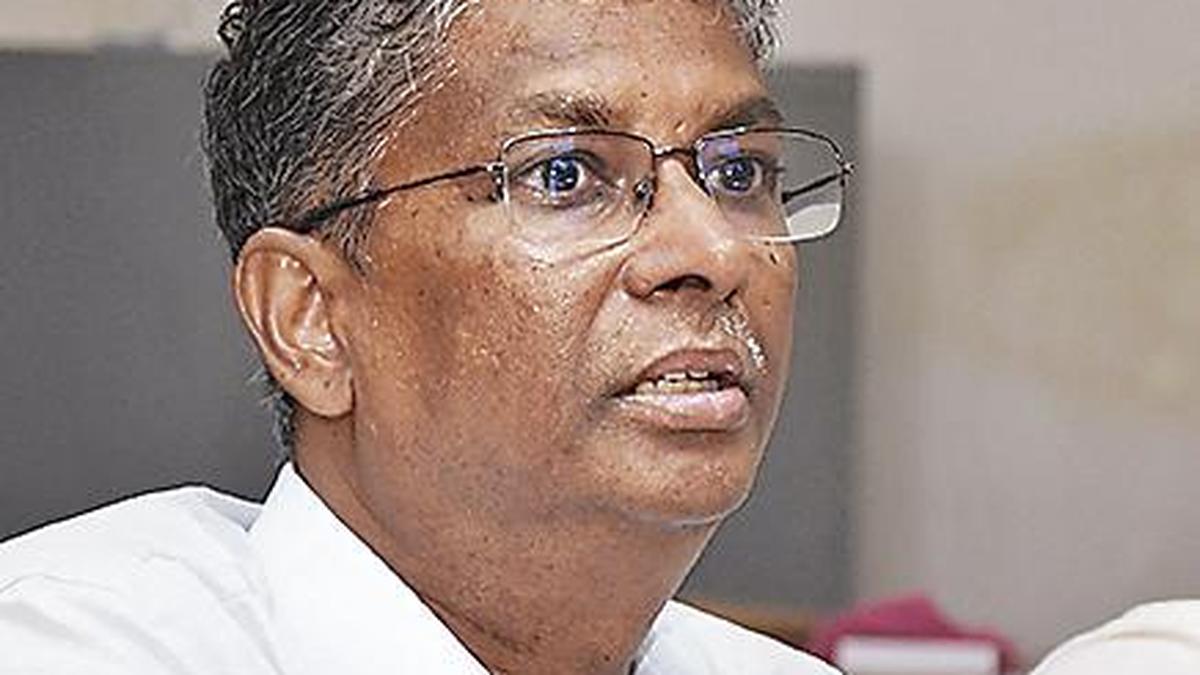
Administrative Rationale, Political Signals and Ground-Level Demands
Supporters of bifurcation argue that Belagavi district’s sheer size makes governance inefficient. With far-flung taluks and a large population dependent on a centralised district administration, they say residents in remote areas often face delays in accessing government services. Proponents believe that creating a new district would bring administration closer to the people, improve responsiveness, and accelerate development.
Local leaders backing the move point to disparities in infrastructure and investment within the district. They argue that certain regions have lagged behind due to administrative overload and that a smaller, focused district administration could address local needs more effectively. For them, bifurcation is less about politics and more about equitable development.
On the political front, Jarkiholi’s remarks are being closely analysed. As a senior leader with influence in the region, his statement is seen as a calibrated message rather than an off-the-cuff comment. By placing the decision squarely with the Chief Minister, he has underscored the seriousness of the issue while avoiding a definitive stance that could alienate either side.
Opposition parties have responded cautiously, with some leaders accusing the government of reviving the issue for political convenience. They argue that repeated discussions without resolution create uncertainty and distract from pressing governance challenges. Others, however, have welcomed the renewed focus, urging the government to initiate structured consultations before making any announcement.
Public opinion within Belagavi district remains divided. While some residents view bifurcation as a pathway to better governance, others fear it could lead to competition for resources and administrative confusion. Traders, farmers, and professionals have expressed differing views, reflecting how the impact of bifurcation may vary across sectors.
Civil society groups have called for transparency in the decision-making process. They argue that any move towards bifurcation should be preceded by detailed studies, public hearings, and clear communication about administrative structures, budget allocations, and long-term implications. Without such clarity, they warn, the decision could deepen divisions rather than resolve existing issues.
Chief Minister’s Role, Regional Sensitivities and the Way Forward- CM
With Satish Jarkiholi emphasising the Chief Minister’s authority in the matter, attention has now shifted to the State leadership. The Chief Minister’s decision will need to balance administrative logic with political stability, especially in a region where identity and regional pride play a significant role in public discourse.
Experts note that district bifurcation is not merely a bureaucratic exercise. It involves reallocating resources, redefining administrative hierarchies, and ensuring continuity in service delivery during the transition. Any misstep could lead to short-term disruptions that may outweigh the intended benefits, at least initially.
The long-pending and politically sensitive demand for the bifurcation of Belagavi district has once again come into focus, with Karnataka Minister Satish Jarkiholi stating that the final decision rests with the Chief Minister. His remarks have revived debate across the district, where opinions on bifurcation remain deeply divided along administrative, cultural, and political lines. While supporters argue that splitting the vast district would improve governance and service delivery, opponents fear it could disrupt regional harmony and create fresh administrative challenges.
The Belagavi case is also being viewed in the context of similar demands across Karnataka. Several large districts have, over the years, seen calls for division on grounds of governance and development. How the government handles Belagavi could set a precedent for responding to such demands elsewhere in the State.
Regional sensitivities add another layer of complexity. Belagavi’s proximity to Maharashtra and its history of linguistic debates mean that administrative changes are often scrutinised through a broader political lens. The government will need to ensure that decisions are framed firmly within administrative and developmental objectives, avoiding any perception of identity-based politics.
For residents, clarity remains the key demand. Many have expressed fatigue over recurring discussions that do not translate into concrete outcomes. Whether the decision ultimately favours bifurcation or status quo, stakeholders say a clear, reasoned explanation from the government would help manage expectations and reduce speculation.
As discussions continue, residents await clarity with a mix of hope and apprehension. For many, the outcome represents not just a change in administrative maps but a statement about how responsive the government is to regional concerns. Whether the Chief Minister opts for bifurcation or maintains the status quo, the decision is expected to leave a lasting imprint on Belagavi’s governance and political discourse.
As the issue awaits the Chief Minister’s call, political observers expect internal consultations within the ruling establishment to intensify. Inputs from district officials, ministers, and party leaders are likely to shape the final decision. The timing of any announcement will also be crucial, given the political calendar and the potential for the issue to influence local sentiments.
In the end, the question of bifurcating Belagavi district goes beyond administrative boundaries. It touches on governance efficiency, regional aspirations, and political responsibility. Satish Jarkiholi’s statement has brought the issue back into public conversation, but the outcome now depends on whether the government can translate debate into a decision that balances development with unity. Whatever the Chief Minister decides, it is a choice that will shape Belagavi’s administrative and political future for years to come.
Administrative officials point out that any bifurcation proposal would require a detailed feasibility study, including assessments of revenue potential, infrastructure readiness, and manpower availability. Creating a new district is not merely about drawing new boundaries but also about ensuring that the new administrative unit can function independently without straining State resources. These technical considerations are expected to weigh heavily in the Chief Minister’s final assessment.
There is also discussion around where the headquarters of a proposed new district would be located, a factor that has triggered quiet competition among different regions. Such decisions often influence local economies, real estate values, and political relevance, making them highly sensitive. Past experiences suggest that disagreements over headquarters location can intensify opposition even among those broadly supportive of bifurcation.
Within the bureaucracy, opinions remain cautious. Senior officials have indicated that while decentralisation can improve governance, frequent restructuring can disrupt administrative continuity. They stress that district-level reforms should ideally be accompanied by investments in digital governance and decentralised service delivery to maximise impact.
The demand for bifurcation has also found resonance among youth groups and local organisations who argue that administrative proximity translates into better access to education, employment schemes, and grievance redressal. They believe that a smaller district administration could be more responsive to local aspirations, particularly in backward taluks that feel marginalised within the existing structure.
At the same time, cultural organisations have urged political leaders to handle the issue sensitively, given Belagavi’s diverse social fabric. They caution that administrative changes should not reopen old fault lines or be framed in ways that sharpen regional or linguistic identities. Inclusive dialogue, they argue, is essential to preserve social harmony.
Political analysts observe that the government’s approach to the Belagavi issue will be closely watched by both supporters and critics. A decisive move could be seen as strong leadership, while prolonged indecision may invite criticism of dithering. The balance between consultation and decisiveness, they say, will define the political narrative around the issue.
As discussions continue, residents await clarity with a mix of hope and apprehension. For many, the outcome represents not just a change in administrative maps but a statement about how responsive the government is to regional concerns. Whether the Chief Minister opts for bifurcation or maintains the status quo, the decision is expected to leave a lasting imprint on Belagavi’s governance and political discourse.
Follow: Karnataka Government
Also read: Home | Channel 6 Network – Latest News, Breaking Updates: Politics, Business, Tech & More
