
A sharp political controversy has erupted after Shivamogga Member of Parliament B.Y. Raghavendra alleged that Congress leader Rahul Gandhi attempted to harm India’s relations with China through his public statements and political conduct. The accusation has added fuel to the already intense national debate over foreign policy, national security, and the role of opposition leaders in shaping international perceptions of India. Raghavendra’s remarks, made in the context of border tensions and diplomatic sensitivity, have drawn strong reactions across the political spectrum, raising fundamental questions about dissent, responsibility, and patriotism in a democracy.
Strategic Communication and Political Signalling
Political strategists believe that allegations involving foreign relations often serve as tools of strategic communication aimed at reinforcing ideological positioning. By raising concerns about statements made by opposition leaders, ruling party figures attempt to highlight differences in approach to national security and diplomacy. Analysts note that such signalling is designed to reassure supporters about strong leadership while placing opponents on the defensive. However, critics argue that repeated reliance on such messaging risks normalising diplomatic issues as partisan tools, potentially complicating the conduct of foreign policy in the long run.
Youth and Public Discourse on National Security
The controversy has also drawn significant attention among younger citizens, particularly students and first-time voters who actively engage with political debates through social platforms. Many youth groups have begun discussing the balance between freedom of expression and responsibility in matters of national security. Political educators observe that such controversies, while polarising, often spark deeper civic awareness among younger generations. Discussions around how leaders should address sensitive international matters are gradually becoming part of public discourse, shaping future expectations from political leadership.
Implications for India’s Global Image
Foreign policy observers note that internal political debates, when widely reported internationally, can influence perceptions about a country’s political climate. While democratic disagreement is generally viewed positively, sustained public disputes over sensitive diplomatic matters may create impressions of political discord. However, experts also point out that India’s democratic tradition, where diverse viewpoints coexist, is often regarded globally as a strength. The long-term impact on India’s global image, therefore, depends on how responsibly political leaders and institutions manage such debates.
Possibility of Clarifications or Escalation
Political watchers suggest that controversies of this nature sometimes lead to demands for formal clarifications from the leaders involved. While Rahul Gandhi has, in previous instances, defended his right to question government policy, further responses or rebuttals could either calm or escalate the situation. Similarly, additional statements from ruling party leaders may keep the issue alive in public debate. The trajectory of the controversy will likely depend on whether political actors choose dialogue and explanation or continued confrontation.
Continuing Debate on Democratic Boundaries
The episode ultimately contributes to an ongoing national conversation about the boundaries of dissent and patriotism. Scholars and commentators emphasise that democracies evolve by constantly negotiating these boundaries, especially during periods of geopolitical tension. The allegation by the Shivamogga MP and the subsequent reactions illustrate how sensitive issues can quickly transform into broader debates about political ethics, governance accountability, and national identity. As India navigates complex international challenges, such debates are likely to remain an enduring feature of its democratic landscape.
Context of the Allegation
The allegation comes against the backdrop of strained India-China relations following years of military standoffs along the Line of Actual Control. During this period, statements by political leaders have been closely scrutinised, both domestically and internationally. Raghavendra accused Rahul Gandhi of making remarks that, according to him, undermined India’s negotiating position and provided ammunition to hostile narratives abroad. He claimed that such statements risked weakening India’s diplomatic stance at a time when unity and caution were essential.
Basis of the Claim
According to Raghavendra, Rahul Gandhi’s repeated criticism of the Union government’s handling of China, especially on border issues, crossed the line from political opposition into actions that could damage national interest. The MP argued that while questioning the government is legitimate in a democracy, doing so in a manner that allegedly echoes adversarial talking points could harm India’s global standing. He maintained that internal political debates should not become tools that foreign powers can exploit to question India’s resolve or sovereignty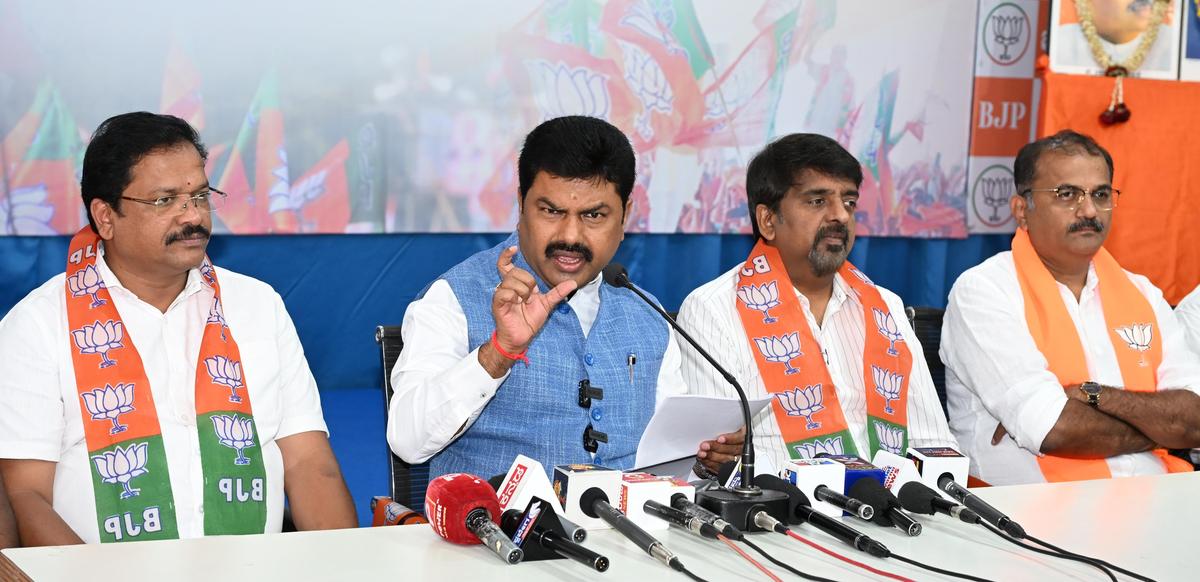
Congress Response and Counterarguments
The Congress party strongly rejected the allegation, asserting that raising concerns about national security lapses or foreign policy failures is part of democratic accountability. Party leaders defended Rahul Gandhi, stating that his remarks were intended to demand transparency and stronger action from the government, not to undermine the country. They accused the ruling party of conflating criticism of the government with criticism of the nation, arguing that such an approach stifles legitimate debate and weakens democratic institutions.
Political Strategy and Messaging
Political analysts view Raghavendra’s statement as part of a broader strategy to frame national security as a key electoral issue. By positioning the opposition leader’s comments as harmful to foreign relations, the ruling party seeks to project itself as the sole custodian of national interest. This narrative resonates strongly with sections of the electorate that prioritise security and sovereignty. However, critics argue that such framing risks oversimplifying complex diplomatic challenges and reducing them to partisan talking points.
National Security, Dissent, and Democratic Boundaries
Foreign Policy as a Political Battleground
Foreign policy, traditionally an area of bipartisan consensus, has increasingly become a site of political contestation. Raghavendra’s allegation reflects this shift, where statements on international relations are weaponised in domestic politics. Experts warn that while political debate is inevitable, excessive politicisation of foreign policy may constrain future governments and diplomats, who require flexibility and broad support to navigate complex global relationships.
The Line Between Criticism and Harm
A central question raised by the controversy is where to draw the line between constructive criticism and actions perceived as harmful to national interest. Supporters of Raghavendra argue that sensitive issues like Indo-China relations demand restraint and responsibility from all political actors. On the other hand, civil liberties advocates insist that questioning the government’s handling of security matters is essential to prevent complacency and ensure accountability. The absence of a clear consensus makes such debates highly polarising.
Impact on Diplomatic Perception
Former diplomats note that statements by prominent political leaders are often monitored by foreign governments and media. While such statements rarely alter official diplomatic positions, they can influence narratives and public opinion abroad. However, diplomats also point out that mature states understand the distinction between government policy and opposition rhetoric. Whether Rahul Gandhi’s remarks had any tangible impact on Indo-China relations remains a matter of interpretation rather than verifiable evidence.
Role of Parliament and Institutional Debate
Institutional mechanisms such as Parliament are designed to host debates on foreign policy in a structured manner. Opposition leaders have repeatedly demanded discussions on China within Parliament, arguing that this provides a legitimate forum for scrutiny. Raghavendra’s allegation implicitly suggests that public remarks outside such forums are more problematic. This raises broader questions about how and where sensitive national issues should be debated in a democracy.
Political Reactions and Broader Implications
Opposition Unity and Resistance
Opposition parties rallied behind Rahul Gandhi, viewing the allegation as an attempt to delegitimise dissent. Leaders from allied parties argued that branding criticism as anti-national sets a dangerous precedent. They warned that such accusations could discourage open discussion on crucial issues like border security and defence preparedness. The controversy has, in some ways, strengthened opposition unity by framing the issue as one of democratic rights rather than individual remarks.
Public Opinion and Polarisation
Public reaction to the allegation has been deeply divided along political lines. Supporters of the ruling party largely accepted Raghavendra’s claims, interpreting them as a defence of national interest. Others viewed the allegation as politically motivated, arguing that patriotism should not be monopolised by any one party. Social commentators observe that such polarisation reflects a broader trend in Indian politics, where nuanced debate is often replaced by binary narratives.
Media and Narrative Amplification
Media coverage has played a significant role in amplifying the controversy. Television debates, opinion columns, and political commentary have dissected every aspect of the allegation, often reinforcing partisan viewpoints. Media analysts caution that sensational framing can overshadow substantive discussion about India-China relations, reducing complex geopolitical realities to sound bites and accusations. The challenge, they note, lies in maintaining focus on policy rather than personality.
Electoral Calculations
With elections never far from the political horizon, allegations related to national security carry significant electoral weight. Analysts suggest that invoking Indo-China relations serves to consolidate voter bases by appealing to emotions of pride and fear. Raghavendra’s statement, therefore, may have as much to do with political mobilisation as with genuine diplomatic concern. Whether this strategy resonates beyond core supporters remains to be seen.
Historical Precedents
India’s political history includes several instances where opposition leaders have criticised foreign policy decisions without being accused of harming national interest. Comparisons are being drawn with past debates over wars, peace talks, and international agreements. Historians argue that democratic resilience lies in the ability to accommodate dissent while safeguarding core interests. The current controversy highlights the tension between these two imperatives.
Expert Views on Responsible Opposition
Political theorists emphasise the concept of a responsible opposition — one that critiques policy while remaining mindful of national sensitivities. At the same time, they stress that responsibility is subjective and often defined by those in power. The Shivamogga MP’s allegation underscores how easily this concept can be contested and politicised, making it a recurring flashpoint in India’s democratic discourse.
Conclusion
B.Y. Raghavendra’s allegation that Rahul Gandhi tried to harm Indo-China relations has opened a wider debate on the limits of political criticism, the nature of patriotism, and the role of opposition in a democracy. While the claim has energised political supporters and sharpened partisan lines, it has also raised important questions about how India conducts internal debate on sensitive international issues. As the controversy unfolds, its lasting impact may lie less in diplomatic consequences and more in how it shapes norms of political discourse. In a complex geopolitical environment, balancing national unity with democratic accountability remains one of India’s most enduring challenges.
Follow: Karnataka Government
Also read: Home | Channel 6 Network – Latest News, Breaking Updates: Politics, Business, Tech & More
