
The closure of 3,617 government schools in Karnataka between the academic years 2020–21 and 2025–26 has triggered widespread concern among educators, parents, and policy observers, raising uncomfortable questions about access, equity, and the future of public education. Data placed in the public domain shows that hundreds of villages and urban habitations have either lost their only government school or seen nearby institutions merged or shut down due to declining enrolment, administrative rationalisation, and policy-driven consolidation. While the State government maintains that the move aims to improve efficiency and learning outcomes, critics argue that the closures risk deepening educational exclusion, particularly among rural, Dalit, tribal, and economically weaker communities.
Officials from the Department of School Education have stated that most of the closures were the result of school mergers rather than abrupt shutdowns. According to them, schools with extremely low enrolment were combined with nearby institutions to ensure better infrastructure, teacher availability, and academic exposure for students. The government has consistently maintained that maintaining thousands of single-teacher or zero-enrolment schools is neither pedagogically sound nor financially sustainable. However, ground-level realities suggest that access to the “nearby” merged schools is not always easy, especially for young children.
Educationists point out that the period between 2020 and 2022, marked by the COVID-19 pandemic, saw a sharp disruption in schooling patterns. Many students dropped out temporarily or permanently, migrant families moved away, and online education widened existing inequalities. Several government schools recorded drastic falls in enrolment during this time, making them vulnerable to closure. Critics argue that instead of revival efforts post-pandemic, the State opted for consolidation, which may have permanently weakened the public education network.
Parents in rural areas have expressed anxiety over increased travel distances for children following school closures. In many cases, students now have to walk several kilometres or rely on irregular transport to attend the merged schools. For younger children, especially those in primary sections, this has led to irregular attendance and, in some cases, complete withdrawal from formal schooling. Women’s groups have warned that such trends disproportionately affect girls, who are often pulled out of school first due to safety concerns and domestic responsibilities.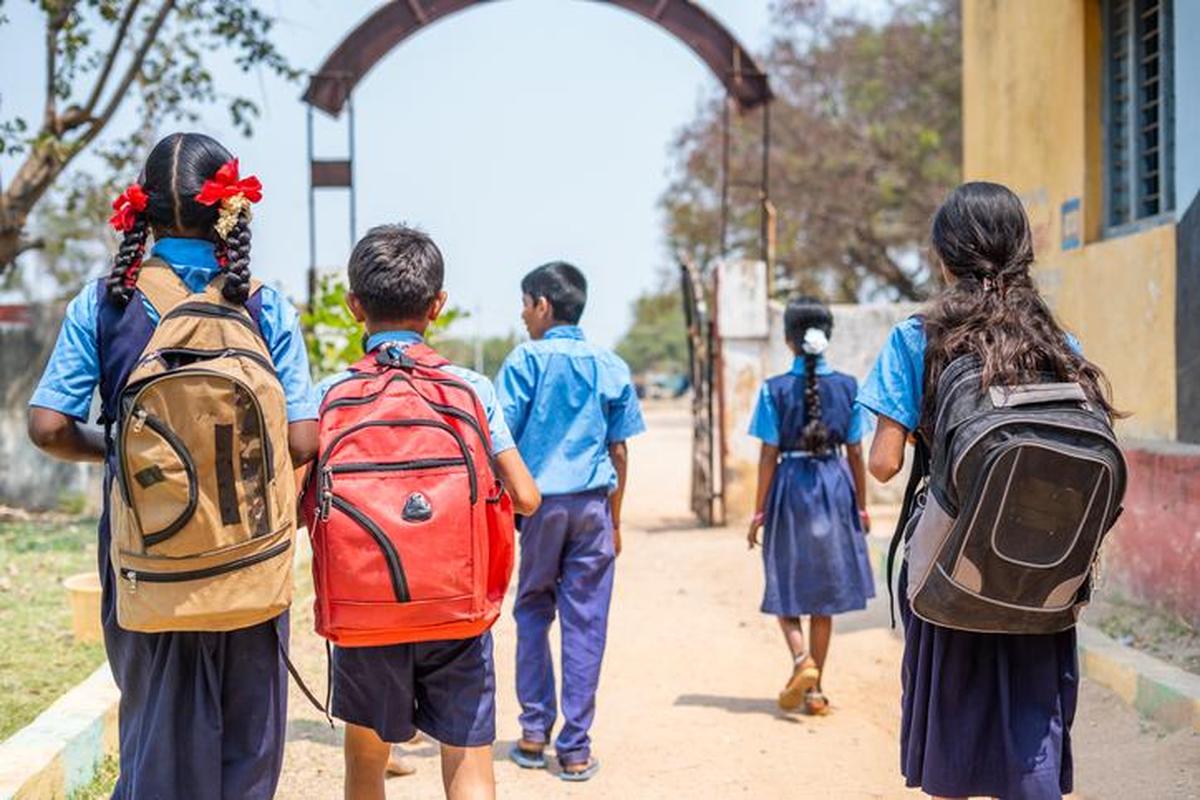
From the government’s perspective, officials insist that no child has been left without access to education. They cite schemes such as free bicycles, uniforms, midday meals, and transport allowances as measures to offset the impact of school mergers. Authorities also argue that consolidating resources allows for better classrooms, digital facilities, and subject teachers, which are difficult to provide in sparsely populated schools. Yet, the scale of closures has led many to question whether efficiency has come at the cost of inclusivity.
Rationalisation or Retreat: The Policy Debate Over School Closures
The closure of thousands of government schools has reignited a long-standing debate over rationalisation versus the State’s constitutional obligation to provide accessible education. Policy planners argue that Karnataka, like many other states, inherited a fragmented school network with several underutilised institutions. Maintaining buildings, staff, and facilities for schools with negligible enrolment, they say, diverts funds from improving quality elsewhere. In this view, consolidation is presented as a pragmatic response to demographic shifts, urbanisation, and changing parental preferences.
The data has also sparked debate among economists and planners about the long-term social costs of shrinking public education infrastructure. They caution that while short-term budgetary savings may appear attractive, the erosion of accessible schooling can have ripple effects on workforce participation, health outcomes, and social cohesion. Studies have consistently shown that early disruptions in education disproportionately affect children from poorer households, limiting their future earning potential and increasing dependence on welfare mechanisms. In this context, the closure of government schools is being viewed not merely as an administrative adjustment, but as a decision with generational consequences.
Women’s rights groups have flagged another dimension of concern: the impact on female literacy and empowerment. Government schools have historically played a crucial role in bringing girls into the education system, particularly in conservative or remote areas where private schooling is either unaffordable or socially discouraged. With local schools shutting down, families may be reluctant to send girls to distant institutions, leading to early dropouts or child marriages. Activists argue that any policy on school consolidation must be evaluated through a gender lens to prevent the rollback of hard-won gains.
There have also been calls for innovative revival strategies instead of outright closures. Education reformers have suggested converting low-enrolment schools into community learning centres offering foundational literacy, vocational exposure, and adult education alongside regular classes. Others have proposed partnerships with local self-governments and civil society organisations to revitalise schools through contextual curricula linked to local livelihoods. Such approaches, they argue, could transform struggling schools into assets rather than liabilities.
As Karnataka continues to grapple with competing demands on its education budget, the debate over school closures is unlikely to fade. The challenge before policymakers is to ensure that rationalisation does not translate into exclusion, and that efficiency does not override the constitutional promise of equitable education. The coming years will reveal whether the State can recalibrate its approach, strengthening government schools as inclusive spaces of learning while adapting to changing demographic and economic realities.
However, education activists counter that low enrolment is often a symptom of neglect rather than a justification for closure. They argue that inadequate infrastructure, teacher shortages, and poor monitoring pushed parents toward private schools, especially during the pandemic. Closing government schools, they say, legitimises this shift instead of correcting systemic failures. Several activists have described the trend as a “silent retreat” of the State from its responsibility to provide free, universal education.
Teacher associations have also raised concerns about the impact on staff. While the government has assured that no permanent teacher has lost employment due to closures, many educators have been transferred far from their original postings. This has disrupted family lives and, in some cases, affected morale. Guest teachers and temporary staff, however, have reportedly borne the brunt of the rationalisation process, with contracts not renewed in several merged schools.
The geographical distribution of closures has further fuelled the debate. Data indicates that a significant proportion of the shut schools were in rural and semi-urban areas, including regions with high concentrations of Scheduled Castes and Scheduled Tribes. Experts warn that weakening the local school presence in such areas could reverse gains made in enrolment and retention over the past two decades. They emphasise that for marginalised communities, proximity to schools is often the single most important factor determining attendance.
Political reactions have been sharply divided. Opposition parties have accused the government of undermining public education while indirectly encouraging the growth of private schools. They argue that closures contradict official claims of strengthening government institutions and question why revitalisation funds were not used to upgrade struggling schools. The ruling establishment, in turn, has dismissed these allegations as politically motivated, insisting that student welfare, not numbers, guides policy decisions.
Civil society groups have demanded greater transparency in the decision-making process. They have called for public consultations before school closures, social impact assessments, and the publication of clear criteria for mergers. According to them, involving local communities could help identify alternatives such as multi-grade teaching, cluster schools with transport support, or targeted incentives to revive enrolment.
Impact on Students, Communities, and the Future of Public Education- Schools
The human impact of the closures is perhaps most visible at the community level. In several villages, government schools were not just centres of learning but also spaces for social interaction, nutrition through midday meals, and public engagement. Their absence has left a vacuum, with anganwadis or community halls attempting to fill some roles but lacking the institutional support of a full-fledged school. Elders in these communities have described the closures as symbolic of declining state presence in rural life.
Students transitioning to merged schools often face adjustment challenges, including language barriers, overcrowded classrooms, and reduced individual attention. Teachers admit that managing larger class sizes with diverse learning levels is demanding, particularly when students arrive after long commutes. Psychologists warn that such stressors can affect learning outcomes and emotional well-being, especially among first-generation learners.
At the same time, there are instances where consolidation has yielded positive results. Some merged schools reportedly offer better facilities, exposure to extracurricular activities, and improved peer learning. Officials cite such examples to argue that the policy should be judged on outcomes rather than numbers alone. However, critics maintain that these successes are uneven and depend heavily on local implementation and infrastructure.
Looking ahead, education experts stress that Karnataka stands at a crossroads. With demographic changes, digital learning tools, and shifting aspirations, the role of government schools must be reimagined rather than reduced. They advocate for hybrid models that combine physical access with digital support, flexible staffing, and community participation. Strengthening early childhood education and primary schooling, they argue, is crucial to preventing future enrolment decline.
The issue has also acquired urgency in the context of the National Education Policy, which emphasises foundational learning and universal access. Analysts note that closing neighbourhood schools runs counter to the spirit of this vision unless accompanied by robust alternatives. They urge the State to conduct longitudinal studies on the impact of closures, tracking dropout rates, learning outcomes, and social mobility over time.
In conclusion, the closure of 3,617 government schools over five years is not merely a statistic but a reflection of deeper tensions within Karnataka’s education system. It raises fundamental questions about how the State balances efficiency with equity, consolidation with access, and fiscal prudence with social responsibility. Whether these closures represent a strategic reorganisation or a worrying contraction of public education will ultimately be judged by their long-term impact on children’s lives, especially those who rely most on the government school system for a chance at a better future.
Follow: Karnataka Government
Also read: Home | Channel 6 Network – Latest News, Breaking Updates: Politics, Business, Tech & More
