
One year after the Karnataka government assured Accredited Social Health Activist (ASHA) workers of an enhanced honorarium, thousands across the State say the promise remains unfulfilled, forcing them back to the streets in protest. ASHA workers’ unions have announced a fresh statewide strike on February 12, accusing the government of apathy, delay, and failure to respect the backbone of the public healthcare delivery system. The renewed agitation comes amid growing frustration, as workers say repeated representations, negotiations, and assurances have not translated into concrete financial relief.
ASHA workers play a critical role in grassroots healthcare, acting as the first point of contact between communities and the public health system. From maternal and child health to immunisation drives, disease surveillance, and pandemic response, their responsibilities have steadily expanded over the years. Despite this, ASHA workers remain classified as “volunteers” rather than regular employees, receiving honorariums instead of fixed salaries. The promise of an increase in honorarium had raised hopes of long-overdue recognition, hopes that workers now say have been dashed.
Union leaders allege that the government announced the honorarium hike amid intense protests last year, but failed to follow it up with budgetary allocation or administrative orders. They say that while ministers publicly acknowledged the workers’ demands and praised their service, the actual implementation was repeatedly postponed. For many ASHA workers, the delay has translated into continued financial hardship, with monthly earnings insufficient to meet rising costs of living.
The unfolding agitation has also reignited conversations around budgetary priorities in the health sector. Economists point out that while large allocations are often announced for infrastructure, equipment, and flagship schemes, the human workforce that ensures last-mile delivery remains underfunded. ASHA workers, they argue, represent the most cost-effective investment in preventive healthcare, and delays in compensating them adequately risk weakening the very foundation of primary health services. Several experts have warned that neglecting frontline workers ultimately leads to higher long-term costs due to preventable illnesses and delayed interventions.
There is also growing pressure from within the public health system itself. Auxiliary Nurse Midwives and primary health centre staff have reportedly conveyed concerns to higher authorities about declining morale among ASHAs. They say coordination at the grassroots level becomes difficult when workers feel undervalued and uncertain about their earnings. In some areas, ASHAs have already reduced non-mandatory work as a form of silent protest, a trend that officials fear could escalate if the strike prolongs.
The issue has found resonance beyond Karnataka, with ASHA unions in other States expressing solidarity. Leaders note that delayed payments and unfulfilled promises are not unique to one region, but reflect a national pattern of precarious treatment of community health workers. This broader context has strengthened the resolve of Karnataka ASHAs, who see their struggle as part of a larger movement for recognition and rights across the country.
Civil society organisations have stepped in to mediate, urging the government to announce at least an interim relief before the strike date. Some have proposed phased implementation of the honorarium hike, coupled with a clear written timeline, as a confidence-building measure. Others have suggested setting up a statutory grievance redressal mechanism for ASHA workers to ensure that future commitments are monitored and enforced.
Politically, the renewed protest poses a delicate challenge for the government. With ASHA workers deeply embedded in communities, their dissatisfaction risks translating into broader public discontent. Analysts note that prolonged unrest among such a visible and trusted group can influence public perception, particularly in rural and semi-urban areas where ASHAs are often the most consistent face of the State.
As the countdown to February 12 continues, the standoff has reached a critical juncture. For ASHA workers, the strike represents a last attempt to be heard after a year of waiting. For the government, it is a test of credibility and responsiveness. Whether this moment leads to resolution or further confrontation will shape not only the immediate dispute, but also the future of frontline healthcare work in Karnataka.
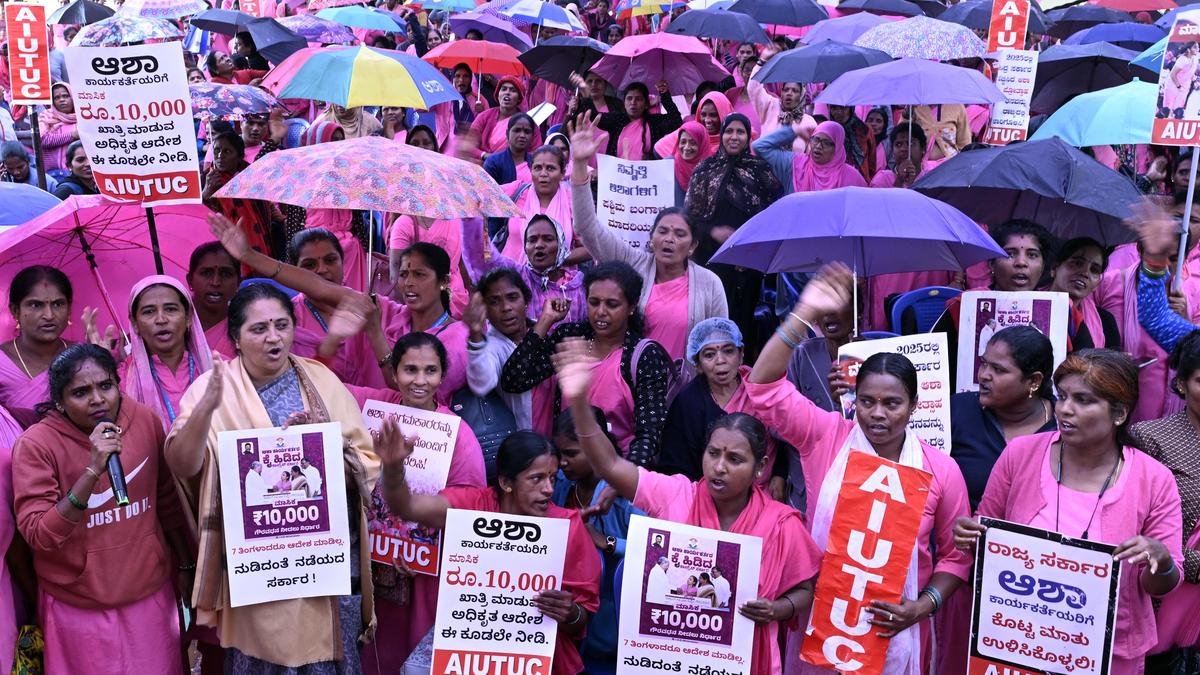
Workers across districts have described the situation as demoralising. Several ASHAs say they continue to work long hours, often travelling across villages and urban slums, while struggling to manage household expenses, children’s education, and healthcare costs of their own families. The sense of betrayal, they say, is deeper because the assurance came after sustained struggle and was seen as a hard-won victory.
The announcement of the February 12 strike signals that patience has worn thin. Union representatives have warned that if the government does not act decisively, the agitation could intensify, potentially disrupting routine public health services. They emphasise that the decision to strike was not taken lightly, but became inevitable after months of inaction.
Government officials, meanwhile, have maintained that discussions are ongoing and that procedural and financial constraints have delayed implementation. They insist that the State remains committed to ASHA welfare, pointing to other benefits and incentives provided under various schemes. However, workers argue that such explanations no longer carry credibility in the absence of tangible outcomes.
Promises, Protests, and the Politics of Delay
The current standoff must be seen against the backdrop of the prolonged struggle by ASHA workers in Karnataka for fair compensation and recognition. Over the past decade, ASHA unions have repeatedly raised demands for regularisation, social security benefits, and a living wage. While incremental incentives have been introduced, workers argue that these are inadequate given the scope and intensity of their work.
Last year’s agitation marked a significant moment, as thousands of ASHA workers staged protests demanding an honorarium hike and other benefits. The movement drew public attention and political responses, culminating in assurances from the government that their demands would be addressed. For many workers, the announcement was seen as a moral victory, even if the details were left vague. The failure to implement it over the following year has now turned that optimism into anger.
Political parties have taken predictable positions. Opposition leaders have accused the government of exploiting ASHA workers’ labour while denying them dignity and financial security. They argue that the delay reflects misplaced priorities and a disconnect between political rhetoric and administrative action. The ruling establishment has countered by citing fiscal pressures and the need to balance competing welfare commitments, though critics say this explanation rings hollow given the essential nature of ASHA services.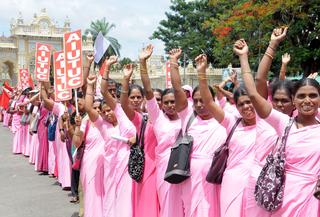
Health policy experts warn that prolonged dissatisfaction among ASHA workers could have serious implications for public health outcomes. ASHAs are instrumental in ensuring institutional deliveries, tracking high-risk pregnancies, and maintaining vaccination coverage. Any disruption to their work, even temporarily, could disproportionately affect vulnerable populations, particularly in rural and underserved areas.
The issue has also reopened debate about the structural status of ASHA workers within India’s healthcare system. By designating them as volunteers, governments have avoided the obligations that come with formal employment. While this model was initially justified as community participation, critics argue that it has become a means to extract labour at minimal cost. The honorarium delay in Karnataka, they say, exemplifies the fragility of such arrangements.
Unions have stressed that the strike is not merely about money, but about respect and accountability. They argue that repeated promises without delivery undermine trust and erode morale. Some leaders have pointed out that ASHA workers were hailed as “frontline warriors” during health crises, yet continue to be treated as expendable once the immediate emergency fades.
Within the government, the issue is said to have triggered internal discussions, particularly given the potential political fallout of another prolonged protest. However, with the strike date approaching, the absence of a clear roadmap has fuelled scepticism among workers.
Lives on Hold and the Road Ahead
Beyond policy debates and political blame, the human cost of the delay is evident in the everyday lives of ASHA workers. Many report working for years without job security, pensions, or adequate health insurance, despite facilitating these very benefits for others. The unfulfilled promise of an honorarium hike has, for some, meant postponing essential expenses, borrowing money, or taking up additional informal work to survive.
Women’s rights groups have highlighted the gendered dimension of the issue, noting that ASHA workers are overwhelmingly women from economically marginal backgrounds. Their labour, often invisible and undervalued, sustains the public health system at its most basic level. The delay in honoring commitments to them, activists argue, reflects a broader pattern of undervaluing care work performed by women.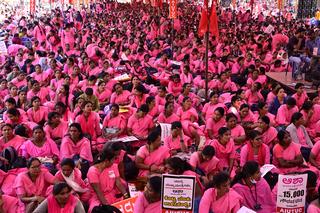
As February 12 approaches, district-level preparations for the strike are underway. Unions have indicated that protests will be peaceful but firm, with participation expected to be widespread. They have urged the government to intervene before the situation escalates, warning that the credibility of future assurances is at stake.
Public health officials are quietly concerned about the potential impact on service delivery, especially in immunisation drives and maternal health follow-ups. While contingency plans may mitigate some effects, the absence of ASHA workers would be keenly felt at the grassroots level. This reality adds urgency to calls for a negotiated settlement.
Observers note that resolving the issue requires more than temporary fixes. They argue that the State must establish a transparent, time-bound mechanism for implementing commitments made to frontline workers. Clear communication, budgetary prioritisation, and administrative follow-through are essential to rebuild trust.
In conclusion, one year of waiting has transformed hope into frustration for Karnataka’s ASHA workers. The planned strike on February 12 is not just a protest against delayed honorariums, but a demand for dignity, recognition, and accountability. How the government responds in the coming days will determine not only the outcome of the agitation, but also the future relationship between the State and the women who form the foundation of its public health system.
Follow: Karnataka Government
Also read: Home | Channel 6 Network – Latest News, Breaking Updates: Politics, Business, Tech & More
